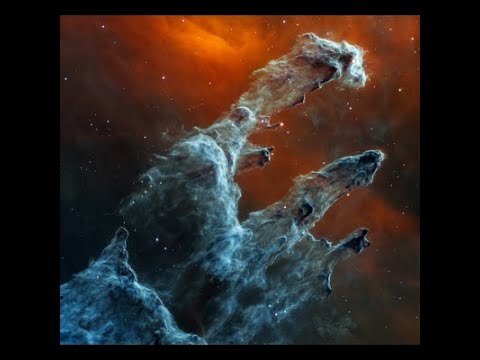
Is the Universe Older than we Thought?
Keywords
Summary
186 words
Critical Evaluation
Value of the Information & Strength of the Argument
The video provides substantial value by clearly explaining a complex scientific controversy without oversimplifying. It presents the alternative hypothesis (tired light) fairly, then systematically dismantles it using multiple independent observational lines of evidence. The argumentation is logical and well-structured, using the analogy of the apple to illustrate the importance of considering all data. The host’s expertise is evident in his ability to distinguish between a genuine crisis and a solvable puzzle, and he effectively communicates the scientific process of hypothesis testing and revision.
Scientific Rigor, Source Quality, Title Accuracy
The video demonstrates strong scientific rigor by referencing the specific paper by Rajendra Gupta and providing a link in the description. It also correctly attributes the tired light concept to Fritz Zwicky and mentions the historical context of the steady-state theory. The presentation is careful to note the limitations of the alternative hypothesis and the strength of the standard model. The title accurately reflects the content, which is a balanced exploration of a question rather than a sensational claim. The video’s conclusion aligns with the scientific consensus, and it does not overstate the significance of the JWST findings.
196 words
Title / Content Match
The title poses a question that the video directly addresses, concluding with a nuanced 'probably not' while exploring the scientific debate.
Quality & Reliability
8/10
The video presents a balanced, well-structured overview of a recent scientific paper, clearly distinguishing between established consensus and speculative alternatives. It accurately describes the 'tired light' hypothesis and its fatal observational contradictions, while acknowledging the legitimate JWST galaxy formation puzzle. The presentation is rigorous, avoids sensationalism, and correctly concludes that the standard age estimate remains overwhelmingly supported.
Key Moments
Markers derived by PSI from the transcript: the creator did not define chapters.
- Introduction to the question of the universe's age and the historical steady-state theory.
- Discussion of the Big Bang model's evidence and the JWST observations of early massive galaxies.
- Introduction of the alternative age estimate of 26.7 billion years and the 'tired light' hypothesis.
- Critique of tired light: failure to explain blurring, cosmological time dilation, and CMB blackbody spectrum.
- Conclusion that the standard age is likely correct, followed by a philosophical reflection on the early appearance of life.
Cited Sources
- JWST early Universe observations and ΛCDM cosmology — The paper by Rajendra Gupta proposing an older universe based on tired light and varying constants.
- Event Horizon Channel — The host's other channel for in-depth explorations.
- Cylinder Five by Chris Zabriskie — Background music used in the video.
- Creative Commons Attribution 4.0 license — License for the music used.
Concurring Sources
- JWST early Universe observations and ΛCDM cosmology — The paper discussed in the video, which proposes an older universe.
Dissenting Sources
- Standard cosmological model (ΛCDM) — The standard model, which the video argues is overwhelmingly supported by evidence, contradicts the older age estimate.
Contribution & Novelties
The video’s original contribution lies in its clear, accessible synthesis of a recent scientific controversy, effectively communicating the strengths and weaknesses of the alternative ’tired light’ hypothesis to a general audience. It provides a valuable service by contextualizing the JWST findings within the broader framework of cosmological evidence, helping viewers understand why the scientific consensus remains robust despite the new data.
Pour aller plus loin :
- Tired light — Wikipedia article providing background on the hypothesis.
- Cosmic microwave background — Wikipedia article on the CMB, whose blackbody spectrum is a key piece of evidence against tired light.
- James Webb Space Telescope — Wikipedia article on the telescope whose observations prompted the debate.
112 words
Radar Profile
The radar profile shows a balanced performance across all dimensions, with slightly higher scores in information quality and reliability, reflecting the video's strong scientific grounding and clear communication. The lower score in technical level indicates that while the content is accurate, it is presented in an accessible manner for a general audience.
💬 Très positif. Sur les 30 commentaires analysés, l'écrasante majorité exprime une admiration profonde pour le créateur et la qualité de son contenu, avec quelques commentaires engageant scientifiquement sur le sujet.