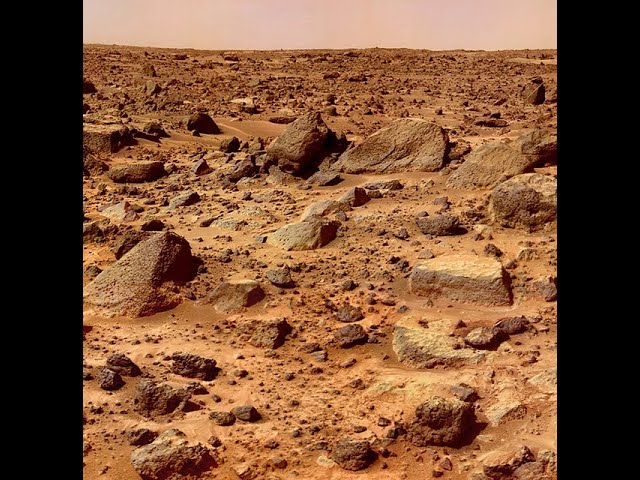
A New Hint of Life on Mars
Keywords
Summary
156 words
Critical Evaluation
Value of the Information & Strength of the Argument
The video provides valuable information by summarizing recent scientific findings and contextualizing them within the broader search for life on Mars. The argumentation is generally solid, clearly distinguishing between confirmed data and speculative interpretations. The presenter acknowledges uncertainties and alternative explanations, which strengthens the credibility of the discussion. However, some speculative elements, such as the possibility of life on Venus or the origin of life on a destroyed protoplanet, are presented with less rigorous justification, though they are clearly labeled as speculation.
Scientific Rigor, Source Quality, Title Accuracy
The video demonstrates reasonable scientific rigor by referencing NASA missions and instruments accurately. However, it does not provide direct citations to scientific papers or official NASA releases, relying instead on general knowledge and the presenter’s interpretation. The title accurately reflects the content, focusing on the new hint of life on Mars. The video’s production quality is high, with clear explanations and appropriate visuals, but the lack of explicit source citations limits its scientific rigor.
171 words
Title / Content Match
The title accurately reflects the content, focusing on a new potential biosignature found on Mars.
Quality & Reliability
7/10
The video provides a balanced overview of recent Mars discoveries, clearly distinguishing between evidence and speculation. It references NASA missions and instruments accurately, but lacks detailed citations and includes speculative elements clearly labeled as such.
Key Moments
Markers derived by PSI from the transcript: the creator did not define chapters.
- Introduction to the history of Mars exploration and the shift from complex life to microbial life.
- Discussion of Mars' past liquid water and the presence of essential chemicals for life.
- Introduction to the Cheyava Falls rock discovery and its potential biosignatures.
- Explanation of the SHERLOC instrument and the detection of organic compounds.
- Analysis of the rock's features: hematite, sulfate veins, and olivine crystals.
- Review of other historical hints of life on Mars, including Viking experiments and methane plumes.
- Discussion of possible fossilized microbial mats and ichnofossils on Mars.
- Speculation about panspermia and the possibility of life on multiple planets.
Cited Sources
- Cylinders by Chris Zabriskie — Background music used in the video.
- Creative Commons Attribution 4.0 License — License for the background music.
- Miguel Johnson Music — Background music 'Intermission in D' used in the video.
- Event Horizon Channel — Related channel by the same author.
Concurring Sources
- NASA Mars Exploration Program — Official NASA resource for Mars missions and discoveries.
Contribution & Novelties
The video provides a timely and accessible synthesis of the latest Mars discoveries, particularly the Cheyava Falls rock, and places them in the context of previous potential biosignatures. It offers a balanced perspective, highlighting both the tantalizing nature of the evidence and the need for further analysis. The speculative discussion about panspermia and the possibility of life on multiple planets adds an engaging dimension, though it is clearly separated from established science.
Pour aller plus loin :
- NASA’s Perseverance Rover — Official mission page with updates and details on the rover’s findings.
- SHERLOC Instrument — Description of the instrument used to detect organics.
- Biosignatures in Martian Rocks — Overview of what constitutes a biosignature and its significance.
- Panspermia Hypothesis — Explanation of the hypothesis that life can be transferred between celestial bodies.
132 words
Radar Profile
The radar profile shows a balanced video with high scores in information quantity and quality, moderate technical depth, and good reliability. The content is accessible yet informative, making it suitable for a general audience interested in astrobiology.
💬 Très positif. Sur les 30 commentaires analysés, la grande majorité exprime enthousiasme et optimisme quant à la possibilité de découvrir de la vie sur Mars, avec quelques remarques humoristiques et des remerciements pour la qualité de la vidéo.