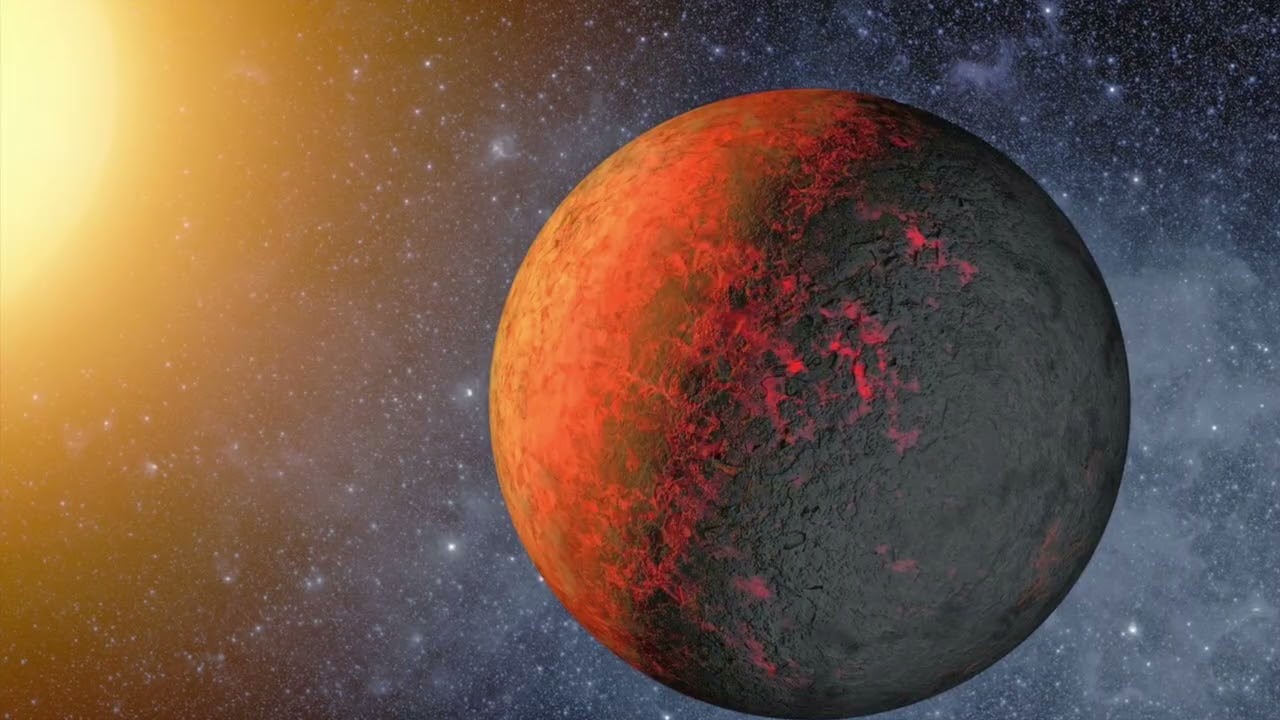
The Atmospheres of Terrestrial Worlds
Keywords
Summary
213 words
Critical Evaluation
Value of the Information & Strength of the Argument
The video provides valuable information by synthesizing known facts about planetary atmospheres and connecting them to broader questions about exoplanet habitability and the Fermi paradox. It presents a clear argument that the diversity of atmospheres in our solar system suggests a wide range of possibilities for exoplanets, and that our solar system might be unusual. The argumentation is logical and well-structured, moving from specific examples (Mercury, Venus, Mars) to general implications. It also introduces the concept of secondary atmospheres and the importance of atmospheric evolution, which is a nuanced and current topic. However, some speculative elements, such as the rarity of our solar system and the potential for terraforming, are presented without strong evidence, but they are framed as hypotheses.
Scientific Rigor, Source Quality, Title Accuracy
The video demonstrates scientific rigor by accurately presenting data on atmospheric composition and referencing recent exoplanet research, such as the case of GJ1132b. However, it does not provide explicit citations to primary sources, which limits the ability to verify claims. The title accurately reflects the content, and the video stays on topic throughout. The description includes links to the creator’s Patreon and other channels, but no direct scientific references. The content is well-researched and up-to-date, but the lack of explicit sourcing is a minor weakness.
220 words
Title / Content Match
The title accurately reflects the content, which focuses on the atmospheres of terrestrial planets in our solar system and extends to exoplanets.
Quality & Reliability
7/10
The video presents accurate, up-to-date information about planetary atmospheres, referencing specific data (e.g., Mercury's oxygen percentage, Venus and Mars CO2 levels) and recent exoplanet research (GJ1132b). It clearly distinguishes established facts from hypotheses and acknowledges uncertainties. However, it lacks explicit citations to primary sources, and some speculative elements (e.g., future terraforming) are presented without rigorous sourcing.
Key Moments
Markers derived by PSI from the transcript: the creator did not define chapters.
- Introduction: striking differences in planetary atmospheres, Mercury's oxygen-rich atmosphere.
- Comparison of Venus and Mars: CO2-rich atmospheres, pressure differences, and Earth's nitrogen dominance.
- Explanation of why Earth has abundant nitrogen: volatility, low reactivity, and resistance to solar radiation.
- Discussion of nitrogen fixation in agriculture and symbiotic relationships with bacteria.
- Why Mars and Venus lack nitrogen: atmospheric loss and chemical trapping.
- Implications for exoplanets: our solar system may be rare, potential solution to Fermi paradox.
- Introduction to exoplanet atmospheres, GJ1132b as a possible secondary atmosphere.
- Future of Earth's atmosphere: runaway greenhouse effect, terraforming possibilities, and space sunshades.
Cited Sources
- Event Horizon Show — John Michael Godier's other channel, mentioned as a related content source.
- Chris Zabriskie - Cylinders — Music used in the video, licensed under Creative Commons.
- Chris Zabriskie — Artist's website for the music used.
- Creative Commons Attribution 4.0 — License for the music used in the video.
Concurring Sources
- NASA - Mercury Fact Sheet — Provides data on Mercury's atmosphere composition, consistent with the video's claims.
- NASA - Venus Fact Sheet — Confirms Venus's CO2-rich atmosphere and high pressure.
- NASA - Mars Fact Sheet — Confirms Mars's CO2-rich atmosphere and low pressure.
Dissenting Sources
- Recent studies on GJ1132b's atmosphere — The video mentions that recent work has questioned the detection of an atmosphere on GJ1132b, which could contradict the earlier claim of a secondary atmosphere.
External References
Contribution & Novelties
The video offers a fresh perspective by comparing the atmospheres of terrestrial planets in our solar system and using that as a framework to discuss exoplanet atmospheres. It highlights the uniqueness of Earth’s nitrogen-rich atmosphere and the potential for secondary atmospheres on exoplanets like GJ1132b. The discussion of our solar system’s possible rarity adds a novel angle to the Fermi paradox. The video also touches on future terraforming possibilities, which is a forward-looking topic.
Pour aller plus loin :
- Atmosphere of Mercury — Provides detailed data on Mercury’s exosphere composition.
- Atmosphere of Venus — Detailed information on Venus’s thick CO2 atmosphere and greenhouse effect.
- Atmosphere of Mars — Overview of Mars’s thin atmosphere and its composition.
- GJ 1132 b — Information on the exoplanet discussed in the video.
- Fermi paradox — Background on the paradox and proposed solutions.
138 words
Radar Profile
The radar profile shows high scores in quality of information and fiability, indicating well-researched content. Quantity of information is moderate, and technical level is accessible, making it suitable for a general audience. The overall balance suggests a reliable and informative video.
💬 Très positif. Sur les 30 commentaires analysés, les spectateurs expriment une grande appréciation pour le contenu, la voix apaisante de John Michael Godier, et la qualité des informations, avec de nombreux commentaires mentionnant l'utilisation de la vidéo pour s'endormir.