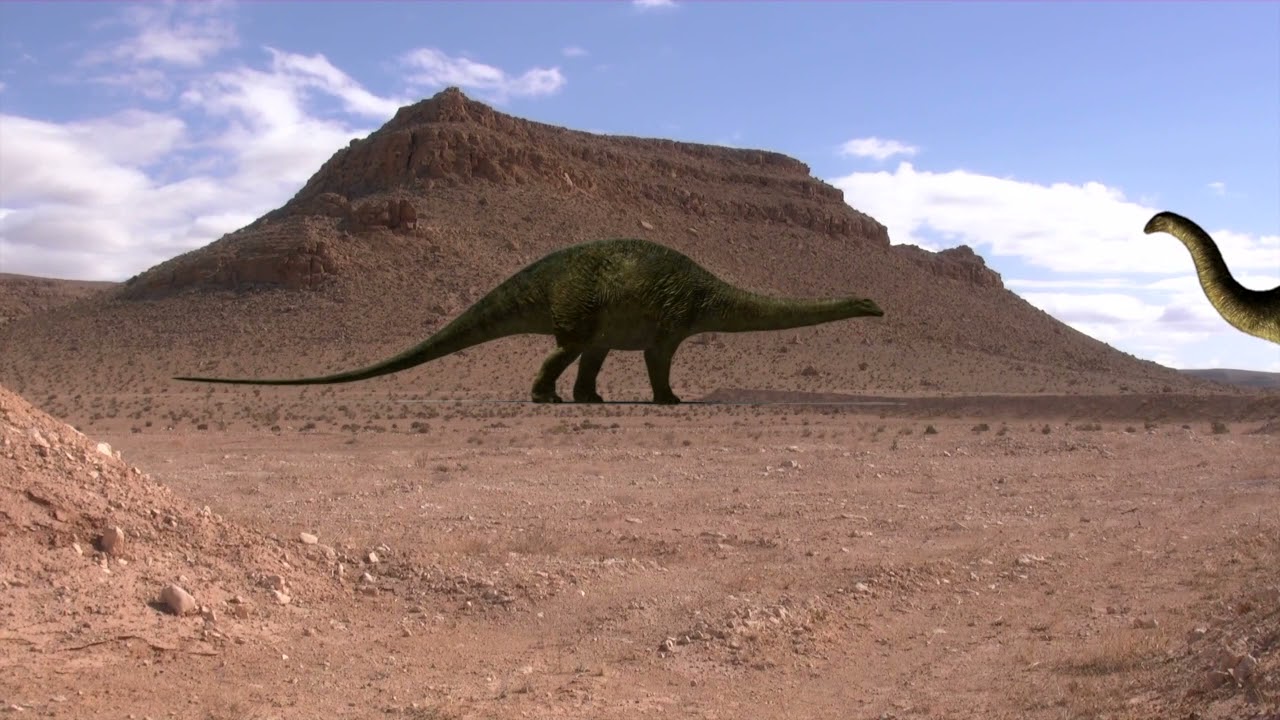
Did Dark Matter Kill the Dinosaurs?
Keywords
Summary
194 words
Critical Evaluation
Value of the Information & Strength of the Argument
The video provides a clear and engaging overview of a speculative scientific hypothesis, effectively communicating the key concepts and the reasoning behind them. It presents the dark matter-dinosaur link as a plausible but unproven idea, and it does a good job of explaining the underlying physics, such as the Sun’s motion through the galaxy and the potential for dark matter to perturb comets. The argumentation is logical and well-structured, but it could be strengthened by a more critical examination of the evidence and a discussion of alternative explanations. The video also touches on related topics like the Nemesis hypothesis and stellar encounters, which adds context but may dilute the focus.
Scientific Rigor, Source Quality, Title Accuracy
The video references the paper by Lisa Randall and Matthew Reece, ‘Dark Matter as a Trigger for Periodic Comet Impacts’, which is a legitimate scientific publication. The link to the paper is provided in the description, and the video accurately represents its main idea. However, the video does not discuss the broader scientific reception of this hypothesis, nor does it mention any criticisms or alternative models. The title is catchy and accurately reflects the content, though it might overstate the certainty of the hypothesis. Overall, the scientific rigor is moderate, with a clear presentation of a speculative idea but limited engagement with the full scientific context.
231 words
Title / Content Match
The title accurately reflects the content, which explores the speculative hypothesis that dark matter could have perturbed comets and caused the dinosaur extinction.
Quality & Reliability
7/10
The video presents a speculative hypothesis with appropriate caveats, referencing a peer-reviewed paper by Randall and Reece. However, it does not deeply engage with counterarguments or the broader scientific debate, and the evidence for the dark matter-dinosaur link is acknowledged as weak.
Key Moments
Markers derived by PSI from the transcript: the creator did not define chapters.
- Introduction to the question of periodic asteroid impacts and the Nemesis hypothesis.
- Discussion of Planet 9 and Planet 10 as potential perturbers of comets.
- Introduction of dark matter as a possible perturber, with explanation of its inferred existence.
- Explanation of the Randall and Reece hypothesis: dark matter disk in the galactic plane perturbing comets.
- Discussion of the evidence for the impactor being a comet or asteroid, and the weaknesses of the dark matter hypothesis.
- Conclusion reflecting on unknown cosmic threats and the possibility of vacuum decay.
Cited Sources
- Dark Matter as a Trigger for Periodic Comet Impacts — The paper by Lisa Randall and Matthew Reece that proposes dark matter as a cause of periodic comet impacts, potentially explaining the dinosaur extinction.
- Event Horizon Channel — The creator's other YouTube channel, mentioned in the video description.
Concurring Sources
- Dark Matter as a Trigger for Periodic Comet Impacts — The primary paper supporting the hypothesis presented in the video.
Dissenting Sources
- No, dark matter didn't kill the dinosaurs — An article that criticizes the dark matter-dinosaur link, arguing that the evidence is weak and that other explanations are more plausible.
External References
Contribution & Novelties
The video presents a novel and intriguing hypothesis that connects dark matter to a major extinction event, offering a fresh perspective on the potential effects of dark matter beyond its role in galaxy dynamics. It effectively communicates the scientific reasoning behind the hypothesis, making it accessible to a general audience.
Pour aller plus loin :
- Dark matter — Provides a comprehensive overview of dark matter, its evidence, and current research.
- Cretaceous–Paleogene extinction event — Details the extinction event that killed the dinosaurs, including the impact hypothesis.
- Oort cloud — Explains the hypothesized cloud of comets at the edge of the solar system, relevant to the perturbation mechanism.
107 words
Radar Profile
The radar profile shows a balanced performance across all dimensions, with slightly higher scores in information quantity and quality, reflecting a well-structured and informative video. The technical level is moderate, making it accessible to a general audience while still providing scientific depth.
💬 Très positif. Sur les 30 commentaires analysés, la grande majorité exprime un enthousiasme marqué pour le sujet et le style de la vidéo, avec de nombreux commentaires louant la qualité du contenu et la voix apaisante du créateur.