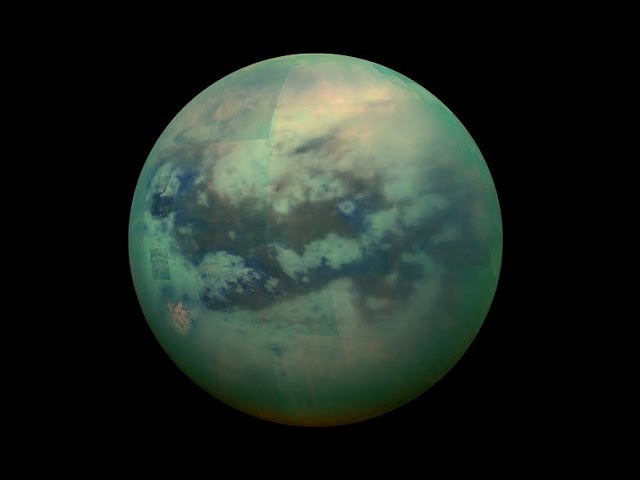
Will the Galileo Project Solve the Fermi paradox?
Keywords
Summary
140 words
Critical Evaluation
Value of the Information & Strength of the Argument
The video provides a valuable synthesis of current scientific thinking on the Fermi paradox and technosignatures, presenting arguments that are generally well-reasoned and grounded in established concepts. The narrator effectively challenges common assumptions about alien motivations and the feasibility of interstellar travel, offering a balanced perspective that acknowledges both the plausibility and the uncertainties. The argumentation is structured logically, moving from the rationale for the Galileo Project to the various ways an alien presence could manifest, and finally to the potential implications. While the video is speculative in parts, it maintains a clear distinction between scientific possibilities and unfounded claims, and it encourages critical thinking.
Scientific Rigor, Source Quality, Title Accuracy
The video demonstrates a reasonable level of scientific rigor by referencing specific papers (Wright 2017, Schmidt & Frank 2018) and the Galileo Project’s official website. The sources are credible and directly relevant to the topics discussed. The title accurately reflects the content, and the video does not overpromise or misrepresent the scientific status of the subject. The discussion is well-informed and avoids sensationalism, though it does engage in speculative scenarios that are clearly identified as such. Overall, the video maintains a good balance between scientific accuracy and engaging presentation.
209 words
Title / Content Match
The title accurately reflects the content, which discusses the Galileo Project's potential to address the Fermi paradox.
Quality & Reliability
7/10
The video presents a reasoned expert opinion grounded in established scientific concepts (Fermi paradox, von Neumann probes, technosignatures) and references specific papers and the Galileo Project. However, it includes speculative scenarios and lacks empirical data, and the scientific rigor is moderate.
Key Moments
Markers derived by PSI from the transcript: the creator did not define chapters.
- Introduction: The Fermi paradox and the question of alien origin for UAPs.
- The Galileo Project: A scientific effort to study UAPs and search for alien artifacts.
- The distance argument and the speed of light: Why they may not be insurmountable.
- Von Neumann probes and Benford probes: Plausible mechanisms for alien presence.
- The 'von Neumann 3D printer' concept: Alien technology that could produce UAPs.
- The Silurian hypothesis and the possibility of prior Earth civilizations.
- The terrifying implications of close contact with an advanced alien civilization.
Cited Sources
- The Galileo Project home page — The project's official website, referenced as the initiative to study UAPs and search for alien artifacts.
- Prior Indigenous Technological Species — Paper by Jason Wright (2017) discussing the possibility of prior technological species on Earth, referenced in the context of the Silurian hypothesis.
- The Silurian Hypothesis — Paper by Schmidt and Frank (2018) about the possibility of prior industrial civilizations on Earth, referenced in the discussion of the Silurian hypothesis.
Concurring Sources
- The Galileo Project home page — The project's official website, referenced as the initiative to study UAPs and search for alien artifacts.
- Prior Indigenous Technological Species — Paper by Jason Wright (2017) discussing the possibility of prior technological species on Earth, referenced in the context of the Silurian hypothesis.
- The Silurian Hypothesis — Paper by Schmidt and Frank (2018) about the possibility of prior industrial civilizations on Earth, referenced in the discussion of the Silurian hypothesis.
External References
Contribution & Novelties
The video offers a unique perspective by connecting the Galileo Project’s goals to the Fermi paradox, and it introduces the concept of a ‘von Neumann 3D printer’ as a plausible mechanism for UAPs. It also synthesizes recent scientific papers on technosignatures and prior civilizations, making these ideas accessible to a broader audience. The discussion of the potential risks of contact adds a thought-provoking dimension.
Pour aller plus loin :
- Fermi paradox — Background on the paradox that motivates the search.
- Von Neumann probe — Concept of self-replicating probes, central to the video’s argument.
- Technosignature — The broader scientific context for detecting signs of alien technology.
105 words
Radar Profile
The radar profile shows a balanced performance across all dimensions, with slightly higher scores in information quantity and technical level, indicating a content-rich and moderately technical video. The lower score in information quality suggests some speculative elements, but overall the video is well-rounded.
💬 Très positif. Sur les 30 commentaires analysés, la grande majorité exprime une forte appréciation, louant la qualité de la narration, l'ouverture d'esprit et la profondeur du sujet, avec quelques commentaires humoristiques et spéculatifs.