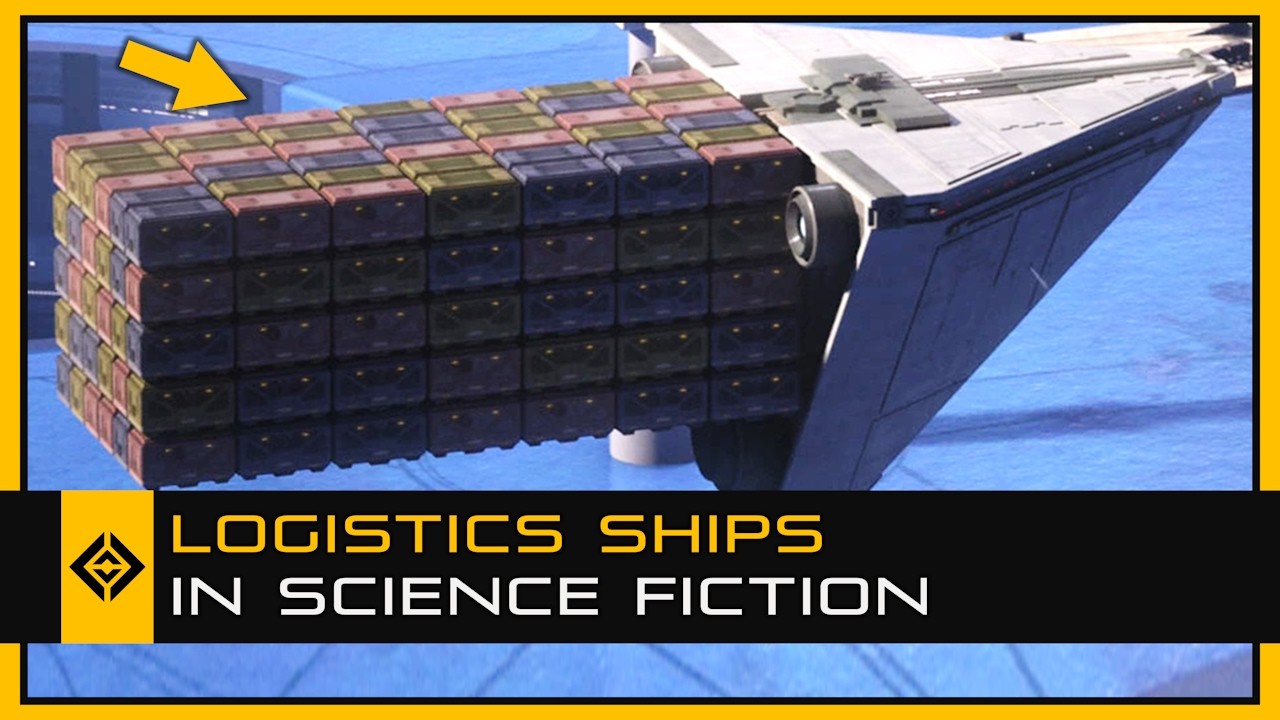
Logistics Ships, The Unsung Heroes of Sci-Fi
Keywords
Summary
224 words
Critical Evaluation
Value of the Information & Strength of the Argument
The video provides a valuable perspective on a niche but important aspect of science fiction worldbuilding. It argues convincingly that logistics ships add depth and realism to fictional universes, and it supports this with a wide range of examples from popular franchises. The argumentation is coherent and well-structured, moving from general observations to specific case studies, and it acknowledges counterpoints, such as the in-universe reasons why logistics might be downplayed. The host’s personal anecdotes from games like Starsector add authenticity and illustrate the practical importance of logistics in gameplay. However, the video is primarily an opinion piece rather than a rigorous analysis, and it does not delve deeply into any single example. The value lies in its synthesis of many examples and its ability to make the viewer appreciate a usually overlooked element of sci-fi.
Scientific Rigor, Source Quality, Title Accuracy
The video demonstrates a strong knowledge of science fiction across various media, including films, TV series, and video games. The examples cited are accurate and relevant, and the host correctly identifies the role of logistics in each. However, the video does not cite any external sources or academic references; it relies solely on the host’s expertise and the examples themselves. The title accurately reflects the content, and the video stays on topic throughout. The sponsor segment is clearly separated and does not interfere with the main content. Overall, the rigour is adequate for an opinion piece, but it lacks the depth of a formal analysis with citations.
257 words
Title / Content Match
The title accurately reflects the content, which focuses on the representation and importance of logistics ships in science fiction.
Quality & Reliability
7/10
The video is an opinion-driven analysis of logistics ships in science fiction, grounded in a broad knowledge of the genre. It does not present original research or data, but the arguments are coherent and well-illustrated with examples. The sponsor segment is clearly separated and does not affect the content's integrity.
Key Moments
Markers derived by PSI from the transcript: the creator did not define chapters.
- Introduction and sponsor segment for Prosperous Universe.
- Discussion of the lack of civilian ships in sci-fi and the importance of logistics.
- Examples from Star Trek, particularly Deep Space Nine.
- Star Wars freighters and the Trade Federation.
- Space truckers in games like Elite Dangerous and the X series.
- Mass Effect's depiction of cargo handling facilities.
- EVE Online's player-driven logistics and freighters.
- Starsector's fuel and supply mechanics, and the host's anecdote.
- Real-world underway replenishment and its rare appearances in fiction.
- Armed merchant ships and Q-ships in Starsector and Nebulous.
- Conclusion: logistics ships are more common than thought and vital for worldbuilding.
Cited Sources
- Prosperous Universe — Sponsor of the video, a space trading simulation game.
- The Sojourn - An Original Sci-Fi Audio Drama — Mentioned as a related project by the channel.
- Spacedock Merchandise — Merchandise store for the channel.
Concurring Sources
- Comment by user on Babylon 5 — A commenter notes that Babylon 5 also represents logistics well, with constant restocking and cargo ships.
- Comment by user on Heir to the Empire — A commenter mentions the plot point in the Star Wars expanded universe where the New Republic faces a shortage of freighters.
Dissenting Sources
- Comment by user on X4 Foundations — A commenter argues that X4 Foundations was underrepresented in the video, as it has distinct logistics classes like Auxiliary ships and Builders.
Contribution & Novelties
The video offers a fresh perspective on a rarely discussed topic in science fiction, highlighting the importance of logistics ships for worldbuilding and narrative depth. It synthesizes examples from a wide range of franchises, from Star Trek to EVE Online, and connects them to real-world military logistics, such as underway replenishment. The host’s personal experiences in games like Starsector provide a practical illustration of the concepts discussed.
Pour aller plus loin :
- Underway replenishment — Wikipedia article explaining the real-world procedure mentioned in the video.
- Q-ship — Wikipedia article on armed merchant ships with concealed weapons, a concept discussed in the video.
- EVE Online — Wikipedia article on the game, which the video highlights as a prime example of player-driven logistics.
121 words
Radar Profile
The radar profile shows a balanced video with moderate scores across all dimensions. The quantity and quality of information are solid, but the technical level is relatively low, reflecting the video's focus on general analysis rather than deep technical details. The reliability is good, as the content is well-reasoned and based on the host's expertise.
💬 Très positif. Sur les 30 commentaires analysés, les spectateurs expriment un fort enthousiasme pour le sujet, partagent des exemples supplémentaires de logistique dans la science-fiction, et saluent la pertinence de l'analyse.