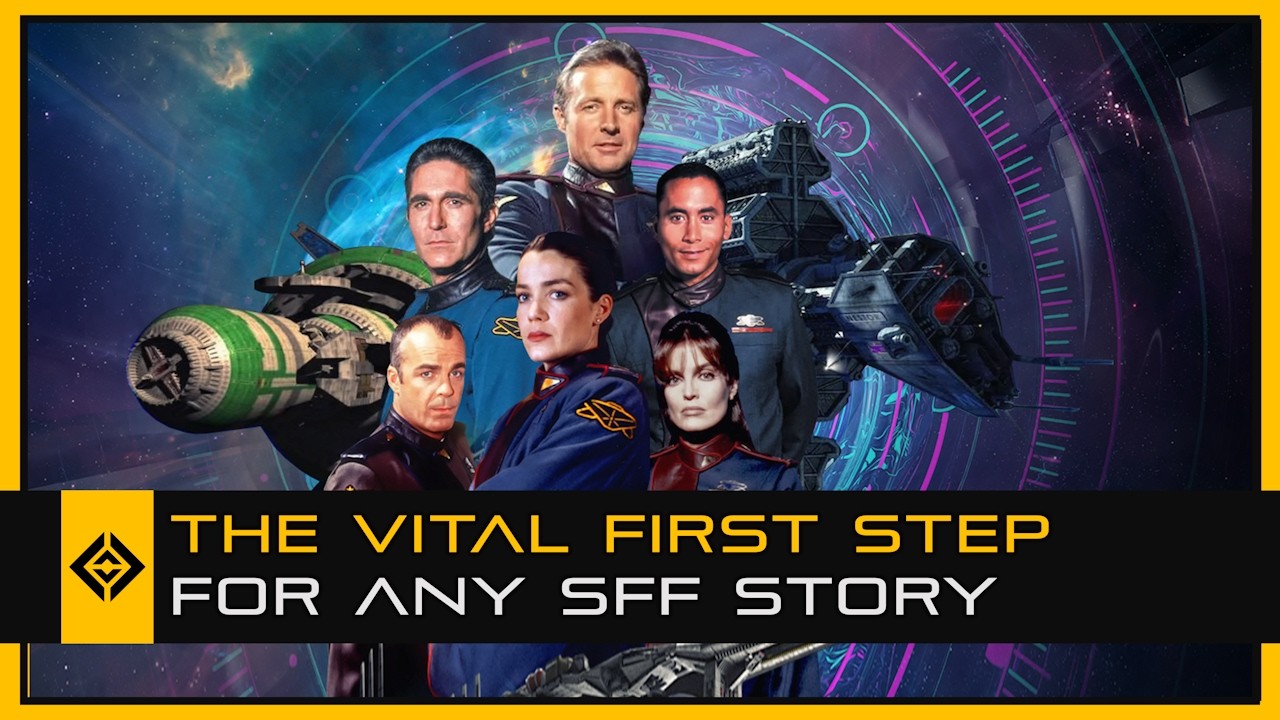
When Building a Sci-Fi Story, What Should You Do FIRST?
Keywords
Summary
201 words
Critical Evaluation
Value of the Information & Strength of the Argument
The video offers valuable insights for writers and creators, emphasizing the importance of thematic coherence over mere worldbuilding. Orrett’s argument is well-structured and persuasive, using a variety of examples to illustrate his points. He effectively demonstrates how a strong theme can serve as a creative guide, making the writing process easier and more focused. The discussion of how themes can be used to create compelling antagonists (e.g., the Borg as a dark mirror of the Federation) is particularly insightful. The argument is solid, though it relies heavily on anecdotal evidence and personal opinion rather than empirical research, which is typical for this genre of content.
Scientific Rigor, Source Quality, Title Accuracy
The video demonstrates a good level of rigor in its use of examples, which are well-known and accurately described. The author’s credentials as a professional writer add credibility to his opinions. However, no formal sources are cited, and the content is primarily based on personal analysis and experience. The title accurately reflects the content, which is a focused discussion on the first step in sci-fi storytelling. The video does not claim to be scientific, but rather offers expert opinion and practical advice, which is appropriate for its format.
208 words
Title / Content Match
The title accurately reflects the video's core question and content, which focuses on the first step in building a sci-fi story: establishing theme.
Quality & Reliability
8/10
The video presents a coherent and well-argued thesis on the primacy of theme in sci-fi storytelling, supported by concrete examples from well-known franchises (Stargate, Mass Effect, Star Trek, Star Wars, Battlestar Galactica). The author is a professional writer with credible credentials, and the argument is internally consistent. However, the content is largely opinion-based and lacks empirical or academic grounding, which slightly reduces its scientific reliability.
Key Moments
Markers derived by PSI from the transcript: the creator did not define chapters.
- Introduction: The common mistake of starting with factions and ships instead of theme.
- Analysis of Assassin's Creed Black Flag remaster as an example of missing theme.
- Stargate as an example of a light-hearted show with a consistent theme of stolen agency.
- Mass Effect and Star Trek's Borg as examples of themes shaping antagonists.
- Battlestar Galactica as a masterclass in purposeful worldbuilding.
- The Sojourn as an example of theme-first worldbuilding.
Cited Sources
- The Sojourn - An Original Sci-Fi Audio Drama — Mentioned as the creator's own work, used as an example of theme-first worldbuilding.
- Spacedock Merchandise — Linked in the description as a way to support the channel.
Concurring Sources
- Theme (narrative) - Wikipedia — Supports the general concept of theme as a central element in storytelling.
Contribution & Novelties
The video provides a clear and compelling argument for prioritizing theme in sci-fi storytelling, a perspective that is often overlooked in favor of worldbuilding. It offers practical advice and examples that can help writers focus their creative process. The discussion of how themes can be used to create antagonists and maintain consistency across a franchise is particularly useful.
Pour aller plus loin :
- Theme (narrative) — Provides a general overview of theme in storytelling.
- Worldbuilding — Discusses the practice of constructing fictional worlds, relevant to the video’s critique of worldbuilding-first approaches.
- The Sojourn — The author’s own work, cited as an example of theme-driven worldbuilding.
105 words
Radar Profile
The radar profile shows high scores in information quality and reliability, with slightly lower scores in quantity and technical depth. This indicates a well-argued and credible opinion piece, but one that is not highly technical or data-rich.
💬 Très positif. Sur les 30 commentaires analysés, la grande majorité exprime une forte appréciation, avec des remerciements et des éloges pour la clarté et la pertinence des conseils, certains mentionnant un impact direct sur leur propre écriture.