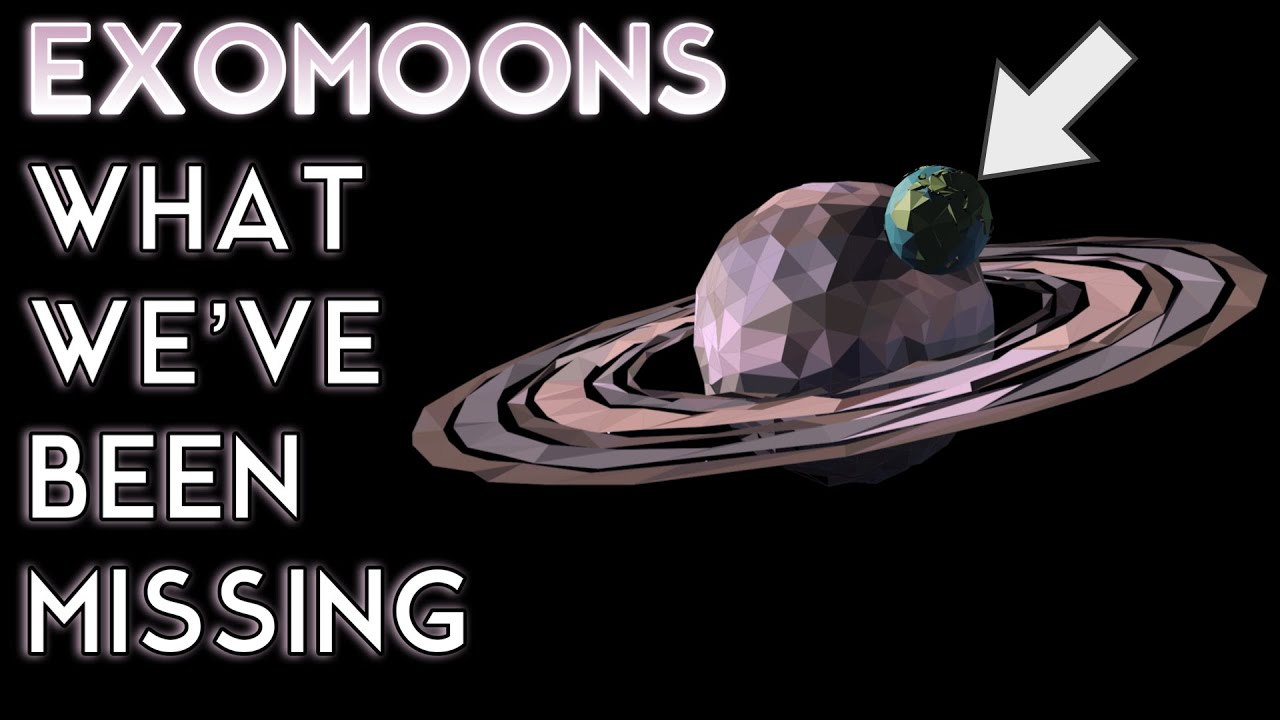
How Astronomers Can Use Origami to Find Exomoons
Keywords
Summary
148 words
Critical Evaluation
Value of the Information & Strength of the Argument
The video provides a high value by presenting a novel, peer-reviewed technique in an accessible manner. The argumentation is solid: it clearly identifies the problem (incoherent moon transits), explains the limitations of existing methods, and logically builds the solution step-by-step. The use of analogies (origami, paper chains) helps convey complex concepts. The presenter also acknowledges the challenges and limitations, enhancing credibility.
Scientific Rigor, Source Quality, Title Accuracy
The scientific rigor is high, as the technique is published in MNRAS (arXiv:2108.02903) and builds on prior work (arXiv:2012.00764). The video references these sources in the description. The title accurately reflects the content. The presentation is clear and well-structured, with appropriate caveats. The inclusion of a sponsorship segment is clearly marked and does not affect the scientific content.
134 words
Title / Content Match
The title accurately reflects the content, which introduces the 'Transit Origami' technique for detecting exomoons.
Quality & Reliability
9/10
The video presents original research by Prof. David Kipping, published in MNRAS (arXiv:2108.02903). The methodology is clearly explained, with references to the paper and prior work. The presentation is rigorous and transparent about limitations.
Chapters
Cited Sources
- Transit Origami: A Method to Coherently Fold Exomoon Transits in Time Series Photometry — The paper presenting the new technique, published in MNRAS.
- The exomoon corridor: Half of all exomoons exhibit TTV frequencies within a narrow window due to aliasing — Prior work by Kipping on TTV frequencies, relevant to the technique.
Concurring Sources
- Exomoon candidates from TTV — General context on exomoon detection methods.
External References
Contribution & Novelties
The video presents a novel method to coherently fold exomoon transit signals, solving a long-standing problem in exomoon detection. This is a significant contribution as it enables the use of folding techniques for moons, similar to what is done for planets. The technique also provides a way to vet TTV systems to distinguish between moons and other planets.
Pour aller plus loin :
- Exomoon — Wikipedia article on exomoons, providing context on the search for moons beyond our solar system.
- Transit-timing variation — Wikipedia article explaining TTVs, a key concept in the technique.
- Kepler space telescope — Wikipedia article on the Kepler mission, which provided the data used in the video.
111 words
Radar Profile
The radar profile shows high scores in information quantity, quality, and reliability, with a slightly lower technical level, indicating a well-balanced presentation that is both rigorous and accessible.
💬 Très positif. Sur les 30 commentaires analysés, les spectateurs expriment une admiration et un soutien enthousiastes pour le travail du professeur Kipping, saluant la clarté de l'explication et l'importance de la recherche.