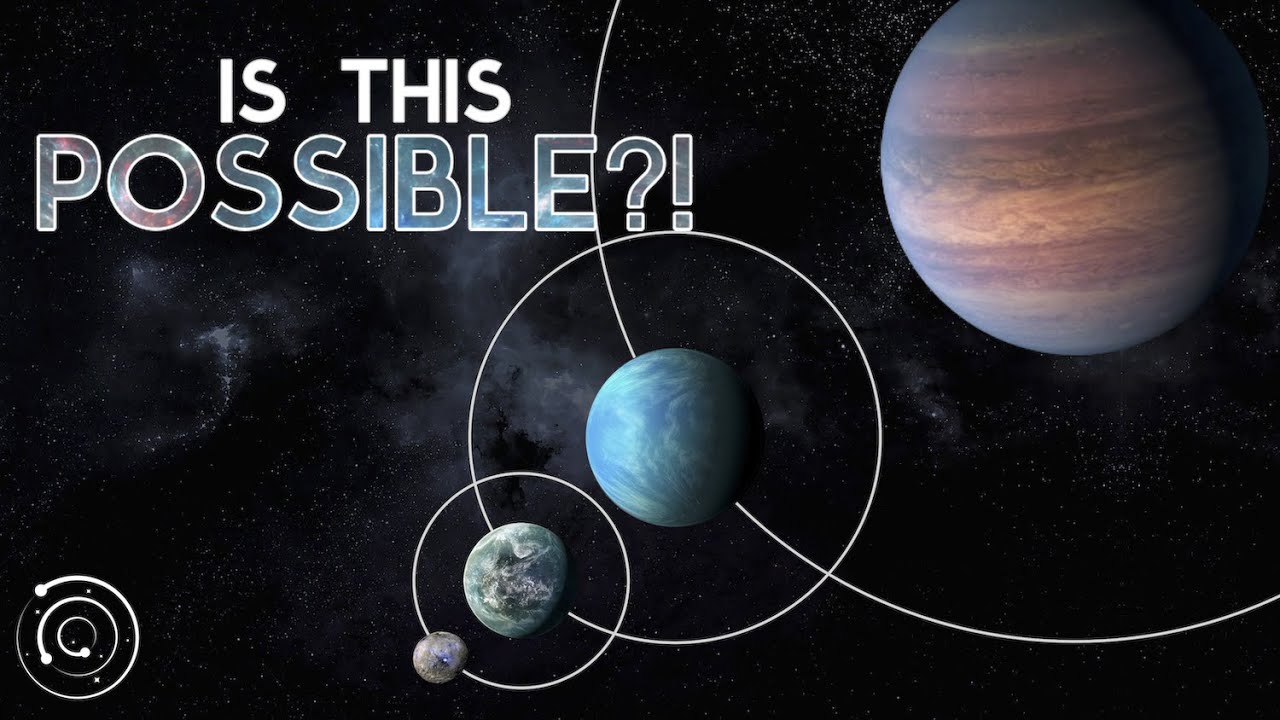
Can Moons Have Moons?
Keywords
Summary
180 words
Critical Evaluation
Value of the Information & Strength of the Argument
The video provides substantial value by clearly explaining a complex astrophysical concept in an accessible manner. It builds the argument logically, starting from basic orbital dynamics and progressing to specific calculations. The presenter uses analogies (e.g., skater) and visual aids to enhance understanding. The argumentation is solid, grounded in peer-reviewed research, and acknowledges the limitations of current models, such as the neglect of the host moon’s tidal migration. The discussion of Iapetus’s ridge as a potential observational clue adds depth and demonstrates the practical implications of the theory.
Scientific Rigor, Source Quality, Title Accuracy
The scientific rigor is high. The video is based on a specific peer-reviewed paper (Kollmeier & Raymond 2019) and references classic work (Barnes & O’Brien 2002). The presenter, a professor at Columbia University, is an expert in the field. The title accurately reflects the content. The video includes a clear disclaimer about the speculative nature of exomoon candidates. The description provides links to the primary source and a related blog post, enhancing transparency. Overall, the sources are credible and appropriately cited.
184 words
Title / Content Match
The title accurately reflects the content, which explores the theoretical possibility and stability of submoons.
Quality & Reliability
9/10
High-quality presentation by a professional astrophysicist, grounded in peer-reviewed research (Kollmeier & Raymond 2019) and classic tidal theory (Barnes & O'Brien 2002). The reasoning is transparent, with clear caveats about model limitations.
Chapters
Cited Sources
- Can Moons Have Moons? (Kollmeier & Raymond 2019) — The primary research paper discussed in the video, providing the analytical framework for submoon stability.
- Can moons have moons? (PlanetPlanet blog) — A blog post by co-author Sean Raymond explaining the same research in a more informal style.
- Creative Commons Attribution License — License for some of the music used in the video.
- Brad Hill - There Is but One Good — Music track used in the video.
- Cool Worlds Store — Merchandise store for the channel.
- Cool Worlds Lab Support — Donation page for the research program.
Concurring Sources
- Can Moons Have Moons? (Kollmeier & Raymond 2019) — The primary source, directly supporting the video's claims.
- Can moons have moons? (PlanetPlanet blog) — A secondary source by a co-author, providing additional context and explanation.
Contribution & Novelties
The video synthesizes recent research on the possibility of submoons, making it accessible to a broad audience. It highlights the specific conditions required for submoon stability and identifies Iapetus as a prime candidate in the Solar System. The discussion of the Iapetus ridge as a potential submoon remnant is particularly novel and thought-provoking.
Pour aller plus loin :
- Hill sphere — The concept is central to the video’s explanation of orbital stability.
- Tidal acceleration — The mechanism driving the evolution of moon orbits, key to the analysis.
- Exomoon — The context for the video’s motivation, with links to the Kepler candidates.
101 words
Radar Profile
The radar profile shows high scores in information quality, technical level, and reliability, with a slightly lower score in information quantity. This indicates a video that is dense with accurate, well-explained scientific content, though it may not cover every aspect of the topic in exhaustive detail.
💬 Très positif. Sur les 30 commentaires analysés, les spectateurs expriment un enthousiasme marqué pour le contenu scientifique, la clarté des explications et la qualité de la présentation, avec de nombreuses suggestions créatives pour nommer les submoons.