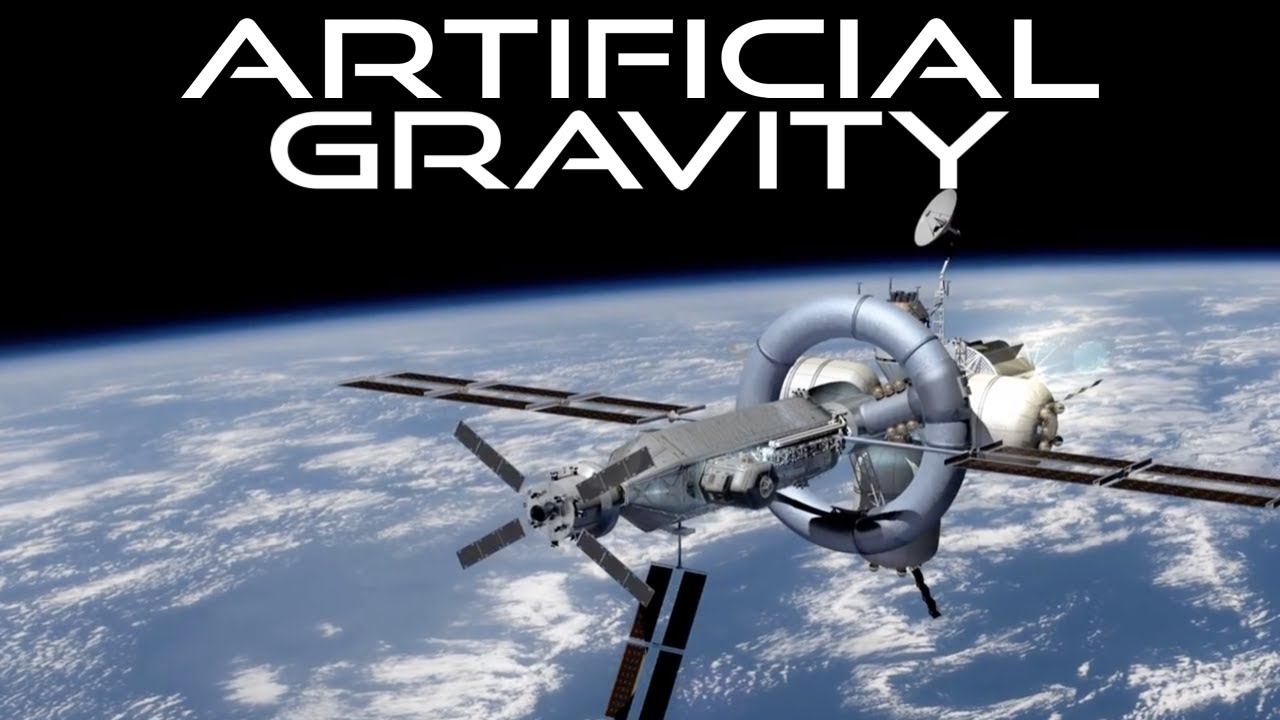
Artificial Gravity
Keywords
Summary
161 words
Critical Evaluation
Value of the Information & Strength of the Argument
The video provides a thorough and well-argued analysis of artificial gravity, systematically breaking down the physics and engineering considerations. It presents a balanced view, acknowledging both the potential and the challenges. The argumentation is solid, supported by references to specific studies and experiments, and it effectively communicates complex concepts without oversimplifying.
Scientific Rigor, Source Quality, Title Accuracy
The video demonstrates high scientific rigor, citing peer-reviewed articles and NASA technical reports. The sources are relevant and directly support the claims made. The title accurately reflects the content, which is a comprehensive and detailed exploration of artificial gravity. The presentation is well-structured and the information is reliable.
114 words
Title / Content Match
The title accurately reflects the content, which is a comprehensive overview of artificial gravity concepts and feasibility.
Quality & Reliability
9/10
The video is based on peer-reviewed studies and NASA technical reports, with clear explanations of physical principles. The presenter is an academic astronomer, and the content is well-structured and accurate.
Key Moments
Markers derived by PSI from the transcript: the creator did not define chapters.
- Introduction to the need for artificial gravity
- O'Neill Cylinder concept and its scale
- Stanford Torus design and comparison
- Down-sizing and the trade-off between radius and rotation rate
- Coriolis effect and its components
- Vertical Coriolis effect and its impact on movement
- Tipping Coriolis effect and its consequences
- Canal sickness and rotation speed limits
- Stability of rotating habitats
- Near-term experiments and future prospects
Cited Sources
- Nesti et al. (2014), "Human sensitivity to vertical motion" — Study on human sensitivity to vertical acceleration, used to define comfort limits.
- Harris et al. (2014), "How Much Gravity Is Needed to Establish the Perceptual Upright?" — Study on the minimum gravity needed for orientation, cited for lower gravity limits.
- Cohen et al. (2000), "Effects of Prolonged Centrifugation on Orthostasis" — NASA report on centrifugation effects, used for tolerance limits.
- Graybiel et al. (1960), "Observations on Human Subjects Living in a 'Slow Rotation Room' for Periods of Two Days" — Classic study on slow rotation room, used for Coriolis effects and adaptation.
- Theodore Hall (1993), "The Architecture of Artificial Gravity: Archetypes and Transformations of Terrestrial Design" — PhD thesis on artificial gravity architecture, used for design considerations.
- Theodore Hall (2002), "Architectural Considerations for a Minimum Mass, Minimum Energy, Artificial Gravity Environment" — Technical paper on minimum mass artificial gravity, used for design optimization.
- Holderman & Henderson (2011), Nautilus-X — Concept for a variable-gravity spacecraft, used as a near-term example.
- Kirk Sorensen (2005), "A Tether-Based Variable-Gravity Research Facility Concept" — Concept for a tether-based gravity research facility, used for alternative designs.
Concurring Sources
- NASA Artificial Gravity Research — NASA's research on artificial gravity for human spaceflight.
Dissenting Sources
- Some science fiction portrayals — Science fiction often depicts artificial gravity via unrealistic technologies like graviton generators, which are not physically plausible.
External References
Contribution & Novelties
The video provides a comprehensive and accessible synthesis of artificial gravity concepts, clearly explaining the physics and engineering trade-offs. It uniquely combines historical designs with modern research on Coriolis effects and human tolerance, offering a nuanced perspective on the feasibility of smaller, near-term systems.
Pour aller plus loin :
- Artificial gravity - Wikipedia — Overview of artificial gravity concepts and history.
- Coriolis force - Wikipedia — Detailed explanation of the Coriolis effect.
- O’Neill cylinder - Wikipedia — Details on the O’Neill cylinder habitat design.
- Stanford torus - Wikipedia — Details on the Stanford torus habitat design.
96 words
Radar Profile
The radar profile shows high scores across all dimensions, indicating a well-rounded, informative, and reliable video. The strongest aspects are the quantity and quality of information, with a slightly lower but still high technical level, reflecting the balance between depth and accessibility.
💬 Très positif. Sur les 30 commentaires analysés, les spectateurs saluent unanimement la clarté, la rigueur et la profondeur de la présentation, la qualifiant de meilleure jamais vue sur le sujet.