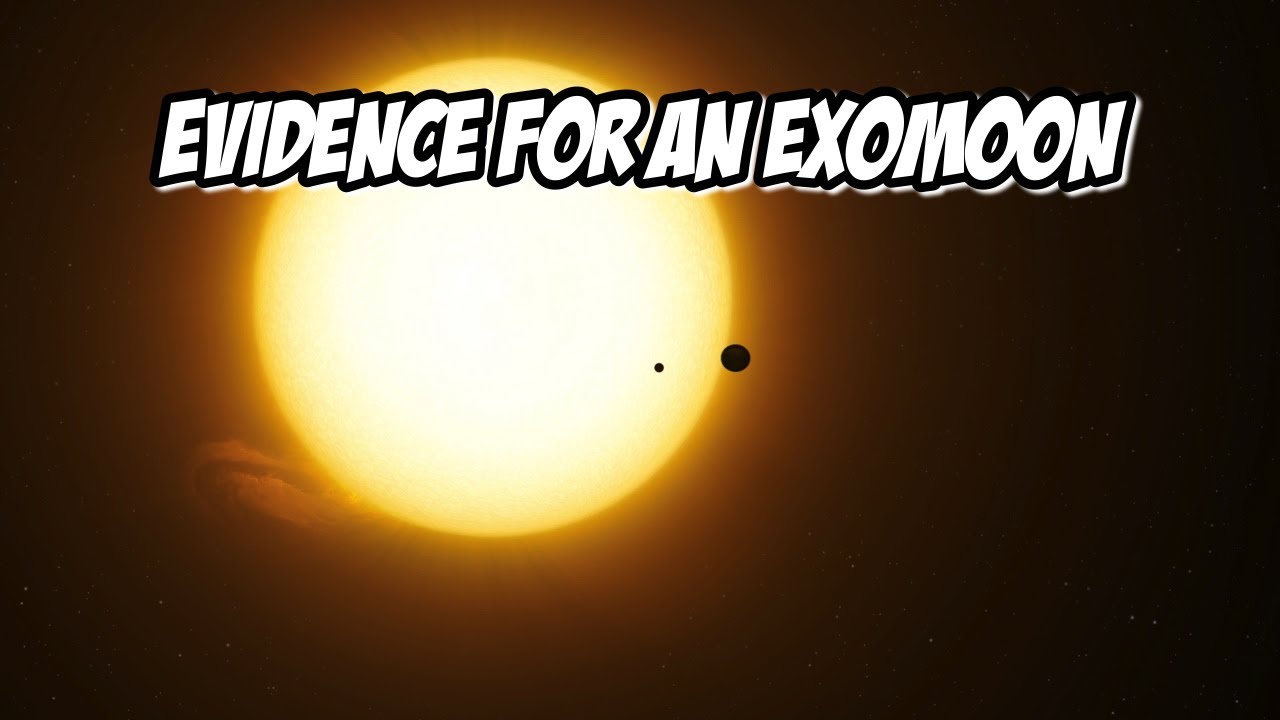
EXOMOON SPECIAL | Evidence for an Exomoon around Kepler-1625b
Keywords
Summary
183 words
Critical Evaluation
Value of the Information & Strength of the Argument
The video provides high-value information by presenting a detailed, first-hand account of a significant scientific investigation. The argumentation is solid: the presenter systematically walks through the observational setup, data reduction, model comparison, and alternative explanations. The use of Bayesian evidence to compare models is a rigorous approach. The presenter also demonstrates scientific skepticism by testing the moon hypothesis against stellar activity, instrumental effects, and other astrophysical scenarios. The candid discussion of the limitations (incomplete transit, unexpected moon size) strengthens the credibility of the argument.
Scientific Rigor, Source Quality, Title Accuracy
The scientific rigor is high, as the video is based on a peer-reviewed paper published in Science Advances. The presenter references the paper and related work by the HEK project. The description provides links to the relevant papers and other resources. The title accurately reflects the content, which is a special presentation of evidence for an exomoon. The video does not overstate the findings, clearly labeling the object as a candidate. The methodology is explained in sufficient detail to convey the complexity and the checks performed.
185 words
Title / Content Match
The title accurately reflects the content: a special presentation of evidence for an exomoon around Kepler-1625b.
Quality & Reliability
8/10
The video presents a peer-reviewed study (Teachey & Kipping 2018) with detailed methodology, systematic checks, and honest caveats. The presenter is a co-author and graduate student, providing expert insight. The content is scientifically rigorous, transparent about uncertainties, and aligns with the published paper.
Key Moments
Markers derived by PSI from the transcript: the creator did not define chapters.
- Introduction to the exomoon search and the candidate Kepler-1625b.
- Recap of the initial Kepler detection and the need for more data.
- Explanation of the Hubble observation and data reduction.
- Description of the four models compared and the evidence for the moon model.
- Discussion of alternative explanations and the robustness of the signal.
- Caveats: incomplete transit and unexpected moon size; need for further observations.
- Conclusion and call for future observations in May 2019.
Cited Sources
- Teachey, A. & Kipping, D., 2018, 'Evidence for an Exomoon Orbiting Kepler-1625b', Science Advances — The paper presenting the evidence for the exomoon candidate.
- Teachey, A., Kipping, D. & Schmitt, A., 2018, 'HEK. VI. On the Dearth of Galilean Analogs in Kepler, and the Exomoon Candidate Kepler-1625b I', Astronomical Journal, 155, 36 — The paper detailing the initial detection and analysis of the exomoon candidate.
- Nesvorný, D., Kipping, D., Buchhave, L., et al., 2012, 'Discovery and Characterization of a Non-Transiting Planet Through Transit Timing Variations', Science, 336, 1133 — Reference for transit timing variations as a method to detect non-transiting planets.
- Wakeford, H. R., Sing, D. K., Evans, T., et al., 2016, 'Marginalizing Instrument Systematics in HST WFC3 Transit Light Curves', ApJ, 819, 10 — Reference for handling instrument systematics in HST data.
- Kipping, D., Schmitt, A., Huang, X., et al., 2015, 'The Hunt for Exomoons with Kepler (HEK): V. A Survey of 41 Planetary Candidates for Exomoons', ApJ, 813, 14 — Previous HEK survey paper.
- Kipping, D., Huang, X., Nesvorny, D., et al., 2014, 'The Possible Moon of Kepler-90g is a False Positive', ApJL, 799, L14 — Example of a false positive in exomoon search.
- Kipping, D., Nesvorný, D., Buchhave, L. A., et al., 2014, 'The Hunt for Exomoons with Kepler (HEK): IV. A Search for Moons around M-Dwarfs', ApJ, 784, 28 — HEK survey paper.
- Kipping, D., Forgan, D., Hartman, J., et al., 2013, 'The Hunt for Exomoons with Kepler (HEK): III. The First Search for an Exomoon around a Habitable-Zone Planet', ApJ, 777, 134 — HEK survey paper.
- Kipping, D., Hartman, J., Buchhave, L., et al., 2013, 'The Hunt for Exomoons with Kepler (HEK): II. Analysis of Seven Viable Satellite-Hosting Planet Candidates', ApJ, 770, 101 — HEK survey paper.
- Kipping, D., Bakos, G. Á., Buchhave, L., et al., 2012, 'The Hunt for Exomoons with Kepler (HEK): I. Description of a New Observational Project', ApJ, 750, 115 — HEK project description.
- Kipping, D., 2011, 'LUNA: an algorithm for generating dynamic planet-moon transits', MNRAS, 416, 689 — Algorithm used for modeling planet-moon transits.
- Kipping, D., 2010, 'How to weigh a star using a moon', MNRAS, 409, L119 — Method for measuring stellar mass using moon transit timing.
- Kipping, D., Fossey, S. & Campanella, G., 2009, 'On the detectability of habitable exomoons with Kepler-class photometry', MNRAS, 400, 398 — Study on detectability of exomoons.
- Kipping, D., 2009, 'Transit timing effects due to an exomoon II', MNRAS, 396, 1797 — Theoretical work on transit timing effects.
- Kipping, D., 2009, 'Transit timing effects due to an exomoon', MNRAS, 392, 181 — Theoretical work on transit timing effects.
Concurring Sources
- Teachey, A. & Kipping, D., 2018, 'Evidence for an Exomoon Orbiting Kepler-1625b', Science Advances — The primary paper supporting the exomoon candidate.
- Teachey, A., Kipping, D. & Schmitt, A., 2018, 'HEK. VI. On the Dearth of Galilean Analogs in Kepler, and the Exomoon Candidate Kepler-1625b I', Astronomical Journal, 155, 36 — The paper detailing the initial detection and analysis.
Dissenting Sources
- Heller, R., et al., 2019, 'No evidence for a large exomoon in the light curve of Kepler-1625b', Astronomy & Astrophysics — A later study that found no evidence for the exomoon, suggesting the signal could be due to other effects.
External References
Contribution & Novelties
This video provides an accessible yet detailed explanation of the evidence for the first exomoon candidate, Kepler-1625b I. It highlights the rigorous methodology, including model comparison and systematic checks, and emphasizes the importance of skepticism in extraordinary claims. The video also discusses the unexpected size of the moon and the need for further observations.
Pour aller plus loin :
- Exomoon - Wikipedia — Overview of exomoons and detection methods.
- Transit-timing variation - Wikipedia — Explanation of TTVs and their use in detecting exoplanets and exomoons.
- Hubble Space Telescope - Wikipedia — Information on the telescope used for the observations.
- Kepler-1625b - Wikipedia — Details on the exoplanet and its exomoon candidate.
111 words
Radar Profile
The radar profile shows high scores in quality and reliability, reflecting the peer-reviewed basis and transparent methodology. The quantity of information is also high, providing a comprehensive overview. The technical level is moderate, making it accessible to a general audience while still conveying the complexity of the analysis.