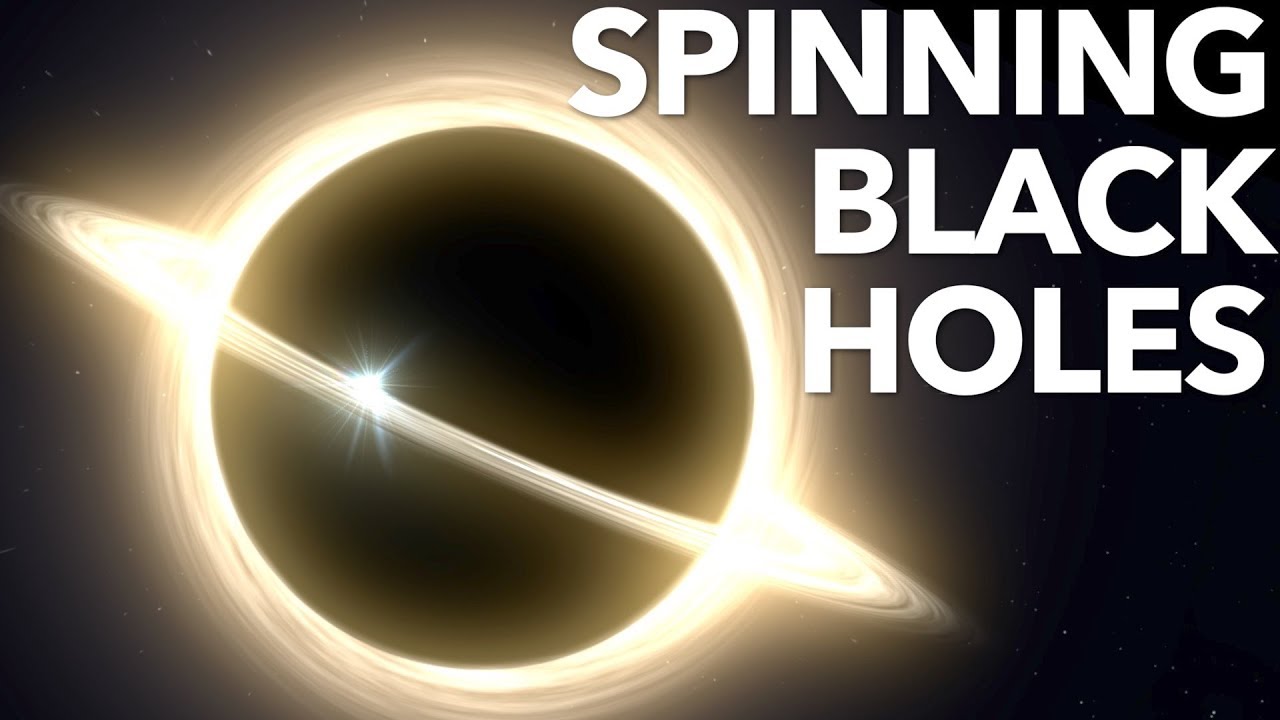
Spinning Black Holes
Keywords
Summary
164 words
Critical Evaluation
Value of the Information & Strength of the Argument
The video provides substantial value by explaining complex astrophysical concepts in an accessible manner, using a real astronomical event as a concrete example. The argumentation is solid, building logically from the observation to the interpretation and its broader implications. It clearly distinguishes between established facts and theoretical interpretations, such as the proposed white dwarf companion. The explanation of the three measurement methods is thorough and well-illustrated with animations, making the physics understandable.
Scientific Rigor, Source Quality, Title Accuracy
The scientific rigor is high. The video is based on a peer-reviewed study (Pasham et al.) and includes consultation with experts. The explanations of general relativity concepts are accurate, and the video correctly notes the theoretical uncertainty regarding maximum spin. The title is appropriate and directly reflects the content. The description provides a link to the study, enhancing transparency. The video does not overstate claims and clearly distinguishes between observational data and theoretical models.
161 words
Title / Content Match
The title accurately reflects the content, which focuses on black hole spin and its measurement.
Quality & Reliability
9/10
High-quality science communication with accurate explanations of general relativity concepts, peer-reviewed study reference, and expert consultation (Prof. Geraint Lewis, Dr. Dheeraj Pasham).
Key Moments
Markers derived by PSI from the transcript: the creator did not define chapters.
- Introduction to a tidal disruption event detected in 2014.
- Explanation of black hole properties: mass and spin.
- Introduction to the concept of ISCO and its relation to spin.
- First method to measure spin: fitting the thermal spectrum of the accretion disk.
- Second method: analyzing broadened iron emission lines.
- Third method: detecting quasi-periodic oscillations, applied to the 131-second pulse.
- Interpretation of the oscillation as an orbiting hotspot, likely a white dwarf.
- Implications for understanding black hole growth and galaxy evolution.
Cited Sources
- A loud quasi-periodic oscillation after a star is disrupted by a massive black hole — The peer-reviewed study that reported the 131-second X-ray oscillation and its interpretation.
- Epidemic Sound — Source of background music used in the video.
Concurring Sources
- Innermost stable circular orbit — The concept of ISCO is standard in general relativity and is accurately explained in the video.
- Tidal disruption event — The video's description of tidal disruption events aligns with established astrophysical understanding.
Dissenting Sources
- No discordant sources identified — The video's content is consistent with current scientific consensus, and no conflicting sources were found.
Contribution & Novelties
The video’s original contribution is its clear and engaging explanation of how a tidal disruption event can be used to measure the spin of a previously dormant supermassive black hole, a method that had not been widely publicized. It effectively bridges a specific research finding with fundamental concepts in general relativity, making the science accessible to a broad audience.
Pour aller plus loin :
- Innermost stable circular orbit — Wikipedia article explaining the ISCO concept in detail.
- Tidal disruption event — Wikipedia article on tidal disruption events, the phenomenon central to the video.
- Kerr metric — Wikipedia article on the Kerr metric, which describes the spacetime around a rotating black hole.
- Black hole spin — Wikipedia article on black hole spin, providing further context.
124 words
Radar Profile
The radar profile shows high scores across all dimensions, with a slight dip in technical level, reflecting the video's accessibility. The overall shape is well-balanced, indicating a high-quality educational resource.
💬 Très positif. Sur les 30 commentaires analysés, la grande majorité exprime une admiration pour la clarté des explications et la qualité des animations, avec quelques remarques humoristiques et des questions de fond, mais aucune critique négative substantielle.