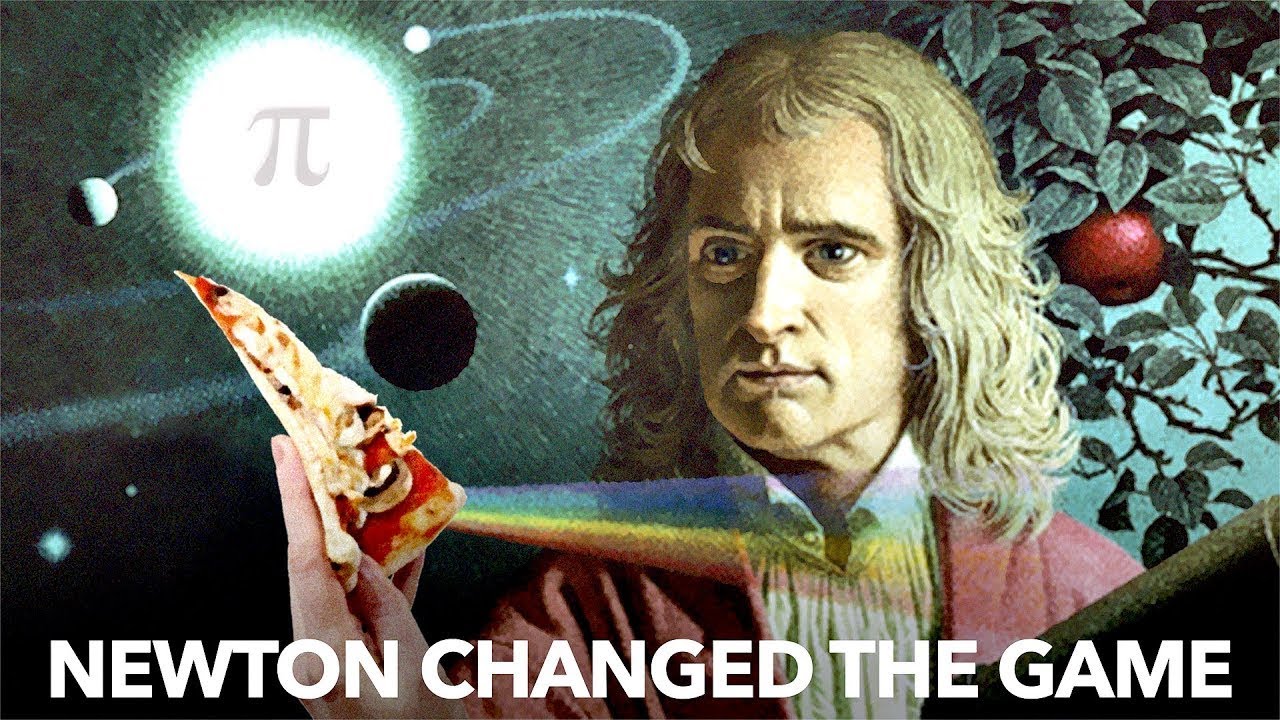
The Discovery That Transformed Pi
Keywords
Summary
147 words
Critical Evaluation
Value of the Information & Strength of the Argument
The video provides a clear and engaging narrative that connects historical methods to modern mathematical insights. It effectively demonstrates the inefficiency of the polygon approach and the elegance of Newton’s series, using visual aids and intuitive explanations. The argumentation is solid, building from basic concepts to more complex ideas, and is supported by expert commentary from mathematician Alex Kontorovich. The video also highlights the broader lesson about the value of exploring patterns beyond their known limits.
Scientific Rigor, Source Quality, Title Accuracy
The video cites several academic references, including ‘Pi-unleashed’ by Arndt and Haenel, ‘Journey through Genius’ by Dunham, and a chapter by Borwein on the history of pi. These sources are reputable and relevant. The title accurately reflects the content, focusing on the transformative discovery of a more efficient method to calculate pi. The video also includes a sponsored segment for Brilliant, which is clearly disclosed.
156 words
Title / Content Match
The title accurately reflects the content, which focuses on the discovery of a more efficient method to calculate pi.
Quality & Reliability
9/10
The video presents a historically accurate account of the computation of pi, from Archimedes' polygon method to Newton's series, with references to academic books and expert commentary from a mathematics professor. The mathematical derivations are correct and clearly explained.
Key Moments
Markers derived by PSI from the transcript: the creator did not define chapters.
- Introduction to the video's topic: the ridiculous way pi was calculated for 2000 years.
- Demonstration of pi using pizzas: circumference and area.
- Explanation of the ancient polygon method for estimating pi.
- Archimedes' improvement by bisecting polygons to get better bounds for pi.
- Historical progression of polygon method through various cultures and mathematicians.
- Introduction of Newton and his binomial theorem extension to negative and fractional exponents.
- Newton's insight to apply the binomial theorem to the equation of a circle.
- Newton uses calculus to integrate the series and derive a formula for pi.
- Newton's final tweak: integrating from 0 to 1/2 for faster convergence.
- Comparison of Newton's method with the old polygon method and conclusion.
Cited Sources
- Pi-unleashed — Reference for the history and computation of pi.
- Journey through Genius: The Great Theorems of Mathematics — Reference for Newton's work and mathematical history.
- The Life of π: From Archimedes to ENIAC and Beyond — Reference for the history of pi and its computation.
Concurring Sources
- Pi-unleashed — Supports the historical account of pi computation.
- Journey through Genius — Supports the narrative of Newton's mathematical achievements.
External References
Contribution & Novelties
The video presents a well-known historical narrative but does so with engaging visualizations and clear explanations, making the mathematical concepts accessible. It emphasizes the importance of pattern extension and the power of calculus in solving classical problems.
Pour aller plus loin :
- Newton’s method for pi — Note: This link is about Newton’s method for finding roots, not directly about pi, but it shows Newton’s numerical techniques.
- Binomial theorem — Note: Provides background on the theorem Newton extended.
- Calculus — Note: Newton’s invention of calculus was crucial to his pi computation.
91 words
Radar Profile
The radar profile shows high scores in information quality and reliability, reflecting the video's accurate and well-sourced content. The technical level is moderate, indicating that while the video is accessible, it still requires some mathematical background. The overall balance suggests a highly informative and trustworthy educational piece.
💬 Très positif. Sur les 30 commentaires analysés, les spectateurs expriment une admiration massive pour Newton et l'animation, avec des commentaires humoristiques sur la productivité en quarantaine, et certains soulignent l'importance de la méthode d'enseignement.