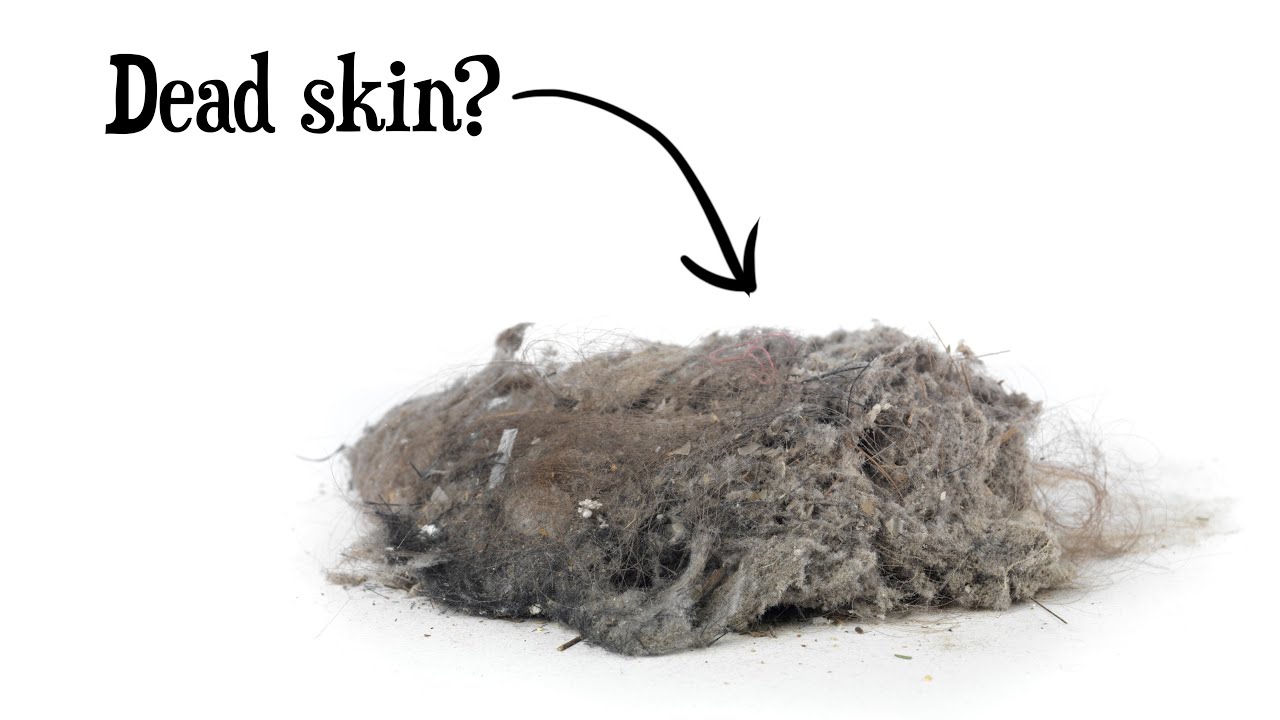
Is Dust Mostly Dead Skin?
Keywords
Summary
167 words
Critical Evaluation
Value of the Information & Strength of the Argument
The video provides substantial value by debunking a widespread myth with scientific evidence. It offers a clear, step-by-step research methodology, showing how to use search engines effectively and the importance of consulting primary sources. The argumentation is solid: it starts with a hypothesis, tests it against sources, and corrects misconceptions with quantitative data. The inclusion of expert email correspondence adds credibility. The video also highlights the complexity of defining ‘dust’ and the variability of its composition, avoiding oversimplification.
Scientific Rigor, Source Quality, Title Accuracy
The video demonstrates high scientific rigor by referencing peer-reviewed studies, a specialized book, and direct communication with an expert. The sources are credible and appropriately cited. The title accurately reflects the content, and the video’s exploration of the topic is thorough and balanced. The sponsor, Google, is integrated into the narrative about research methods, but the content remains objective. The video also acknowledges the limitations of the studies cited, such as the Dutch context and particle size dependence.
171 words
Title / Content Match
The title is a clear, engaging question that accurately reflects the video's content, which investigates the proportion of dead skin in household dust.
Quality & Reliability
9/10
The video demonstrates a rigorous research process, consulting peer-reviewed sources and an expert (J.M.E.H van Bronswijk), and corrects a common misconception with nuanced data. The claim is supported by specific studies and expert email correspondence, though some extrapolations (e.g., family of 2.6) are illustrative.
Key Moments
Markers derived by PSI from the transcript: the creator did not define chapters.
- Introduction to the question and the sponsor, Google.
- Definition of dust and particle size standards.
- Calculation of skin cell shedding rate and weight.
- Discussion of the 1981 book and the graph showing 50% skin in small particles.
- Debunking the mattress doubling myth using conservation of mass.
- Microbial cloud and forensic applications.
- Conclusion and reflection on dust as a record of human presence.
Cited Sources
- Google Search How Search Works — Sponsor link and resource for understanding search algorithms.
- Fictionalhead (YouTube channel) — Thumbnail creator.
Concurring Sources
- House Dust Biology (book) — Provides the graph and data on dust composition, supporting the video's claims.
- Email correspondence with J.M.E.H van Bronswijk — Expert confirmation of the video's claims.
Dissenting Sources
- Live Science article — Claims that the 70-80% figure is a misconception, which the video partially refutes by showing that for small particles, skin can be 50%.
- BBC Science Magazine — Claims dust is mostly from outside, but the video shows that indoor dust, especially in beds, has a high skin content.
Contribution & Novelties
The video provides a nuanced, evidence-based answer to a common question, correcting a widespread myth with specific data. It demonstrates a rigorous research methodology, including the use of academic sources and expert consultation. The video also introduces the concept of microbial clouds and their potential forensic use, adding a novel perspective.
Pour aller plus loin :
- House dust biology : for allergists, acarologists and mycologists — The book cited in the video, providing detailed data on dust composition.
- ISO 7708:1995 Air quality — Particle size fraction definitions for health-related sampling — Standard defining particle size fractions, relevant to the discussion of dust particle sizes.
- Human skin cells shedding rate — A study on skin cell shedding, supporting the video’s calculations.
120 words
Radar Profile
The radar profile shows high scores in information quantity, quality, and reliability, with a slightly lower technical level, indicating a well-researched and accessible science communication piece.
💬 Très positif. Sur les 30 commentaires analysés, la majorité exprime un amusement et une admiration pour le sponsor Google, tout en appréciant la qualité scientifique de la vidéo.