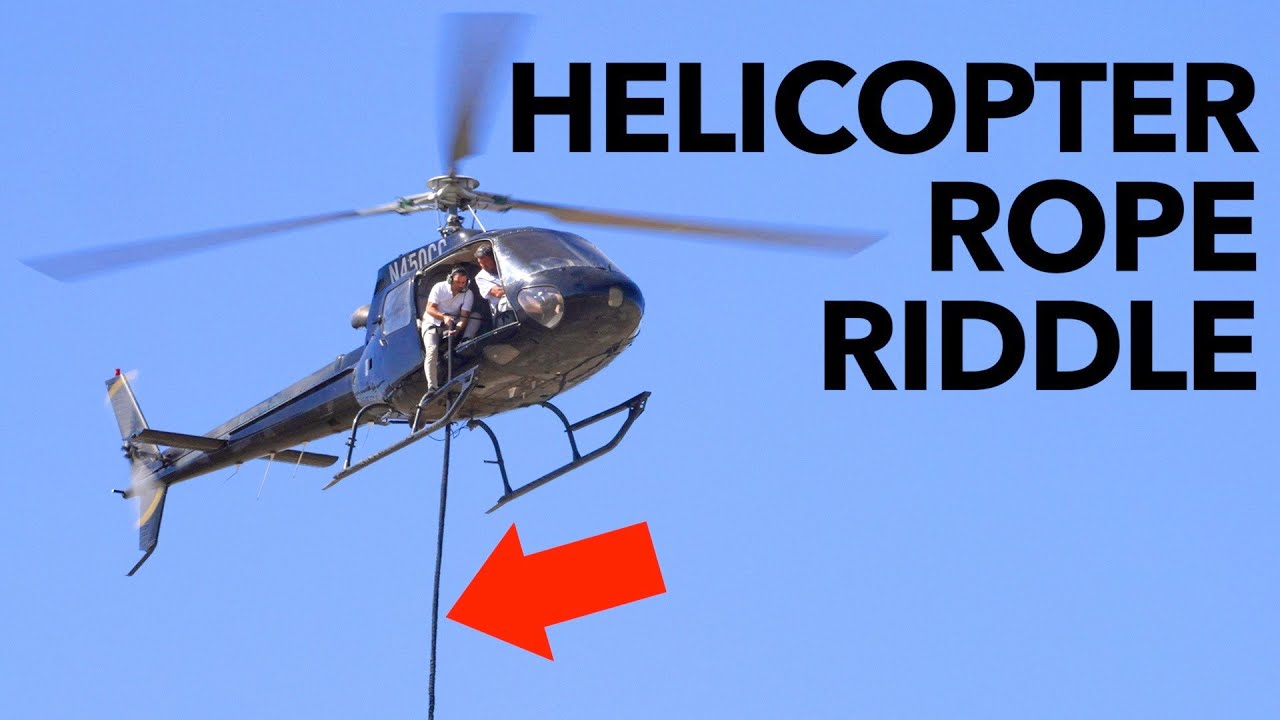
I Rented A Helicopter To Settle A Physics Debate
Keywords
Summary
189 words
Critical Evaluation
Value of the Information & Strength of the Argument
The video provides high-value information by directly testing a theoretical physics problem in a real-world setting. The argumentation is solid, as it clearly explains the physics principles (force balance, tension, air resistance) and supports them with experimental evidence. The video also addresses potential confounding factors, such as rotor wash, and shows that they do not affect the result. The step-by-step reasoning from the simple case to the more complex cases (with weight and parachute) is logical and easy to follow.
Scientific Rigor, Source Quality, Title Accuracy
The video demonstrates strong scientific rigor by conducting a controlled experiment with a professional pilot and using multiple trials. The sources cited include the original exam and solutions, which are provided in the description. The title accurately reflects the content, and the video does not overstate its claims. The inclusion of the question’s author adds credibility. The video also acknowledges the limitations of the experiment, such as the pilot’s caution and the potential for rotor wash effects, but provides evidence that these are not significant.
180 words
Title / Content Match
The title accurately reflects the content: the video documents renting a helicopter to experimentally resolve a debated physics question.
Quality & Reliability
9/10
The video presents a rigorous experimental test of a theoretical physics problem, with clear explanations of the underlying physics and multiple controlled trials. The methodology is sound, and the results are consistent with theoretical predictions.
Key Moments
Markers derived by PSI from the transcript: the creator did not define chapters.
- Introduction to the physics question and the plan to test it with a helicopter.
- Interview with pilot Craig about safety concerns and the setup.
- Deploying the rope and initial observations.
- Polling people on the street for their predictions.
- First flight: observing the rope shape without any weight.
- Explanation of why the rope hangs in a straight diagonal line.
- Adding a kettlebell to the end of the rope and observing the shape.
- Explanation of the inverted J shape with the weight.
- Adding a parachute to the end of the rope and observing the shape.
- Explanation of the J shape with the parachute and conclusion.
Cited Sources
- AAPT 2014 Exam — The original qualifying exam for the US Physics Team, containing the controversial question.
- AAPT 2014 Solutions — The official solutions to the exam, providing the expected answer.
Concurring Sources
- AAPT 2014 Solutions — The official solutions confirm that the correct answer for the original question is B.
External References
Contribution & Novelties
The video provides a unique experimental validation of a theoretical physics problem, offering a clear visual demonstration of the concepts of tension, air resistance, and force balance. It also clarifies the conditions under which different cable shapes occur, which is not commonly addressed in textbooks.
Pour aller plus loin :
- Catenary — The shape of a hanging cable under gravity, which is related but distinct from the case with air resistance.
- Drag equation — The physics of air resistance, which is central to the problem.
- Force balance — The principle used to analyze the forces on the cable.
98 words
Radar Profile
The radar profile shows high scores in information quantity, quality, and reliability, with a slightly lower technical level, indicating that the video is accessible yet scientifically sound. The overall high scores reflect the video's success in combining entertainment with rigorous science communication.
💬 Très positif. Sur les 30 commentaires analysés, le public exprime un enthousiasme marqué pour l'expérience et l'approche pédagogique, avec de nombreux commentaires humoristiques et admiratifs.