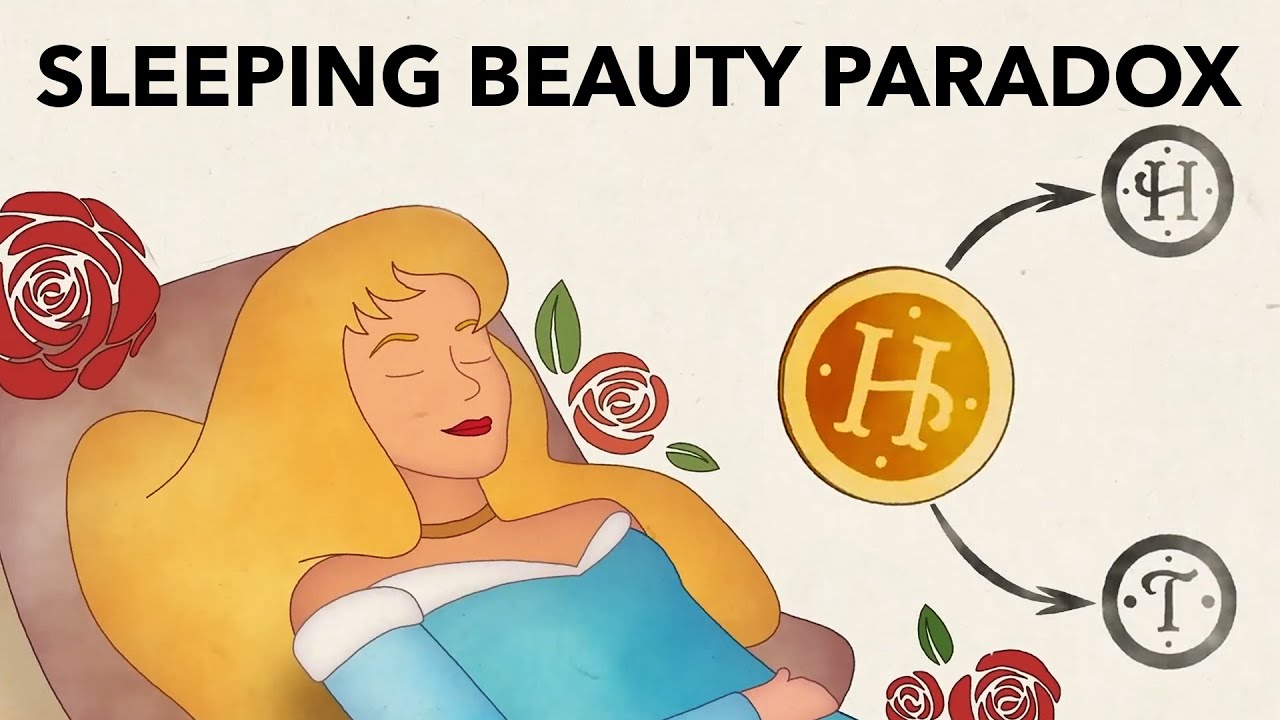
The Most Controversial Problem in Philosophy
Keywords
Summary
170 words
Critical Evaluation
Value of the Information & Strength of the Argument
The video provides a clear and engaging explanation of the Sleeping Beauty problem, effectively presenting both the halfer and thirder positions. The argumentation is solid, using thought experiments and variations to illustrate the core philosophical tension. The video does not take a definitive stance but rather highlights the ambiguity in the question, which is intellectually honest. The connection to the simulation hypothesis and the multiverse adds depth, though these are more speculative extensions.
Scientific Rigor, Source Quality, Title Accuracy
The video references several key academic papers on the Sleeping Beauty problem, including works by Elga, Lewis, and Titelbaum, which are listed in the description. The presentation is consistent with the academic literature, though simplified for a general audience. The title accurately reflects the content, as the problem is indeed controversial in philosophy. The video does not misrepresent the positions, and the sources cited are appropriate and credible.
156 words
Title / Content Match
The title accurately reflects the content, as the video focuses on a well-known philosophical controversy.
Quality & Reliability
8/10
The video presents a balanced overview of the Sleeping Beauty problem, clearly explaining both the halfer and thirder positions, and references key academic papers. The reasoning is sound, though the presentation is simplified for a general audience.
Key Moments
Markers derived by PSI from the transcript: the creator did not define chapters.
- Introduction to the Sleeping Beauty problem and the request to vote.
- Explanation of the halfer position: the coin is fair, no new information.
- Explanation of the thirder position: three possible awakening states.
- Discussion of the million-awakenings variation and the simulation hypothesis.
- The soccer game thought experiment illustrating the difference between being right about the coin vs. being right about awakenings.
- The multiverse thought experiment and conclusion.
Cited Sources
- Elga, A. (2000). Self-locating belief and the Sleeping Beauty problem — Original paper presenting the thirder position.
- Lewis, D. (2001). Sleeping beauty: reply to Elga — Response defending the halfer position.
- Winkler, P. (2017). The sleeping beauty controversy — Mathematical analysis of the problem.
- Titelbaum, M. G. (2013). Ten reasons to care about the Sleeping Beauty problem — Overview of the philosophical significance.
- Mutalik, P. (2016). Solution: 'Sleeping Beauty's Dilemma' — Quanta Magazine article discussing the problem.
- Rec.Puzzles - Some 'Sleeping Beauty' Postings — Early online discussions.
- The Sleeping Beauty Paradox, Statistics SE — Discussion on Stack Exchange.
- The Sleeping Beauty Problem, Reddit — Community discussion.
- Sleeping Beauty paradox explained, GameFAQs — Forum discussion.
- The Sleeping Beauty Problem, Physics Forums — Forum discussion.
Concurring Sources
- Elga, A. (2000). Self-locating belief and the Sleeping Beauty problem — Supports the thirder position.
- Titelbaum, M. G. (2013). Ten reasons to care about the Sleeping Beauty problem — Discusses the philosophical importance.
Dissenting Sources
- Lewis, D. (2001). Sleeping beauty: reply to Elga — Defends the halfer position, contradicting the thirder view.
External References
Contribution & Novelties
The video provides a clear and engaging synthesis of the Sleeping Beauty problem, making it accessible to a broad audience. It effectively contrasts the halfer and thirder positions and introduces thought experiments that highlight the underlying philosophical issues. The video’s original contribution lies in its presentation style and the way it connects the problem to broader questions about self-location and the nature of probability.
Pour aller plus loin :
- Self-locating belief — Stanford Encyclopedia of Philosophy entry on self-locating beliefs, directly relevant to the problem.
- Sleeping Beauty problem — Wikipedia article providing an overview and references.
- Bayesian probability — The framework used in the problem’s analysis.
106 words
Radar Profile
The radar profile shows high scores in information quantity and quality, with a moderate technical level. This indicates a well-balanced educational video that is accessible yet informative, with a strong foundation in the cited literature.
💬 Positif. Sur les 30 commentaires analysés, la majorité exprime un intérêt pour le problème et apprécie la clarté de l'explication, avec de nombreux débats sur la réponse correcte.