Make A Royalty-Free Copy of ANY Image You Find Online
Keywords
Summary
118 words
Critical Evaluation
Value of the Information & Strength of the Argument
The video provides a practical, hands-on evaluation of Synthesys X, showing real examples of its output across different categories. The argumentation is straightforward: the tool works well for certain types of images (landscapes, fruit bowls) but struggles with people and complex scenes. The creator is honest about limitations and raises ethical questions about ownership and copyright. However, the evaluation is subjective and lacks quantitative metrics or comparison with other tools. The promotional aspect for FutureTools.io is present but not overly intrusive.
Scientific Rigor, Source Quality, Title Accuracy
The video does not cite scientific sources; it references the tool’s website and the creator’s own platform. The title accurately describes the content. The demonstration is clear, but the scientific rigor is low, as it is based on anecdotal evidence and personal opinion. The creator acknowledges the ethical gray areas but does not delve into legal or technical details. The description provides links to FutureTools.io and the tool page, which are relevant for further exploration.
171 words
Title / Content Match
The title accurately reflects the content: a demonstration of how to use Synthesys X to recreate images found online, with the claim of royalty-free usage.
Quality & Reliability
6/10
The video is a practical demonstration of a specific AI tool (Synthesys X) with clear examples and limitations. The creator is transparent about the tool's performance and ethical concerns, but the content is largely anecdotal and promotional, lacking rigorous testing or scientific validation.
Key Moments
Markers derived by PSI from the transcript: the creator did not define chapters.
- Introduction to Synthesys X and its claims.
- How to install the Chrome extension.
- Testing on wolf images - mixed results.
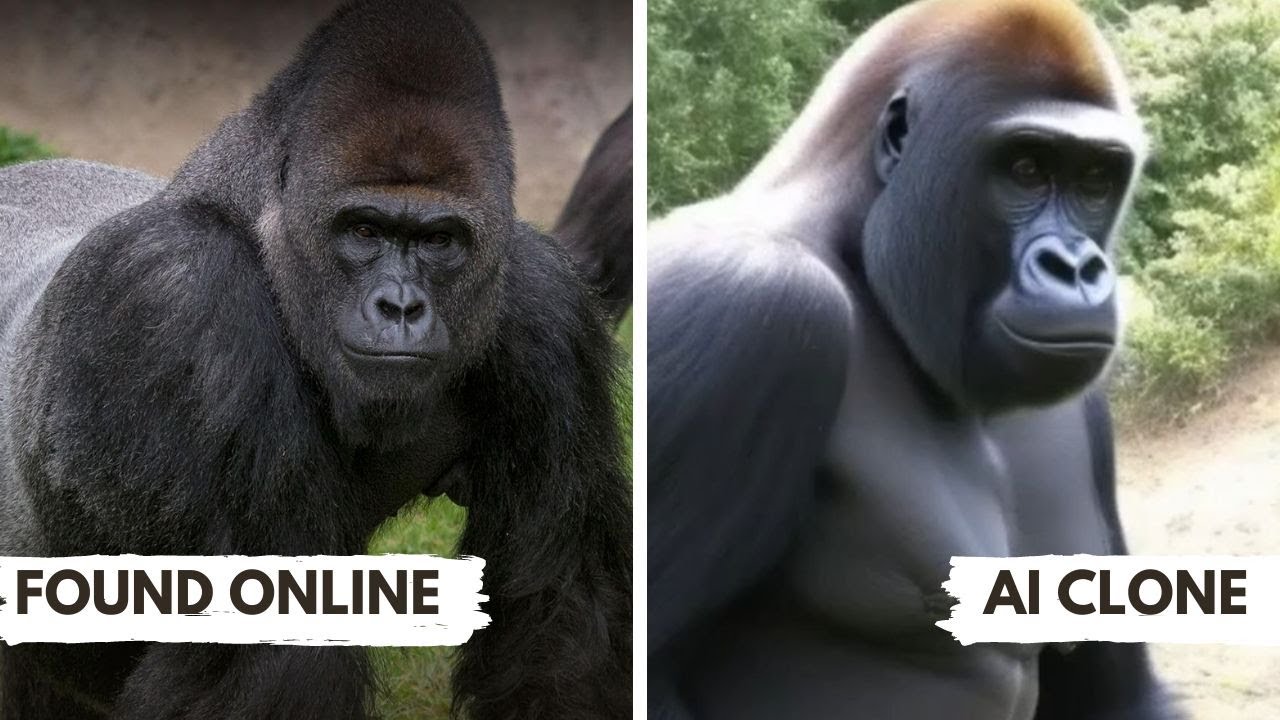
- Testing on gorilla images - decent results.
- Testing on landscapes - very good results.
- Testing on people - poor results.
- Testing on fruit bowls - good results.
- Testing on fictional characters - creepy results.
- Final thoughts and promotion of FutureTools.io.
Cited Sources
- FutureTools.io — Main platform where the tool is listed and curated.
- Synthesys X on FutureTools — Tool page with details and access.
- Matt Wolfe's blog — Personal blog of the creator.
- Mubert — Music generation tool used for outro music.
- FutureTools Desktop Backgrounds — Backgrounds offered by FutureTools.
Concurring Sources
- FutureTools.io — The tool is listed and described, supporting the claims made in the video.
Contribution & Novelties
The video offers a practical demonstration of a specific AI tool for image recreation, highlighting its capabilities and limitations in real-world scenarios. It contributes to the understanding of current AI image generation technology’s strengths and weaknesses. The ethical discussion, though brief, raises important questions about copyright and ownership in AI-generated content.
Pour aller plus loin :
- Stable Diffusion — A popular open-source AI image generation model that underlies many such tools.
- DALL-E — Another AI image generation model by OpenAI, often compared to Stable Diffusion.
- Copyright and AI-generated content — Overview of legal issues surrounding AI-generated works.
97 words
Radar Profile
The radar profile shows moderate scores across all dimensions, with a slightly higher score in information quality and quantity, reflecting the practical demonstrations. The technical level is low, indicating the video is accessible to a general audience. Overall, the profile suggests a balanced but not deeply rigorous content.
💬 No comments were provided for analysis.