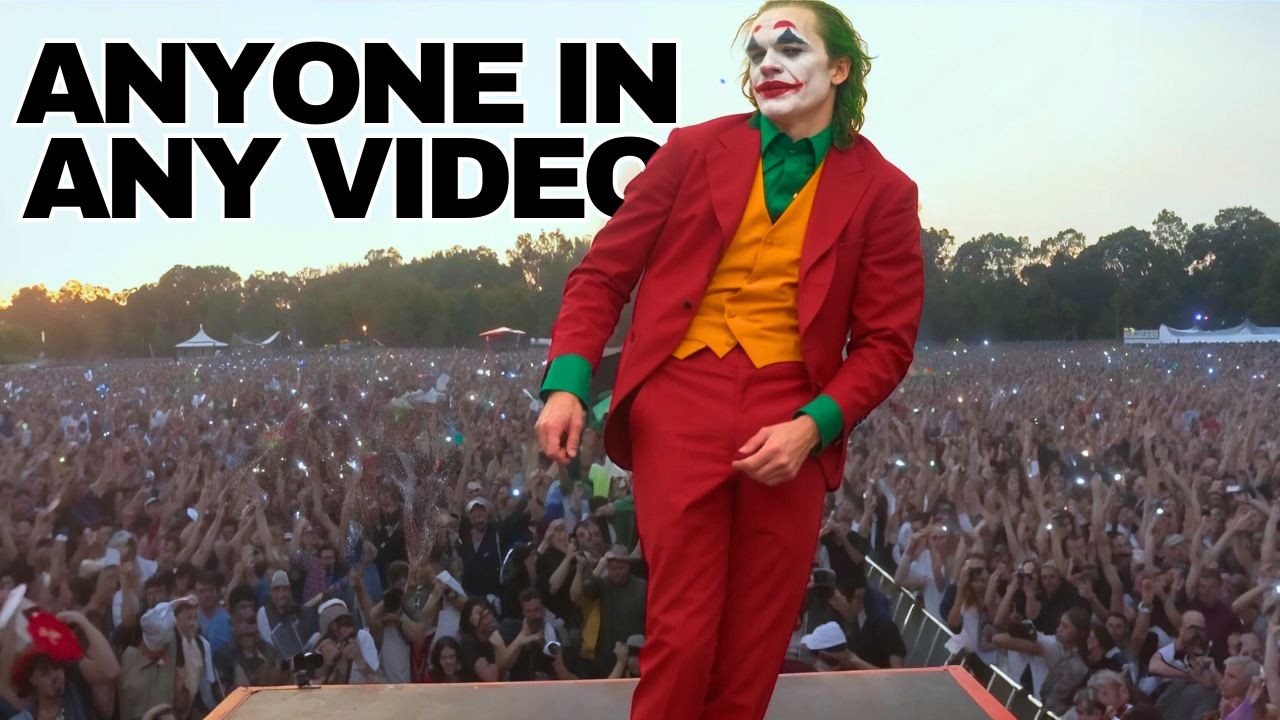
THIS AI Meme Went VIRAL (Here's How It Was Made)
Keywords
Summary
159 words
Critical Evaluation
Value of the Information & Strength of the Argument
The video provides a clear, step-by-step tutorial that is easy to follow, even for beginners. The creator demonstrates each step in real-time, showing both successes and limitations (e.g., ghosting artifacts). The argumentation is practical and based on direct experience, which adds credibility. However, the video is also promotional, encouraging viewers to use the tools and subscribe to the newsletter, which slightly detracts from its objective value.
Scientific Rigor, Source Quality, Title Accuracy
The creator cites the tools used (Viggle, Runway, Suno, DaVinci Resolve) and provides links in the description. The tutorial is accurate for the tools as of the publication date, but the rapidly evolving nature of AI tools means some information may become outdated. The title accurately reflects the content, and the video delivers on its promise to show how the viral meme was made. The creator also references specific examples from Twitter, but these are not formally cited in the video.
162 words
Title / Content Match
The title accurately reflects the content: the video explains how a viral AI meme was made, focusing on the tool Viggle.
Quality & Reliability
7/10
The video is a practical tutorial demonstrating a specific AI tool workflow. The creator shows real examples and provides step-by-step instructions, but the scientific rigor is limited as it's a demonstration rather than a systematic study. The information is accurate for the tools shown, but the video is promotional in nature.
Key Moments
Markers derived by PSI from the transcript: the creator did not define chapters.
- Introduction to the viral AI meme and the tools used.
- Demonstration of the simple Viggle template for single-person replacement.
- Explanation of the more complex two-person workflow, including cropping and rendering clips.
- Using Viggle's mix command to replace each person with a chosen image.
- Removing the original people from the background using Runway's inpainting.
- Compositing the final video in DaVinci Resolve with green screen and Delta Keyer.
- Adding a custom song with Suno and final export.
Cited Sources
- Viggle — Main tool used for AI video generation and replacement.
- Viggle Templates — Library of pre-built templates for popular scenes.
- Runway — Used for inpainting to remove original people from the background.
- Suno — Used to generate the custom song for the video.
- DaVinci Resolve — Video editing software used for compositing and final assembly.
- FutureTools — Creator's website for discovering AI tools.
- FutureTools Newsletter — Newsletter for AI news and tools.
- FutureTools Discord — Community Discord for AI enthusiasts.
- Sponsorship/Media Inquiries — Contact form for sponsorship and media inquiries.
Concurring Sources
Contribution & Novelties
The video provides a practical, up-to-date tutorial on a trending AI tool (Viggle) and demonstrates a complete workflow for creating viral-style AI memes. It offers a clear, step-by-step guide that is accessible to a general audience, filling a gap for those who want to replicate the effect without deep technical knowledge. The combination of tools (Viggle, Runway, DaVinci Resolve) is a novel approach for this specific use case.
Pour aller plus loin :
- Viggle AI — The main tool demonstrated, offering free AI video generation.
- Runway ML — Used for inpainting and video editing, with advanced AI features.
- DaVinci Resolve — Professional video editing software with a free version.
- Suno AI — AI music generation tool used to create the custom song.
- Generative Adversarial Networks (GANs) — The underlying technology for many AI image and video generation tools.
- Diffusion Models — A class of generative models used in AI video and image synthesis.
153 words
Radar Profile
The radar profile shows high scores in information quantity and technical level, reflecting the detailed tutorial nature. The quality and reliability scores are moderate, indicating that while the information is useful, it is not deeply scientific or rigorously sourced. The overall balance suggests a practical, hands-on guide rather than an academic analysis.
💬 Très positif. Sur les 30 commentaires analysés, la majorité exprime de l'enthousiasme et de la gratitude pour le tutoriel, avec des éloges sur la clarté et l'accessibilité de la démonstration.