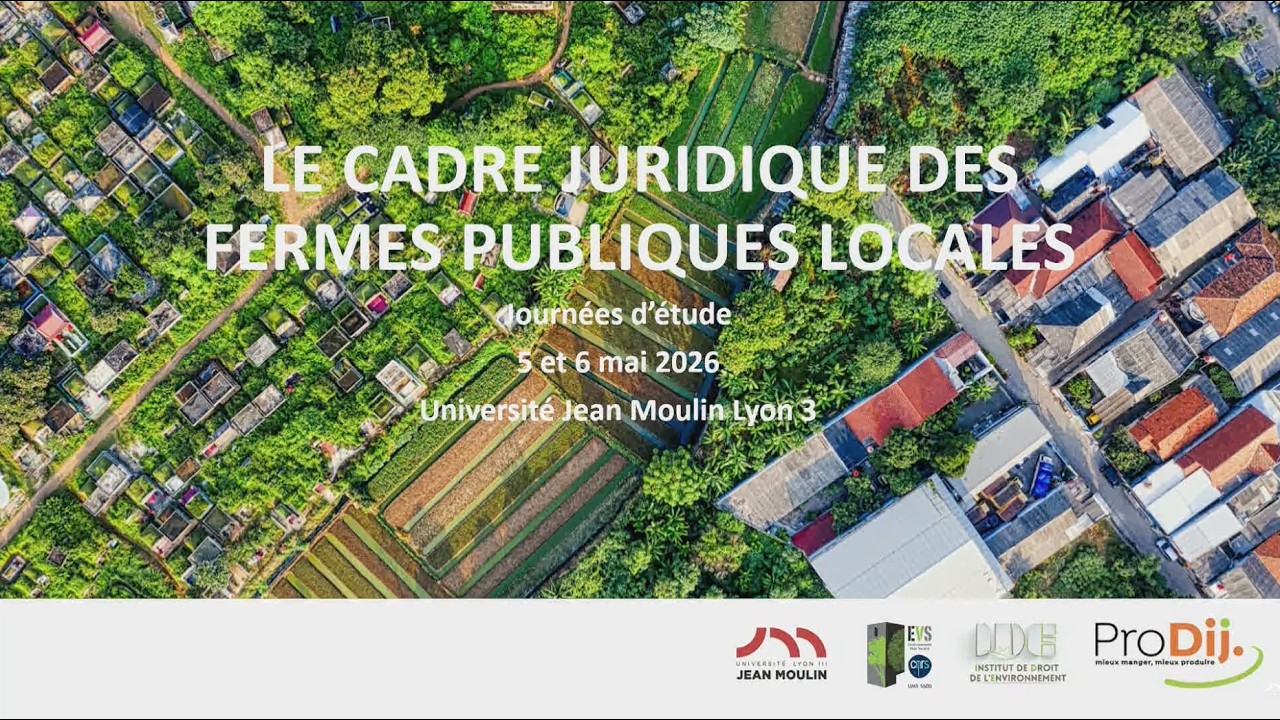
01 - Accueil des participants et présentation des journées d’étude
Keywords
Summary
248 words
Critical Evaluation
Value of the Information & Strength of the Argument
The video provides valuable insights into the emerging concept of ‘public farms’ from a legal and practical perspective. The speakers, both experts in environmental law, offer a thoughtful introduction to the subject, highlighting its historical roots and contemporary relevance. They present a clear working definition and outline the key legal questions that will be addressed during the conference. The argumentation is solid, based on their research and observations from the field, such as the national network of public farms. However, the video is primarily an introduction and does not delve deeply into the substantive analysis, which is expected in the subsequent sessions.
Scientific Rigor, Source Quality, Title Accuracy
The scientific rigor is evident in the speakers’ academic backgrounds and their references to ongoing research projects, such as PRODIGE and the national network of public farms. However, the video does not cite specific sources or publications, and the claims are based on general knowledge and practical experience. The title accurately reflects the content, as it is indeed the opening session of the study days. The video is well-structured and provides a solid foundation for the conference, but it lacks detailed citations and empirical evidence, which limits its standalone scientific value.
208 words
Title / Content Match
The title accurately describes the content: it is the opening session of a study days event, including welcome and presentation of the event.
Quality & Reliability
7/10
The video is an academic conference opening, featuring two speakers (Philippe Billet and Tom Drevard) who provide context and preliminary definitions. The content is based on ongoing research and practical observations, but no specific sources are cited in the video itself. The speakers are recognized academics, lending credibility, but the video is primarily an introduction and lacks detailed evidence.
Key Moments
Markers derived by PSI from the transcript: the creator did not define chapters.
- Tom Drevard welcomes participants and introduces the conference.
- Philippe Billet begins his opening speech, discussing the historical context of public farms.
- Philippe Billet mentions the national network of public farms and its growth.
- Philippe Billet raises legal questions about the definition and nature of public farms.
- Tom Drevard takes over and thanks the organizers and partners.
- Tom Drevard explains the origins of the conference, linked to the PRODIGE project.
- Tom Drevard proposes a working definition of 'public farm' and discusses the term 'local'.
- Tom Drevard addresses questions about the distinction between public farms and urban agriculture.
- Tom Drevard concludes with an overview of the conference program.
Cited Sources
- Répertoire national des fermes maraîchères municipales, intercommunales et départementales — Mentioned by Tom Drevard as a resource produced by the national network of public farms, illustrating the diversity of projects.
Concurring Sources
- Réseau national des fermes publiques — Mentioned as a network of over a hundred public farms, supporting the growing interest in the subject.
Contribution & Novelties
The video contributes to the emerging field of public farms by providing a preliminary legal framework and highlighting the need for further research. It introduces the concept of ‘public farm’ as a distinct legal object, raising questions about its definition, legal regime, and relationship with urban agriculture. The speakers’ practical experience and involvement in the PRODIGE project add a valuable empirical dimension.
Pour aller plus loin :
- Droit rural — Provides an overview of French agricultural law, relevant to the legal questions raised.
- Agriculture urbaine — Explores the concept of urban agriculture, which is closely related to the topic.
- Souveraineté alimentaire — Discusses the concept of food sovereignty, a key motivation for public farms.
114 words
Radar Profile
The radar profile shows moderate scores across all dimensions, with slightly higher scores in quality and reliability, reflecting the academic nature of the content. The video is informative but not highly technical, and the quantity of information is limited due to its introductory nature.