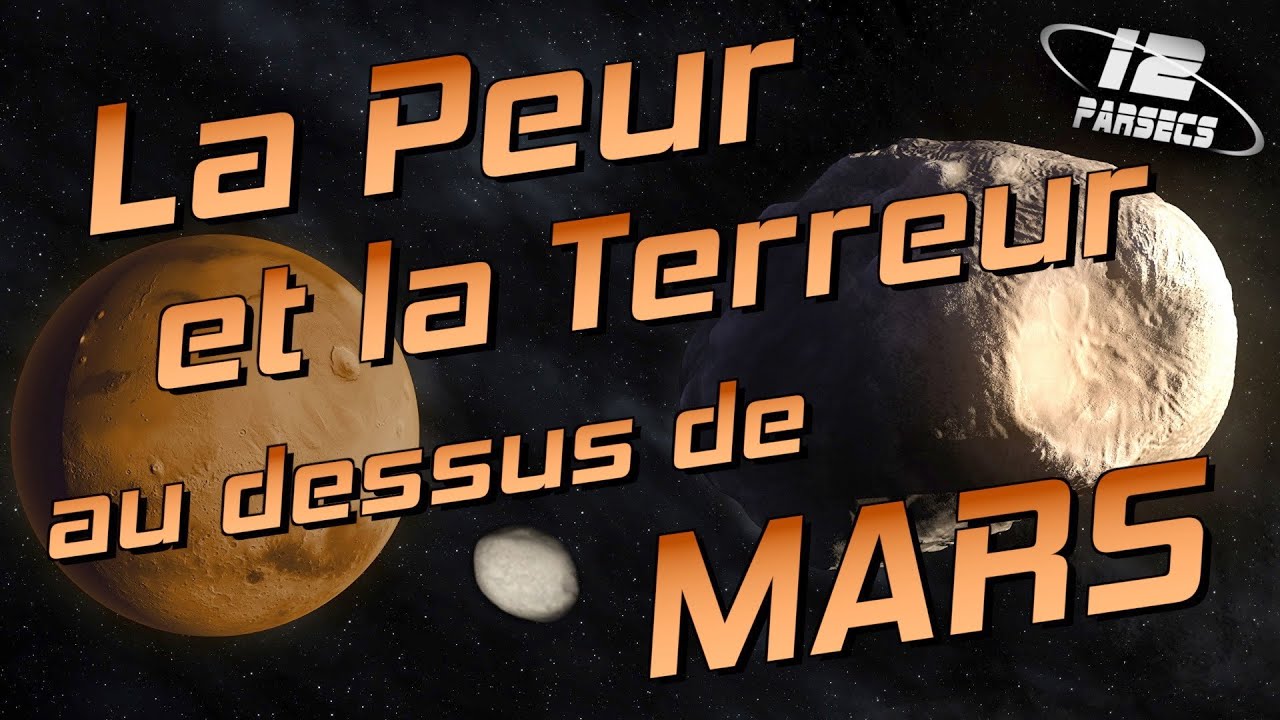
La Peur et la Terreur au dessus de Mars
Keywords
Summary
156 words
Critical Evaluation
Value of the Information & Strength of the Argument
The video provides a substantial amount of accurate scientific information about Phobos and Deimos, including their dimensions, orbital dynamics, and surface features. The host effectively explains complex concepts like orbital decay and tidal forces in an accessible manner. The argumentation is solid, presenting multiple theories for the moons’ origin and discussing the evidence for each. The use of comparisons (e.g., size relative to Luxembourg) helps convey scale. The host also acknowledges uncertainties and presents the scientific consensus while noting alternative hypotheses. The inclusion of mission details and future plans adds depth. However, the informal tone and frequent digressions may distract from the scientific content, and some claims lack explicit citations within the video itself.
Scientific Rigor, Source Quality, Title Accuracy
The video demonstrates a good level of scientific rigor, with the host referencing credible sources such as NASA, Futura-Sciences, and National Geographic in the description. The erratum about the Moon’s diameter shows a commitment to accuracy. The title accurately reflects the content, focusing on the mythological and physical aspects of the moons. The video is well-structured, moving from discovery to characteristics to future prospects. While the tone is humorous, the underlying information is reliable. The description includes links to relevant articles and mission documents, enhancing the video’s credibility. The adéquation between title and content is strong, as the video indeed discusses the ‘fear and terror’ associated with Mars’ moons, both mythologically and in terms of their potential impact on Mars.
249 words
Title / Content Match
The title accurately reflects the content, which focuses on the two moons of Mars, Phobos and Deimos, and their mythological association with fear and terror.
Quality & Reliability
7/10
The video provides accurate astronomical data (sizes, distances, orbital periods) and references credible sources (NASA, Futura-Sciences, National Geographic). The presenter acknowledges an erratum regarding the Moon's diameter, showing transparency. However, the informal tone and lack of in-depth citations for some claims slightly reduce the overall reliability.
Key Moments
Markers derived by PSI from the transcript: the creator did not define chapters.
- Introduction and mythological origin of Phobos and Deimos
- Discovery of the moons by Asaph Hall in 1877
- Physical characteristics: size, shape, and surface
- Orbital dynamics: Phobos' rapid orbit and Deimos' slower orbit
- Future of Phobos: potential collision with Mars or ring formation
- Surface conditions and low gravity on the moons
- Theories of formation: asteroid capture vs. giant impact
- Upcoming missions and conclusion
Cited Sources
- PADME Mission Concept — Referenced as a proposed NASA mission to study Phobos and Deimos.
- Phobos and Deimos: The Mysterious Moons of Mars — Article providing general information on the moons.
- Phobos and Deimos would indeed be born from an impact — Article discussing the giant impact theory.
- Mars might already be surrounded by rings — Article about the possibility of Mars having rings in the future.
- Mars explorers could get electrocuted on the moons — Article about electrostatic hazards on the moons.
- Aladdin Mission — Reference to a proposed sample-return mission.
- Theory on the formation of Phobos and Deimos — Video referenced for the formation theory.
- Ricky Berwick video — Humorous video referenced for entertainment.
Concurring Sources
- Phobos and Deimos: The Mysterious Moons of Mars — Provides general information consistent with the video's content.
- Phobos and Deimos would indeed be born from an impact — Supports the giant impact theory mentioned in the video.
- Mars might already be surrounded by rings — Discusses the possibility of Mars having rings, aligning with the video's discussion of Phobos' fate.
Dissenting Sources
- Mars explorers could get electrocuted on the moons — The video does not mention the electrostatic hazards on the moons, which is a relevant aspect for future exploration.
Contribution & Novelties
The video offers an engaging and accessible overview of Phobos and Deimos, synthesizing current scientific knowledge with a humorous presentation style. It highlights the dynamic nature of these moons, particularly Phobos’ impending collision or disintegration, and the potential for future exploration. The inclusion of mission concepts like PADME and Aladdin provides a forward-looking perspective. The video’s originality lies in its ability to make a niche topic entertaining while maintaining scientific accuracy.
Pour aller plus loin :
- Phobos (moon) — Detailed encyclopedia entry on Phobos, including its physical characteristics and exploration history.
- Deimos (moon) — Comprehensive article on Deimos, covering its discovery, orbit, and surface.
- Mars Express — ESA mission that has studied Phobos and Deimos, providing valuable data.
- PADME mission concept — Original NASA document describing the PADME mission concept.
130 words
Radar Profile
The radar profile shows high scores in quantity of information and technical level, indicating a content-rich video with moderate depth. The quality and reliability scores are slightly lower, reflecting the informal presentation style and occasional lack of explicit citations. Overall, the video is informative and engaging, with a good balance between entertainment and education.
💬 Très positif. Sur les 30 commentaires analysés, la grande majorité exprime un enthousiasme marqué pour le style humoristique et la capacité du présentateur à rendre l'astronomie accessible, avec quelques critiques isolées sur le ton.