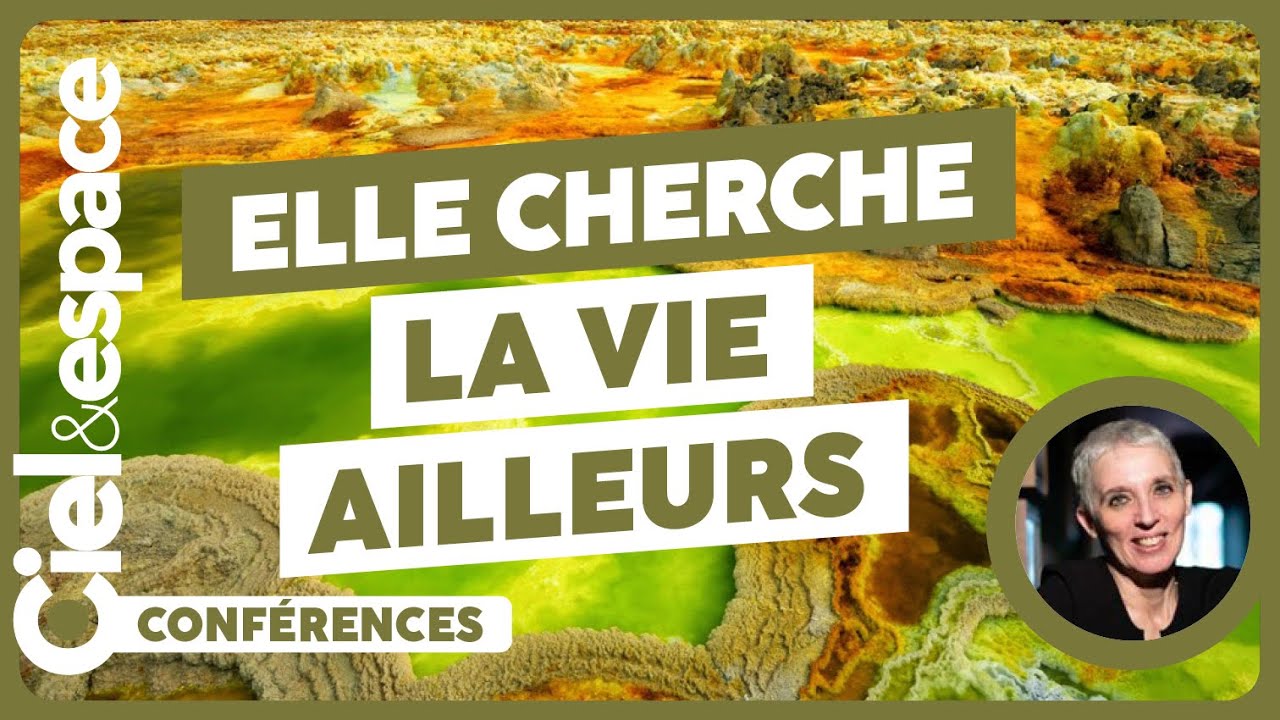
Nathalie Cabrol : le grand mystère de la vie dans l'Univers
Keywords
Summary
188 words
Critical Evaluation
Value of the Information & Strength of the Argument
The talk provides substantial value by synthesizing current astrobiological knowledge and presenting it in an accessible yet scientifically accurate manner. Cabrol’s argumentation is solid, grounded in her expertise and references to recent discoveries (e.g., James Webb) and ongoing research. She effectively communicates complex ideas, such as the biophysical model of life as an inevitable thermodynamic phenomenon, and the challenge of distinguishing life from environment. The discussion of agnostic biomarkers and the need for convergent evidence shows a nuanced understanding of the field’s methodological challenges.
Scientific Rigor, Source Quality, Title Accuracy
The scientific rigor is high, as Cabrol is a leading expert and the content aligns with current scientific consensus. She references specific missions (e.g., Mars rovers, James Webb) and concepts (e.g., stromatolites, zircons) without formal citations, typical for a public lecture. The title accurately reflects the content, focusing on the mystery of life in the universe. The talk is well-structured and avoids overstatement, acknowledging uncertainties in the field.
167 words
Title / Content Match
The title accurately reflects the content, which focuses on the mystery of life in the universe as presented by Nathalie Cabrol.
Quality & Reliability
8/10
The speaker is a renowned astrobiologist and director of the Carl Sagan Center at SETI, providing expert insights grounded in current research. The talk is well-structured and references specific missions and discoveries, though it remains a popular science lecture without formal citations.
Key Moments
Markers derived by PSI from the transcript: the creator did not define chapters.
- Introduction and tribute to Hubert Reeves
- Paradoxes of astrobiology: no definition of life
- Formation of life's building blocks in stars and James Webb discoveries
- Habitable zone concept and dynamic nature
- Conditions for life: CHNOPS, energy, refuge, nutrients
- Origin of life: hydrothermal vents vs. wet-dry cycles
- Life-environment fusion and biosignatures
- Challenges in detecting life on Mars and elsewhere
- Agnostic biomarkers and future missions
- Conclusion: potential for discovery in the next 25 years
Cited Sources
- SETI Institute — Mentioned as the institution where Nathalie Cabrol works.
- James Webb Space Telescope — Referenced for recent discoveries of early galaxies and organic molecules.
- TRAPPIST-1 system — Mentioned as an example of a system with small stars and close-in habitable zone.
Concurring Sources
- NASA Astrobiology — Supports the scientific context of the talk.
- Enceladus and Europa missions — Mentioned as targets for life detection.
Contribution & Novelties
The talk offers a comprehensive overview of astrobiology, emphasizing the philosophical and methodological challenges in the search for life. Cabrol’s perspective as a leading researcher provides unique insights into the field’s current state and future directions.
Pour aller plus loin :
- Astrobiology — Overview of the field.
- Habitable zone — Definition and examples.
- Biosignature — Types and detection methods.
- Origin of life — Theories and research.
66 words
Radar Profile
The radar profile shows high scores in information quantity, quality, and reliability, with a moderate technical level. This indicates a well-balanced, informative talk that is accessible to a general audience while maintaining scientific depth.
💬 Sur les 0 commentaires analysés, aucune tendance n'est disponible.