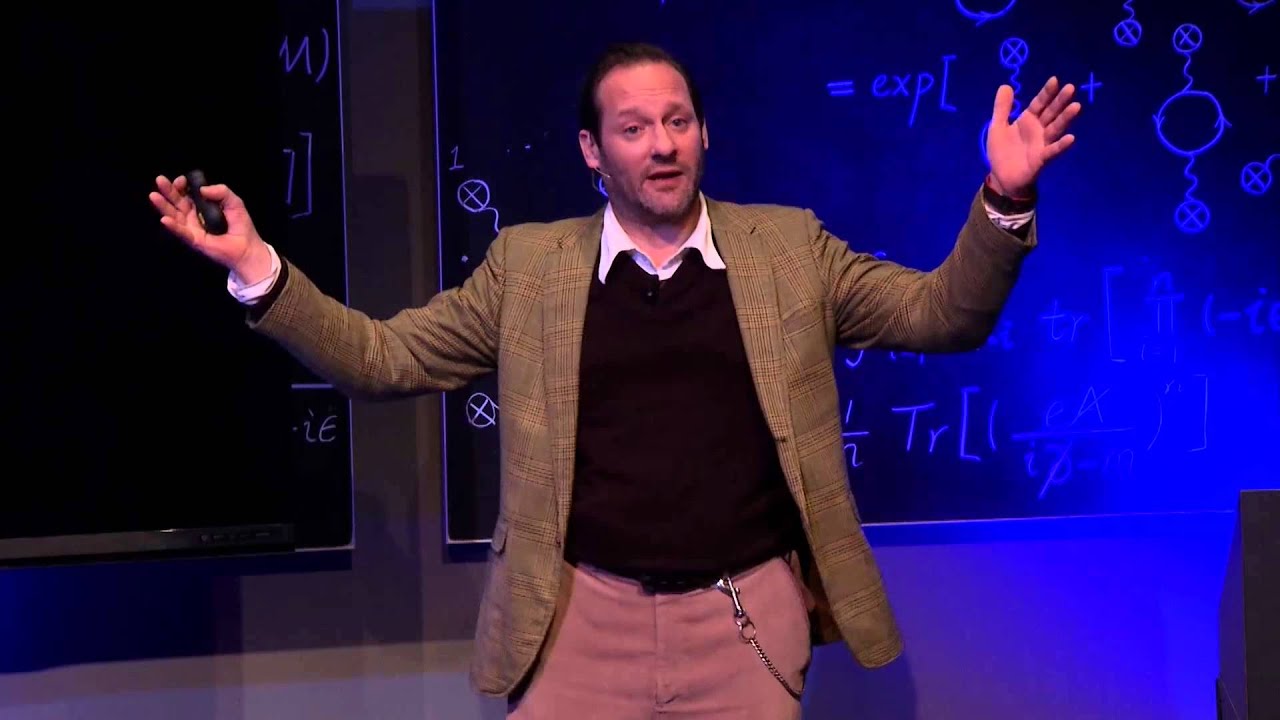
Cameron Smith Public Lecture: Interstellar Voyaging -- An Evolutionary Transition
Keywords
Summary
204 words
Critical Evaluation
Value of the Information & Strength of the Argument
The lecture provides a valuable interdisciplinary perspective, bridging anthropology, evolutionary biology, and space exploration. Smith’s argument is well-structured and logically presented, building from evolutionary principles to practical considerations for space settlement. He effectively uses examples from human evolution (e.g., high-altitude adaptation, lactose tolerance) to support his claims about human adaptability. The argumentation is persuasive, though it relies heavily on analogy and extrapolation rather than empirical data specific to space colonization. The emphasis on cultural and social factors, often overlooked in technical discussions, adds significant value. However, the lecture is more of an expert opinion and synthesis than a rigorous scientific analysis, with limited critical evaluation of potential counterarguments or technological constraints.
Scientific Rigor, Source Quality, Title Accuracy
The lecture demonstrates a reasonable level of scientific rigor, with references to established concepts in evolutionary biology and anthropology. Smith cites a few sources, such as Jared Diamond’s ‘Collapse’ and the work of Gerard K. O’Neill, but does not provide detailed citations for many of his claims. The title accurately reflects the content, focusing on interstellar voyaging as an evolutionary transition. The lecture is well-organized and the speaker’s expertise is evident, but the lack of specific references and the speculative nature of the topic limit its scientific robustness. The description provides links to Perimeter Institute’s general pages, but no direct sources for the lecture’s content.
231 words
Title / Content Match
The title accurately reflects the content: the lecture discusses interstellar voyaging as an evolutionary transition, focusing on biological and cultural aspects.
Quality & Reliability
7/10
Lecture by an academic (archaeologist/anthropologist) presenting a well-structured argument grounded in evolutionary biology and anthropology, but largely based on his own synthesis and general references rather than detailed citations. The content is plausible and coherent, but the scientific rigor is limited by the lack of specific sources and the speculative nature of the topic.
Key Moments
Markers derived by PSI from the transcript: the creator did not define chapters.
- Introduction and welcome by Greg Dick, Director of Educational Outreach at Perimeter Institute.
- Dr. Cameron Smith begins his lecture, framing interstellar voyaging as an evolutionary transition.
- Discussion of NASA's mission statements and the focus on life, not just machinery.
- Introduction of the concept of 'extraterrestrial adaptation' and the need for a science of human space colonization.
- Exploration of the fragility of civilizations, citing a 99% failure rate and average duration of 12,200 years.
- Discussion of biological evolution mechanisms: mutation, migration, selection, and drift in space colonies.
- Examples of human biological adaptations, such as high-altitude adaptation and lactose tolerance.
- Emphasis on the need to shift from individual-focused exploration to community-based settlement.
- Conclusion: the next evolutionary transition will involve humanity's complete disassociation from Earth.
- Q&A session begins, with questions from the audience.
Cited Sources
- Perimeter Institute - Inspiring and Educating the Public — Description link to Perimeter Institute's public outreach page.
- Perimeter Institute - Newsletter — Description link to subscribe for updates.
- Perimeter Institute - Donate — Description link to donate to Perimeter Institute.
Concurring Sources
- NASA's Mission Statement — Referenced in the lecture regarding NASA's focus on life.
- Gerard K. O'Neill's Space Colonization — Referenced in the lecture for orbital colony designs.
Contribution & Novelties
The lecture offers a novel interdisciplinary perspective by applying evolutionary biology and anthropology to the challenge of interstellar settlement. It reframes space colonization as an evolutionary transition, emphasizing the need for a ‘science of extraterrestrial adaptation’ that integrates biological and cultural dimensions. This approach is original and provides a framework for future research and planning.
Pour aller plus loin :
- Evolutionary transition — Wikipedia article on major transitions in evolution, providing background on the concept.
- Human adaptation to high altitude — Wikipedia article on human high-altitude adaptation, relevant to biological adaptation examples.
- Lactose tolerance — Wikipedia article on lactase persistence, another example of human genetic adaptation.
- Jared Diamond’s ‘Collapse’ — Wikipedia article on the book, referenced in the lecture for civilization collapse.
122 words
Radar Profile
The radar profile shows high scores in quantity of information and fiabilité, reflecting the lecture's comprehensive coverage and the speaker's expertise. The niveau technique is moderate, indicating accessibility to a general audience. The overall profile suggests a well-rounded, informative lecture with a strong foundation in established science.