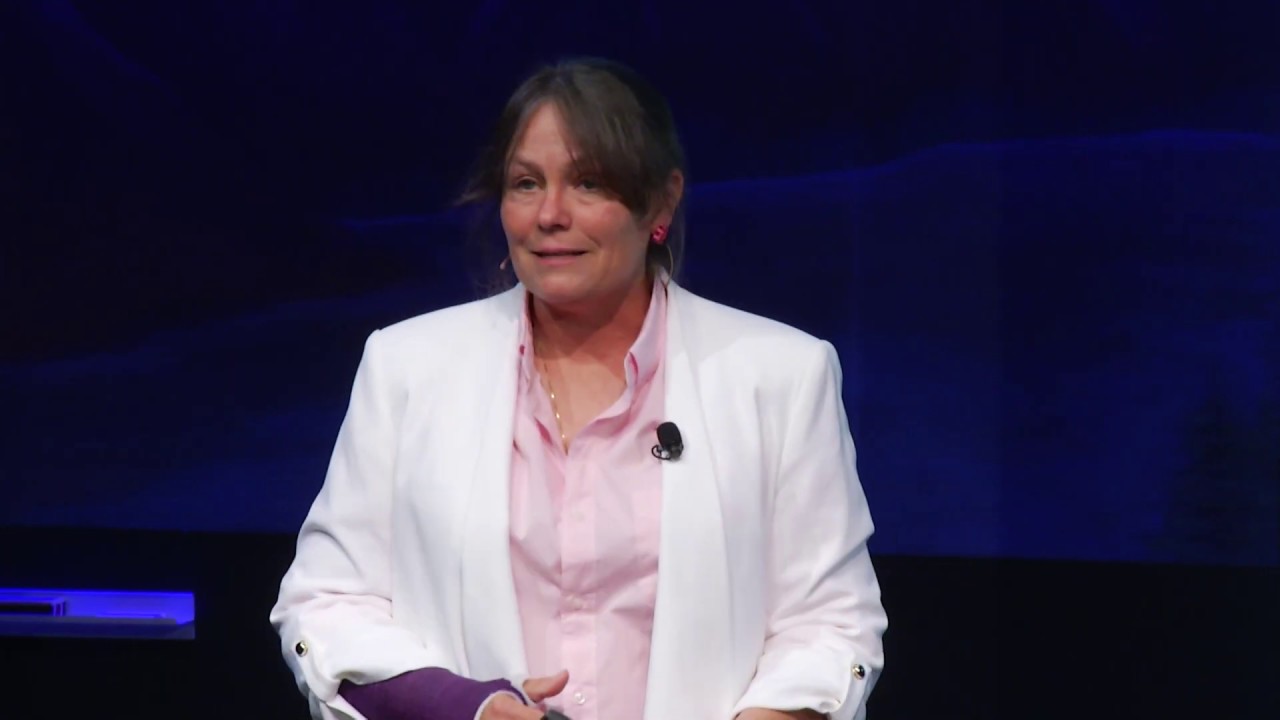
Cather Simpson Public Lecture: Farms, Food, and Photonics
Keywords
Summary
187 words
Critical Evaluation
Value of the Information & Strength of the Argument
The lecture provides substantial value by connecting fundamental photonics research to practical agricultural applications. Dr. Simpson effectively argues that photonics is a key enabling technology for sustainable food production, citing concrete examples like the dramatic cost reduction in LED lighting and solar panels. She supports her points with references to specific studies (e.g., Lewis & Nocera’s 15 terawatt challenge) and real-world companies (e.g., Sun Drop Farms). The argumentation is coherent and persuasive, though it sometimes relies on optimistic projections and personal enthusiasm rather than rigorous data. The inclusion of her own lab’s work adds credibility and illustrates the translational pathway from research to application.
Scientific Rigor, Source Quality, Title Accuracy
The lecture demonstrates strong scientific rigor, with clear explanations of complex concepts and appropriate references to scientific literature and industry data. The speaker cites specific sources, such as the NREL efficiency charts and the MIT study on solar price decline, which enhances credibility. However, some claims are made without explicit citations, and the lecture is more of an overview than a detailed technical analysis. The title accurately reflects the content, and the lecture is well-structured. The presence of a brief introduction by Perimeter Institute staff does not detract from the scientific content.
211 words
Title / Content Match
The title accurately reflects the content: the lecture covers the application of photonics (light-based technologies) to farming and food production.
Quality & Reliability
8/10
The lecture is delivered by a recognized expert (professor at the University of Auckland) and is hosted by the Perimeter Institute, a reputable research institution. The content is well-structured, references specific studies (e.g., Lewis & Nocera 2006, NREL data) and real-world examples, and avoids overstatement. However, some claims are presented without detailed citations, and the speaker's enthusiasm sometimes leads to optimistic projections.
Key Moments
Markers derived by PSI from the transcript: the creator did not define chapters.
- Introduction by Heather Clark and Rob Myers, new director of Perimeter Institute.
- Dr. Simpson defines photonics and its importance, mentioning the International Year of Light.
- Discussion on the economic impact of photonics and the role of lasers.
- Introduction to indoor farming and its potential for sustainable food production.
- Explanation of the 15 terawatt challenge and solar energy harvesting.
- Overview of solar cell efficiency improvements and cost reductions.
- Example of Sun Drop Farms in Australia using solar energy for desalination and climate control.
- Transition to Dr. Simpson's lab work: the Photon Factory and femtosecond lasers.
- Discussion of quantum light-matter coupling and its potential applications.
- Vision for future home gardening with modular photonic systems.
Cited Sources
- Perimeter Institute Newsletter — Mentioned as a way to stay updated on future lectures and events.
- Perimeter Institute Donation Page — Mentioned as a way to support the institute.
- Perimeter Institute Public Engagement — Mentioned as part of the institute's mission.
Concurring Sources
- NREL Efficiency Chart — Referenced in the lecture as a source for solar cell efficiency data.
- Lewis and Nocera 2006 paper — Referenced for the 15 terawatt challenge.
Contribution & Novelties
The lecture provides a comprehensive overview of the intersection of photonics and agriculture, a relatively novel and rapidly growing field. It highlights how advances in light-based technologies, such as LEDs and solar cells, are enabling new farming methods like vertical farming. The speaker also shares insights from her own research, including the use of femtosecond lasers in food processing and quantum light-matter coupling, offering a unique perspective on the future of food production.
Pour aller plus loin :
- Vertical farming — Provides background on the concept and its history.
- Photonic crystal — Related to the manipulation of light, relevant to photonics applications.
- Solar cell efficiency — Discusses the efficiency limits and technologies mentioned in the lecture.
116 words
Radar Profile
The radar profile shows high scores in information quantity, quality, and reliability, with a slightly lower score in technical level. This indicates a lecture that is rich in content and credible, but accessible to a general audience rather than deeply technical.
💬 No comments were provided for analysis.