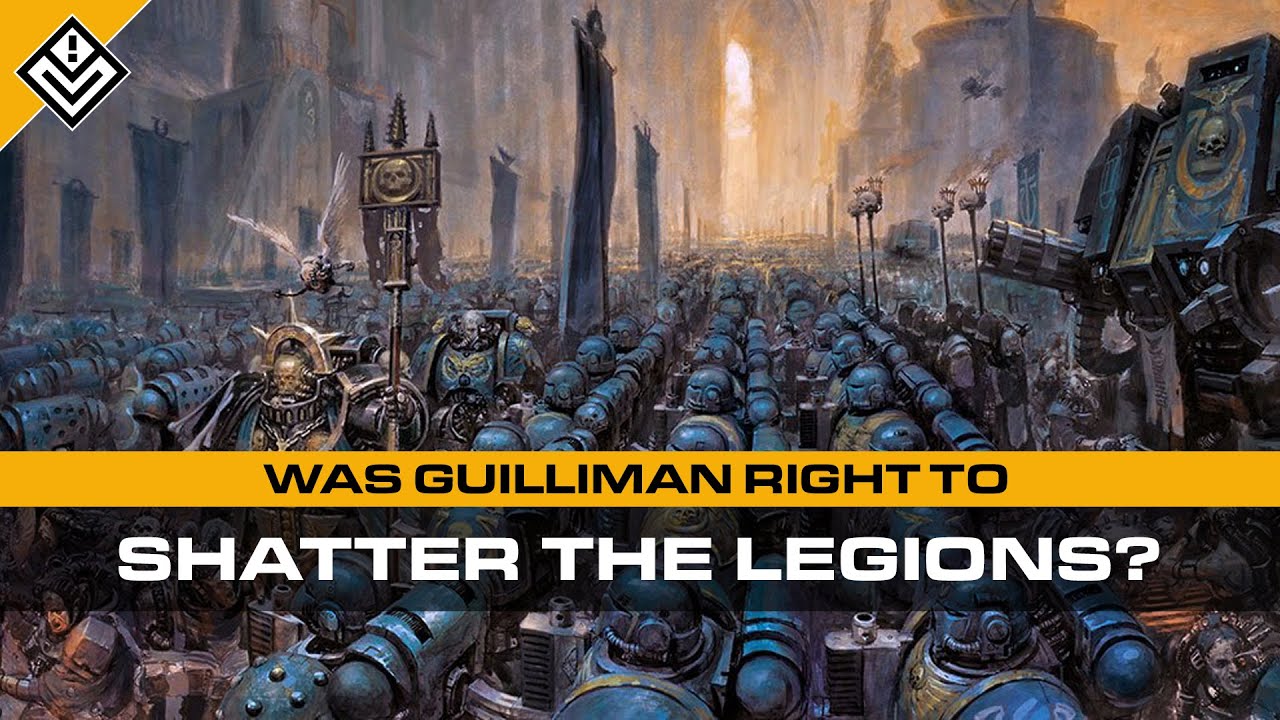
Was Guilliman Right To Shatter the Space Marine Legions? | Warhammer 40,000
Keywords
Summary
156 words
Critical Evaluation
Value of the Information & Strength of the Argument
The video provides a balanced and well-reasoned argument, acknowledging both the strengths and weaknesses of the Codex Astartes. It effectively uses examples from Warhammer 40,000 lore, such as the Badab War and the deployment of Chapters in the 42nd millennium, to support its points. The argument is structured logically, moving from the initial premise to a nuanced conclusion. The host’s willingness to change his mind based on new considerations adds credibility to the analysis.
Scientific Rigor, Source Quality, Title Accuracy
The video is an opinion piece and does not cite specific sources, but it draws on established Warhammer 40,000 lore. The title accurately reflects the content. The argument is internally consistent and acknowledges counterarguments, but the lack of citations to primary sources (e.g., specific codexes or novels) limits its scholarly rigor. The video is well-produced and the reasoning is clear, but it is not a comprehensive academic analysis.
157 words
Title / Content Match
The title accurately reflects the content, which directly addresses the question of whether Guilliman's decision to split the Legions was correct.
Quality & Reliability
7/10
The video presents a well-structured argument based on established Warhammer 40,000 lore, with clear reasoning and acknowledgment of counterarguments. However, it is an opinion piece without citations to primary sources, and the fictional nature of the subject limits its factual reliability.
Key Moments
Markers derived by PSI from the transcript: the creator did not define chapters.
- Introduction and sponsor message about Warhammer 40,000 Rogue Trader Closed Beta keys.
- Discussion of the symbolic importance of the Legions and the decision to shatter them.
- Arguments against breaking the Legions: loss of unity, reduced offensive capability, and loss of institutional knowledge.
- The host's initial opinion that breaking the Legions was a mistake, and his later reconsideration due to the threat of Chaos.
- Analysis of how Chapters are deployed in the 41st/42nd millennia, acting as force multipliers rather than standing armies.
- Discussion of the Codex Astartes as a political tool and Guilliman's role as the Emperor's successor.
- Conclusion: The decision was right for the 31st millennium, but the changing nature of warfare may require larger formations again.
Cited Sources
- The Templin Institute - Submit Your Episode Idea — Link in description for viewers to submit episode ideas.
- The Templin Institute Subreddit — Community discussion forum.
- The Templin Institute Website — Official website.
- The Templin Institute Twitch Channel — Live streaming channel.
Concurring Sources
- The Templin Institute - Submit Your Episode Idea — Link in description for viewers to submit episode ideas.
- The Templin Institute Subreddit — Community discussion forum.
Contribution & Novelties
The video offers a nuanced perspective on a long-debated topic in Warhammer 40,000 lore, arguing that the decision to split the Legions was contextually correct but may need revision. It highlights the importance of internal security against Chaos and the logistical advantages of smaller Chapters. The analysis of the Codex Astartes as a political tool adds depth.
Pour aller plus loin :
- Warhammer 40,000 - Wikipedia — Overview of the fictional universe.
- Codex Astartes - Warhammer 40k Wiki — Detailed article on the Codex Astartes.
- Horus Heresy - Warhammer 40k Wiki — Background on the event that led to the Legions’ dissolution.
102 words
Radar Profile
The radar profile shows high scores in information quality and reliability, with slightly lower scores in quantity and technical depth. This reflects a well-argued opinion piece that is strong in reasoning but not exhaustive in scope.
💬 Positif. Sur les 30 commentaires analysés, la majorité soutient la décision de Guilliman, avec des nuances sur la taille des chapitres et des discussions sur l'évolution nécessaire face aux menaces actuelles.