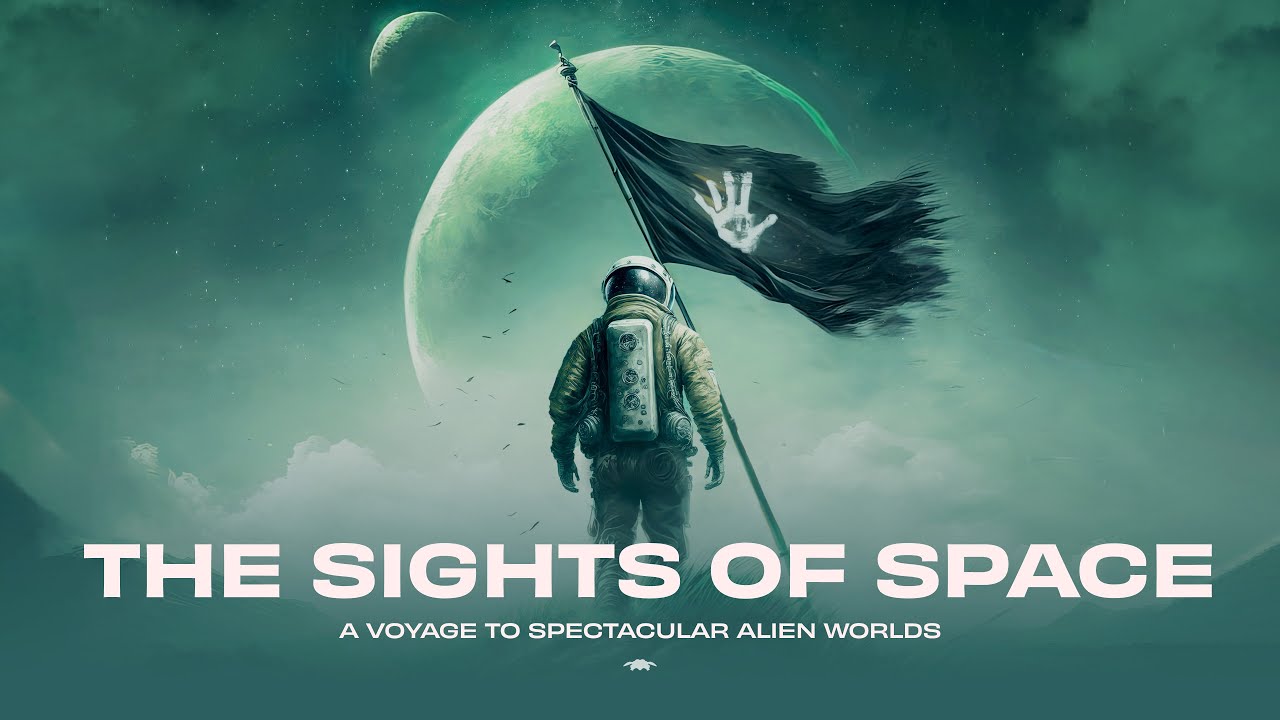
THE SIGHTS OF SPACE: A Voyage to Spectacular Alien Worlds
Keywords
Summary
166 words
Critical Evaluation
Value of the Information & Strength of the Argument
The video provides substantial value by presenting a wide range of exoplanet discoveries in an engaging and accessible format. It effectively communicates complex scientific concepts such as tidal locking, habitable zones, and exotic planetary compositions. The argumentation is solid, as it bases its depictions on current scientific understanding and clearly states when creative license is used. The narration and visuals work together to build a compelling case for the importance of exoplanet research and the potential for future exploration.
Scientific Rigor, Source Quality, Title Accuracy
The video demonstrates scientific rigor by referencing real exoplanets and phenomena, such as TRAPPIST-1, Gliese 436 b, and pulsar planets. However, the description does not provide direct links to research papers or sources, limiting the ability to verify specific claims. The title accurately reflects the content, and the video’s speculative scenes are appropriately labeled. The lack of explicit citations is a minor weakness, but the overall scientific accuracy appears high.
164 words
Title / Content Match
The title accurately reflects the content: a visual and narrative journey to spectacular alien worlds, showcasing extreme exoplanets and other celestial phenomena.
Quality & Reliability
8/10
The video is a high-quality science documentary that presents current exoplanet discoveries and scientific concepts with visualizations based on scientific understanding. It clearly states that scenes are speculative depictions with creative license. The content aligns with known exoplanet research, and the creator has a track record of accuracy, though specific sources are not cited in the description.
Key Moments
Markers derived by PSI from the transcript: the creator did not define chapters.
- Introduction to the Navis III and the journey's purpose.
- Exploration of the Kuiper Belt and dwarf planets like Haumea.
- Arrival at Proxima Centauri b, the closest exoplanet.
- Visit to Gliese 436 b, the 'burning ice' planet.
- Tour of the TRAPPIST-1 system and its potentially habitable planets.
- Encounter with a planet of glass rain and supersonic winds.
- Discovery of a planet with enormous rings and a possible exomoon.
- Exploration of planets with metal clouds and gemstone rain.
- Visit to pulsar planets, including Draugr, Poltergeist, and Phobetor.
- Reflection on the vast number of undiscovered worlds and the future of exploration.
Cited Sources
- The Sights of Space Original Soundtrack — The official soundtrack for the video, available on Bandcamp.
Concurring Sources
- NASA Exoplanet Archive — A comprehensive database of confirmed exoplanets, supporting the existence and characteristics of the planets mentioned.
Contribution & Novelties
The video offers a unique blend of scientific accuracy and artistic visualization, making exoplanet science accessible and emotionally resonant. It stands out for its high-quality animation and narrative, which together create a compelling vision of future space exploration.
Pour aller plus loin :
- Exoplanet Exploration — NASA’s official exoplanet discovery and exploration resource.
- TRAPPIST-1 — Wikipedia article on the TRAPPIST-1 system.
- Pulsar planet — Wikipedia article on pulsar planets.
- Gliese 436 b — Wikipedia article on the ‘burning ice’ planet.
80 words
Radar Profile
The radar profile shows high scores in information quantity and quality, with a slightly lower technical level, indicating a video that is rich in content but accessible to a general audience. The reliability is strong, reflecting the scientific basis of the content.
💬 Très positif. Sur les 30 commentaires analysés, l'immense majorité exprime une admiration profonde pour la qualité visuelle, la narration et la musique, avec des éloges récurrents sur le caractère immersif et inspirant du contenu.