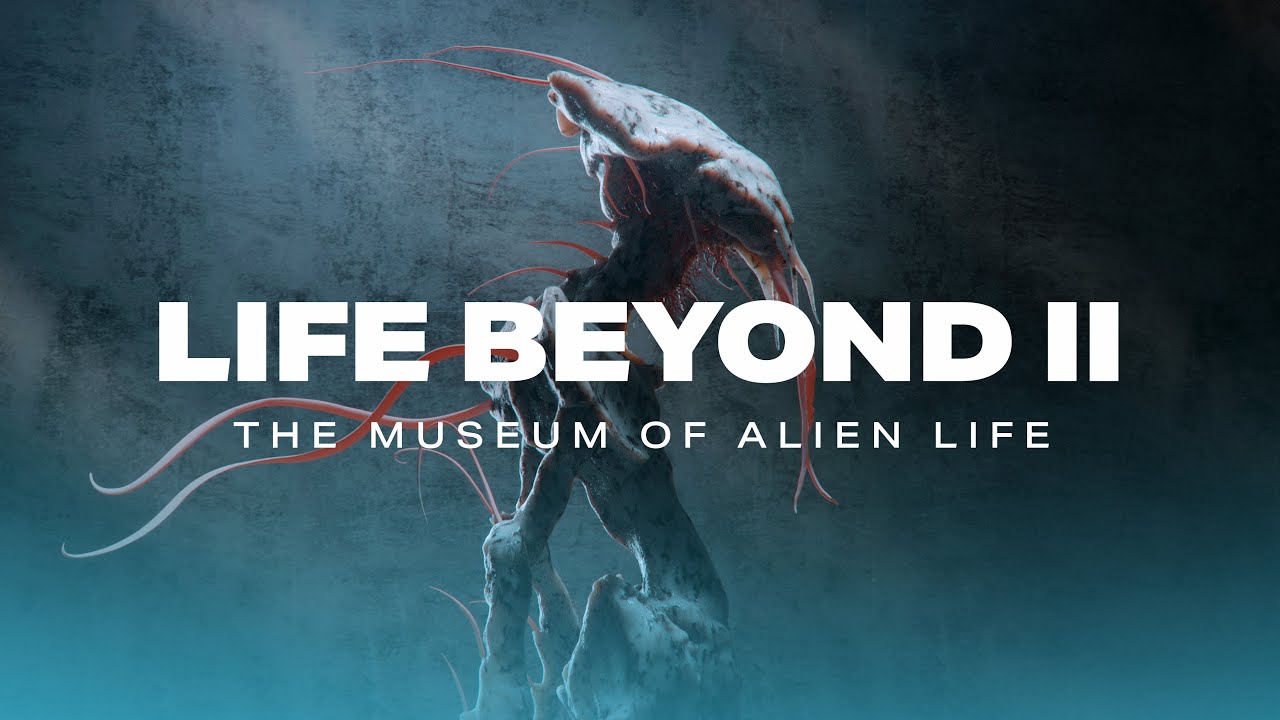
LIFE BEYOND II: The Museum of Alien Life (4K)
Keywords
Summary
152 words
Critical Evaluation
Value of the Information & Strength of the Argument
The video provides a rich and thought-provoking exploration of astrobiological concepts, effectively synthesizing current scientific knowledge with speculative possibilities. It presents a balanced view, clearly distinguishing between established science (e.g., the chemistry of carbon, the existence of exoplanets) and more speculative ideas (e.g., life in neutron stars). The argumentation is structured logically, moving from the familiar to the exotic, and is supported by expert interviews and references to real research. The visual and musical production enhances the narrative, making complex ideas accessible and engaging without oversimplifying the science.
Scientific Rigor, Source Quality, Title Accuracy
The video demonstrates a strong commitment to scientific rigor, with a clear effort to ground its speculative scenarios in current research. The creator provides a list of research sources on his website, and the video features soundbites from recognized scientists in the field. The title accurately reflects the content, and the video’s structure as a ‘museum’ tour is a creative and effective way to organize the information. The production quality is exceptionally high, and the video has been praised by educators and scientists for its accuracy and inspirational value.
192 words
Title / Content Match
The title accurately reflects the content: a guided tour through a conceptual 'museum' of possible alien life forms, from familiar Earth-like life to exotic speculative forms.
Quality & Reliability
8/10
The video presents a scientifically informed speculative overview of possible alien life forms, grounded in current astrobiological research and featuring interviews with experts. It clearly distinguishes between established science and speculative hypotheses, and the creator provides a list of research sources on his website.
Key Moments
Markers derived by PSI from the transcript: the creator did not define chapters.
- Introduction: The concept of a museum of alien life and the question of whether Earth's tree of life is unique.
- Exhibit I: Life as we know it - carbon-based biochemistry and the universality of carbon.
- Discussion of convergent evolution and the possibility of humanoid aliens on Earth-like planets.
- The color of alien plants and how it could be used as a biosignature.
- The influence of planetary properties (gravity, day length, orbit) on life forms.
- The hall of microorganisms and the importance of biosignatures like oxygen and methane.
- Brown dwarfs as potential habitats for life in their atmospheres.
- Exhibit II: Life as we don't know it - exotic biochemistries, starting with silicon-based life.
- Life in extreme environments: plasma crystals, neutron stars, and the possibility of life in magma.
- Machine-based life as a potential evolutionary endpoint and the future of intelligence in the universe.
Cited Sources
- Research Sources for Life Beyond — The creator's website lists the research sources used for the video.
- Protocol Labs — The video is supported by Protocol Labs, as mentioned in the description.
- SHYAMA (film by Lynn Huberty) — The video features clips from Lynn Huberty's film 'SHYAMA', which was scored by melodysheep.
- Amara.org — The video is available for community translation on Amara.
Concurring Sources
- NASA Astrobiology — NASA's astrobiology program supports research on the origin, evolution, and distribution of life in the universe, aligning with the video's themes.
- Exoplanet Exploration - NASA — NASA's exoplanet exploration page provides information on the search for habitable planets, a central topic in the video.
Dissenting Sources
- Silicon-based life is often considered unlikely due to silicon's chemical properties — Some scientists argue that silicon's weaker bonding and tendency to form silicon dioxide make it less suitable for life than carbon, a point the video acknowledges but does not fully explore.
External References
Contribution & Novelties
This video stands out for its ambitious and visually stunning synthesis of current astrobiological research into a coherent and engaging narrative. It goes beyond simple enumeration of possibilities by structuring the content as a ‘museum’ tour, which helps viewers grasp the spectrum of potential life forms, from the familiar to the highly speculative. The video also effectively communicates the idea that life is not limited to Earth-like planets, but could exist in a variety of extreme environments, such as the atmospheres of brown dwarfs or the hearts of neutron stars. It successfully bridges the gap between scientific rigor and artistic expression, making complex concepts accessible to a broad audience.
Pour aller plus loin :
- Astrobiology - Wikipedia — Provides an overview of the field of astrobiology, including the search for habitable exoplanets and biosignatures.
- Convergent evolution - Wikipedia — Explains the concept of convergent evolution, which the video discusses as a potential driver of similar forms on other planets.
- Silicon-based life - Wikipedia — Discusses the theoretical possibility of life based on silicon, a key topic in the video.
- Brown dwarf - Wikipedia — Provides information on brown dwarfs, which the video suggests could host life in their atmospheres.
- Neutron star - Wikipedia — Offers details on neutron stars, where the video speculates about exotic life forms.
217 words
Radar Profile
The radar profile shows high scores in information quantity, quality, and technical level, with a slightly lower score in reliability. This reflects the video's strength in presenting a wealth of well-researched and engaging content, while the speculative nature of some topics slightly reduces its overall reliability.
💬 Très positif. Sur les 30 commentaires analysés, l'enthousiasme est unanime : les spectateurs saluent la qualité de production, la beauté visuelle, la bande-son, et la valeur éducative, certains le qualifiant de meilleur que des documentaires à gros budget.