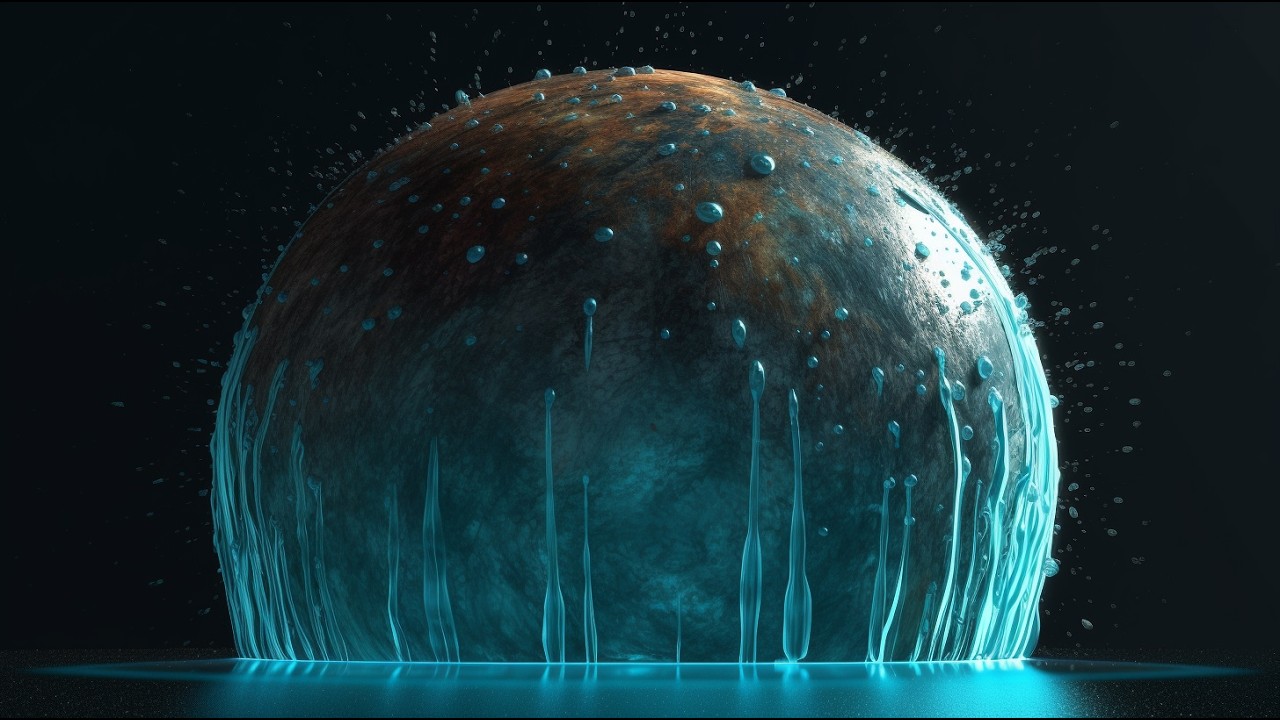
Les planètes SAUNA, quand l’eau devient tueuse de monde
Keywords
Summary
156 words
Critical Evaluation
Value of the Information & Strength of the Argument
The video provides substantial scientific value by synthesizing current research on ocean planet habitability. It presents a nuanced argument, first outlining the multiple ways water can be lethal, then introducing counterarguments and recent simulations that offer hope. The argumentation is logically structured, progressing from simple concepts (erosion, nutrients) to more complex ones (plate tectonics, high-pressure ice), and effectively uses Earth as a baseline for comparison. The inclusion of specific numbers (e.g., 50 times more water, 2% of planet mass) adds credibility. The video also broadens the discussion to alternative biochemistries, which is intellectually stimulating. However, it does not deeply engage with the uncertainties or debates within the scientific community, presenting the information as more settled than it might be.
Scientific Rigor, Source Quality, Title Accuracy
The video demonstrates high scientific rigor by citing multiple peer-reviewed articles and reputable science communication sources, including Nature Communications, Monthly Notices of the Royal Astronomical Society, and Scientific American. The sources are directly relevant to the topics discussed, such as ocean depth, climate stability, and high-pressure ice phases. The title is somewhat sensational but accurately reflects the content’s focus on the potential lethality of water worlds. The video’s structure, with clear chapters, aids in comprehension. The creator also acknowledges supporting institutions (Cité de l’Océan, Aquarium de Biarritz) transparently. Overall, the sourcing is robust and enhances the video’s credibility.
232 words
Title / Content Match
The title is catchy and slightly sensational, but accurately reflects the core theme: water worlds can be hostile to life. The 'SAUNA' acronym is not explained, but the content matches the promise of exploring how water can become a 'world-killer'.
Quality & Reliability
8/10
The video is well-researched, referencing multiple peer-reviewed studies and reputable science communication outlets. The scientific content is accurate and up-to-date, with clear explanations of complex concepts. Minor simplifications are present but do not compromise overall reliability.
Chapters
- Les planètes océans des paradis ?
- Quand l’eau devient un enfer
- 50 fois plus d’eau que chez nous
- Les plaques et le cycle carbone / silicate
- Le problème des grandes profondeurs
- Des “mondes” voisins potentiellement inhabitables
- Lueurs d’espoir et bonnes nouvelles
- Des océans constitués d’autres choses que de l’eau
Cited Sources
- Are Water Worlds Habitable? — Discusses the habitability of water worlds, likely referenced in the section about potential habitability.
- A super-Earth and a sub-Neptune in a system with a misaligned ice giant — Peer-reviewed article on exoplanet systems, possibly used for models of ocean worlds.
- Habitable water worlds? Exoplanets with primordial atmospheres — Popular science article on water worlds and their atmospheres.
- Exoplanet Ocean Depth — Astrobites article on the depth of oceans on exoplanets.
- Water worlds: self-arresting thermostats and long-term climate stability — Astrobites article on climate stability of water worlds.
- M-dwarf stars go overboard with ocean worlds — Astrobites article on ocean worlds around M-dwarf stars.
- Nature Communications article on ocean worlds — Peer-reviewed article likely discussing the formation or habitability of ocean worlds.
- Une exoplanète océan à 100 années-lumière de la Terre — French science news article about a specific ocean exoplanet.
- Cubic crystal system — Reference for the crystal structure of high-pressure ice.
- Superionic water — Reference for exotic water phases in planetary interiors.
- Ice VII — Reference for high-pressure ice phase.
- Supercritical fluid — Reference for supercritical states of matter, possibly relevant to planetary interiors.
- Can you overwater a planet? — Blog post discussing the concept of overwatering a planet, likely related to the video's theme.
Concurring Sources
- Are Water Worlds Habitable? — Supports the video's discussion on the potential habitability of water worlds.
- Water worlds: self-arresting thermostats and long-term climate stability — Aligns with the video's points on climate stability of water worlds.
- Nature Communications article on ocean worlds — Provides peer-reviewed evidence supporting the video's claims about ocean world processes.
External References
Contribution & Novelties
The video provides a comprehensive and accessible synthesis of current research on ocean planet habitability, highlighting the counterintuitive idea that too much water can be detrimental to life. It effectively communicates complex scientific concepts, such as the carbon-silicate cycle and high-pressure ice phases, to a general audience. The video also broadens the discussion by considering alternative solvents for life, which is a valuable perspective. It adds value by compiling and explaining multiple lines of evidence and recent simulations, offering a balanced view of the potential for life on these worlds.
Pour aller plus loin :
- Water world (Wikipedia) — Provides a general overview of ocean planets and their characteristics.
- Habitable zone (Wikipedia) — Discusses the region around a star where liquid water can exist on a planet’s surface, relevant to the habitability discussion.
- Plate tectonics (Wikipedia) — Explains the process that the video argues is crucial for nutrient cycling and climate regulation.
- Carbon-silicate cycle (Wikipedia) — Details the long-term climate regulation mechanism mentioned in the video.
- Superionic water (Wikipedia) — Explores the exotic phase of water that may exist in the deep interiors of ocean planets.
186 words
Radar Profile
The radar profile shows high scores in information quality and reliability, with slightly lower scores in quantity and technical depth. This indicates a well-researched and trustworthy video that is accessible to a broad audience, though it may not delve into the most technical details. The balance between quality and accessibility is a strength.
💬 Très positif. Sur les 30 commentaires analysés, l'écrasante majorité exprime une admiration profonde pour la qualité de la narration, la précision scientifique et la beauté visuelle de la vidéo, avec des éloges récurrents sur le talent oratoire du créateur et l'aspect apaisant du contenu.