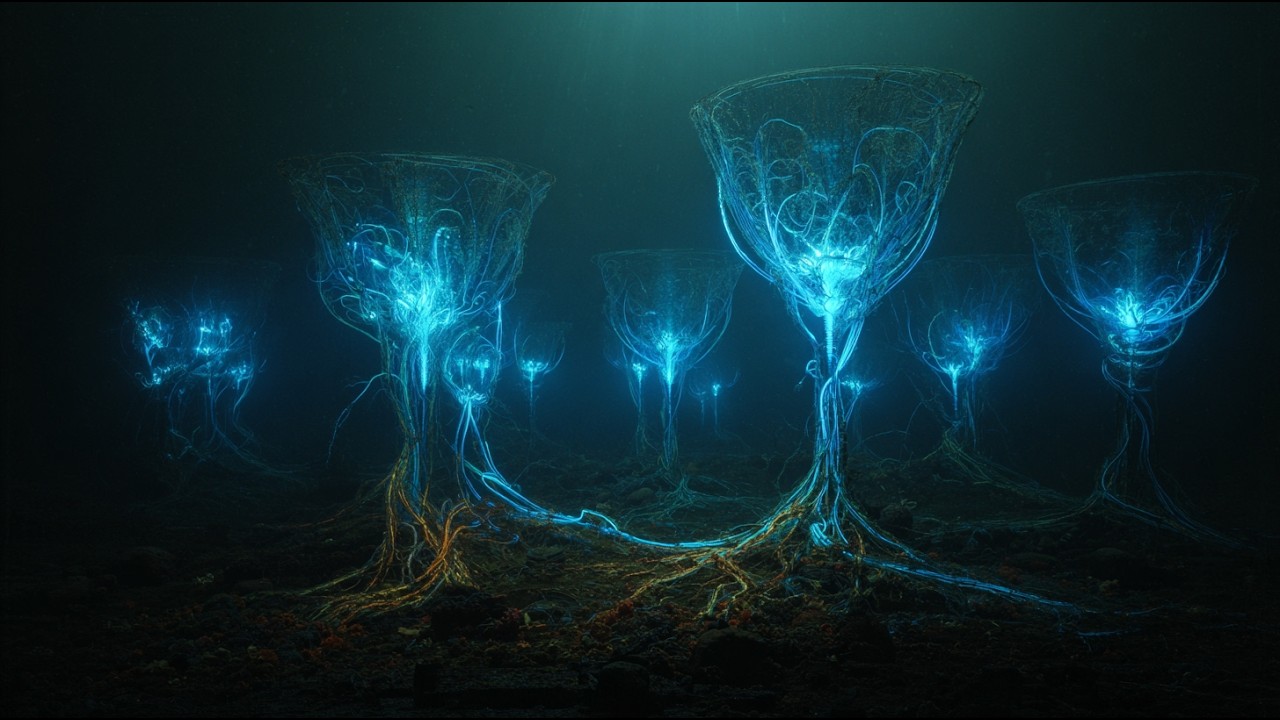
On a découvert des créatures en verre dans les abysses
Keywords
Summary
107 words
Critical Evaluation
Value of the Information & Strength of the Argument
The video provides valuable information about deep-sea ecosystems, which are often overlooked. It effectively argues for the importance of these habitats by illustrating their biodiversity, ancientness, and vulnerability. The argumentation is solid, using vivid imagery and scientific facts to build a case for conservation. The comparison of deep-sea trawling to destroying an orchard to harvest fruit is a powerful rhetorical device that underscores the irrationality of this practice.
77 words
Title / Content Match
The title accurately reflects the content, which focuses on glass-like creatures (sponges and corals) in the deep sea.
Quality & Reliability
8/10
The video presents a well-structured and scientifically accurate overview of deep-sea glass sponges and corals, relying on footage from reputable oceanographic institutions (NOAA, MBARI, Schmidt Ocean Institute). The information is up-to-date and aligns with current scientific understanding, though it is presented in a popularized manner without formal citations.
Chapters
Cited Sources
- Nautilus Live — Source of deep-sea exploration footage and live streams.
- NOAA Ocean Exploration — NOAA's live streams of deep-sea expeditions.
- NOAA Ocean Today — Educational content on ocean exploration.
- Schmidt Ocean Institute — Research vessel and deep-sea exploration footage.
- Aquarium de Biarritz — Partner institution, mentioned for support and public engagement.
- Cité de l'Océan — Partner institution, mentioned for support and public engagement.
- Les Mondes du dessous — Book by the author, related to deep-sea topics.
- MBARI — Research institution providing deep-sea footage and discoveries.
- Rebikoff — Underwater photography and exploration resources.
Concurring Sources
- MBARI — Research on deep-sea organisms, including glass sponges.
- Schmidt Ocean Institute — Expeditions documenting deep-sea ecosystems.
Contribution & Novelties
The video synthesizes recent discoveries about deep-sea glass sponges and corals, presenting them in an accessible and engaging format. It highlights unique adaptations like carnivory in sponges and the extreme longevity of these ecosystems. The visual material from leading oceanographic institutions adds novelty and immediacy.
Pour aller plus loin :
- Deep-sea sponge grounds — Overview of sponge-dominated habitats.
- Glass sponges — Wikipedia article on glass sponges.
- Deep-water coral — Wikipedia article on deep-sea corals.
- NOAA Ocean Explorer — Official site for deep-sea exploration resources.
84 words
Radar Profile
The radar profile shows high scores in information quantity, quality, and reliability, with a moderate technical level. This indicates a well-researched and informative video that is accessible to a general audience, balancing scientific depth with engaging presentation.
💬 Très positif. Sur les 30 commentaires analysés, les spectateurs expriment une admiration unanime pour la beauté et la poésie du contenu, tout en soulignant la prise de conscience sur la fragilité des écosystèmes profonds et la critique du chalutage.