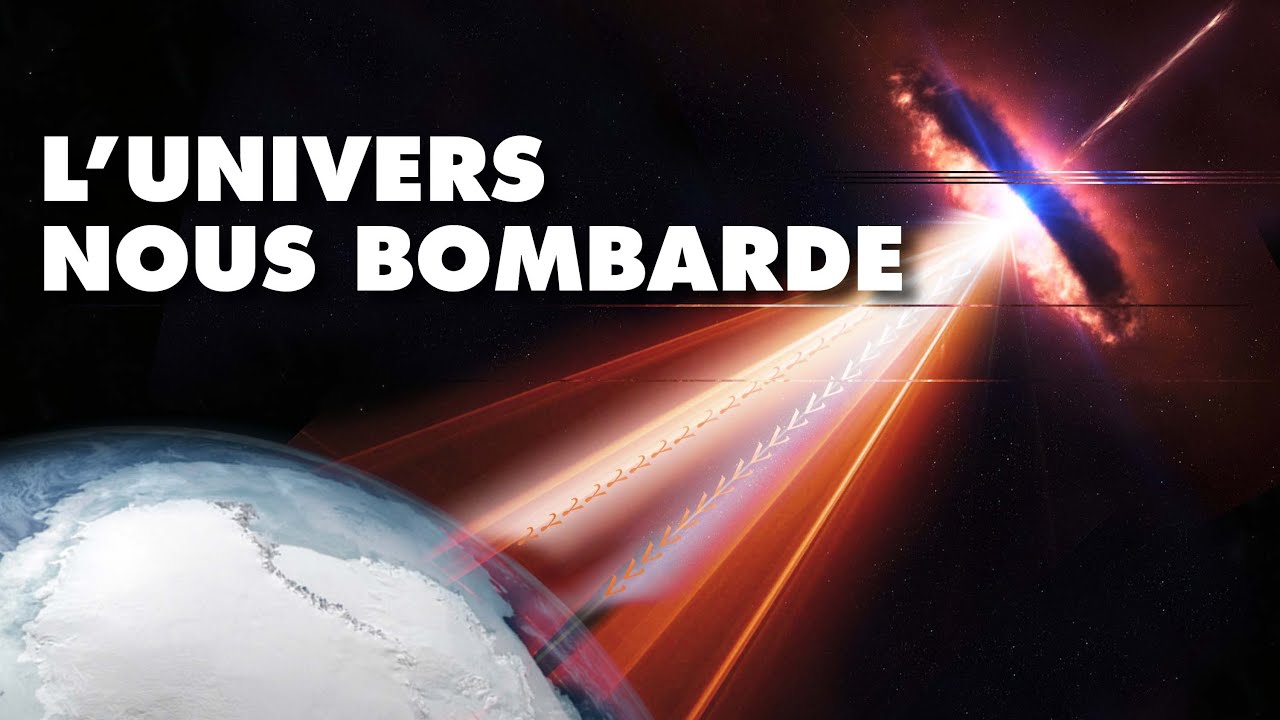
Le Rayonnement Cosmique, quand l'univers nous tire dessus
Keywords
Summary
124 words
Critical Evaluation
Value of the Information & Strength of the Argument
The video provides a rich and engaging narrative that effectively communicates complex scientific concepts. It uses vivid analogies and visual demonstrations, such as cloud chamber footage, to make the invisible world of particles tangible. The argumentation is well-structured, moving from historical discovery to modern applications and implications. The inclusion of real-world examples, like the Qantas incident, adds credibility and illustrates the practical relevance of cosmic rays. The video also presents balanced perspectives on topics like cloud formation, acknowledging ongoing research.
Scientific Rigor, Source Quality, Title Accuracy
The video demonstrates strong scientific rigor, with references to reputable sources such as CERN, Wikipedia, and educational institutions. The description provides a comprehensive list of links for further reading. The title accurately reflects the content, and the video’s structure aligns with its stated chapters. While minor errors were noted by viewers (e.g., ISS altitude, stall terminology), these do not significantly detract from the overall reliability. The video’s use of expert commentary and footage from the Pic du Midi observatory enhances its credibility.
177 words
Title / Content Match
The title accurately reflects the content, which explains cosmic radiation as a phenomenon of the universe 'shooting' at Earth.
Quality & Reliability
8/10
The video presents a scientifically accurate overview of cosmic rays, supported by references to established research and institutions. Minor inaccuracies (e.g., ISS altitude, Qantas 72 stall terminology) are corrected by viewers, but overall the content is reliable and well-sourced.
Chapters
Cited Sources
- Cloudylabs - Radioactive sources and cloud chamber — Source of cloud chamber footage and radioactive mineral demonstrations.
- Rayons cosmiques au Pic du Midi — Educational resource on cosmic rays, used for interpretation of particles.
- Chambre à brouillard - Wikipedia — Background information on the cloud chamber.
- Rayonnement cosmique - Wikipedia — General reference on cosmic radiation.
- Qantas Flight 72 - Wikipedia — Case study of a single-event upset caused by cosmic rays.
- Cosmic challenge: protecting supercomputers from an extraterrestrial threat — Article on cosmic rays affecting electronics.
- CLOUD experiment at CERN — Research on cosmic rays and cloud formation.
- The history of cosmic rays is buried beneath our feet — Article on cosmic ray traces in rocks.
- Effet Tcherenkov - Wikipedia — Explanation of Cherenkov radiation, relevant to astronaut vision.
- Perturbation par une particule isolée - Wikipedia — Concept of single-event upsets in electronics.
Concurring Sources
- Rayonnement cosmique - Wikipedia — General information consistent with the video's explanations.
- Chambre à brouillard - Wikipedia — Details on cloud chamber operation, matching the video's description.
- Effet Tcherenkov - Wikipedia — Explanation of Cherenkov radiation, supporting the astronaut vision segment.
Dissenting Sources
- Qantas Flight 72 - Wikipedia — The video's terminology is imprecise; the aircraft did not stall but experienced an uncommanded pitch-down.
External References
Contribution & Novelties
The video offers a compelling and accessible synthesis of cosmic ray science, blending historical context with modern applications. Its unique contribution lies in the vivid cloud chamber footage and the personal anecdote about Qantas Flight 72, which humanizes the impact of cosmic rays. The video also touches on cutting-edge research like the CLOUD experiment, connecting cosmic rays to climate and evolution.
Pour aller plus loin :
- Cosmic ray - Wikipedia — Comprehensive overview of cosmic rays.
- Cloud chamber - Wikipedia — Detailed explanation of the detector.
- Cherenkov radiation - Wikipedia — Physical phenomenon behind astronaut visual flashes.
- Single event upset - Wikipedia — Technical term for cosmic-ray-induced electronics errors.
- CLOUD experiment - CERN — Official page of the CLOUD experiment on cosmic rays and clouds.
125 words
Radar Profile
The radar profile shows high scores in information quantity, quality, and reliability, with a slightly lower technical level, indicating the video is accessible yet scientifically sound. The balance suggests a well-rounded educational piece.
💬 Très positif. Sur les 30 commentaires analysés, les spectateurs expriment une admiration unanime pour la qualité de la vulgarisation, la narration et les visuels, avec quelques précisions scientifiques constructives.