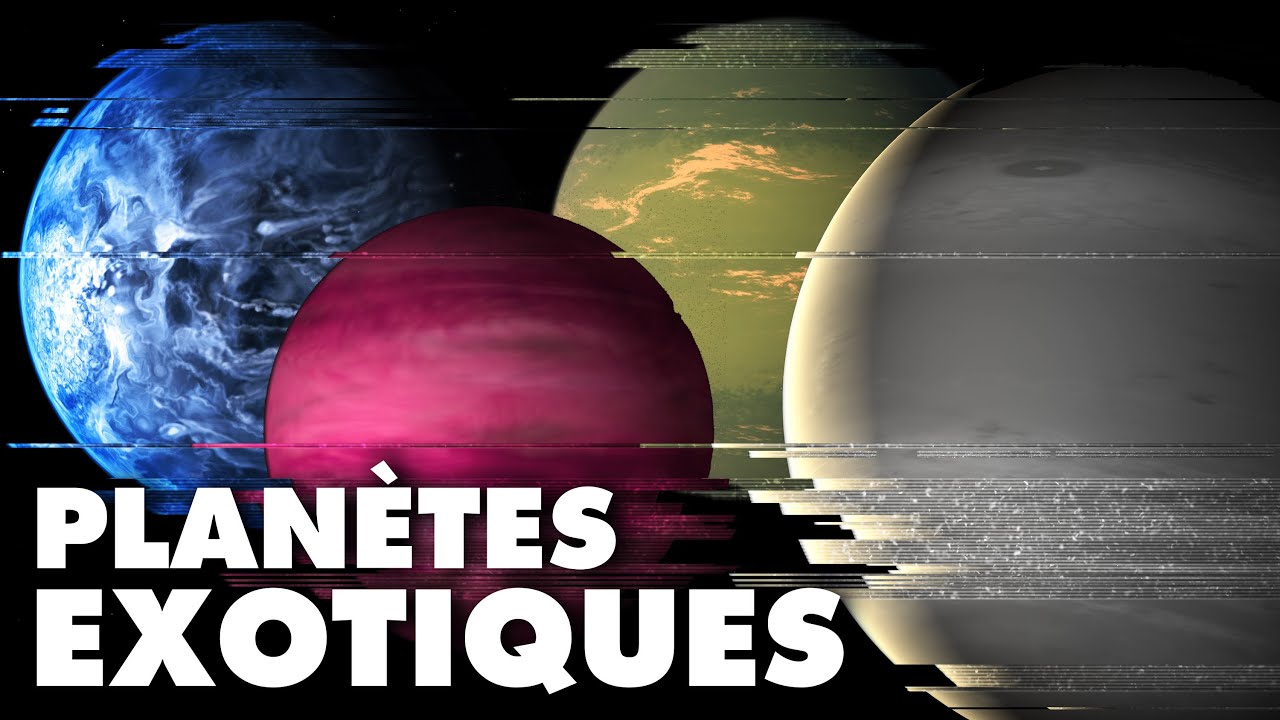
D'étranges planètes EXOTIQUES
Keywords
Summary
153 words
Critical Evaluation
Value of the Information & Strength of the Argument
The video provides valuable information about exotic exoplanets, presenting a curated selection of extreme cases that illustrate the diversity of planetary systems. The argumentation is solid, as it consistently distinguishes between confirmed scientific data and artistic interpretations, emphasizing that the visuals are plausible models based on observational data. The narrative is engaging and poetic, but it maintains scientific rigor by referencing specific exoplanets and their characteristics, such as temperatures, masses, and orbital configurations. The video also explains the methods of detection and the limitations of current technology, which adds depth to the presentation.
Scientific Rigor, Source Quality, Title Accuracy
The video demonstrates high scientific rigor by citing numerous authoritative sources, including NASA, the Exoplanet Archive, and peer-reviewed papers. The description provides a comprehensive list of references, including catalogs and scientific articles, which enhances the credibility of the content. The title accurately reflects the content, as the video indeed showcases strange and exotic exoplanets. The video also acknowledges the role of artistic impressions, clarifying that they are not actual images but plausible representations based on scientific models. Overall, the sources are of high quality and the title is well-matched to the content.
200 words
Title / Content Match
The title accurately reflects the content, which showcases a variety of unusual exoplanets with extreme characteristics.
Quality & Reliability
8/10
The video presents a well-structured overview of exotic exoplanets, citing numerous scientific sources and databases. The information is accurate and up-to-date as of early 2020, with a clear distinction between confirmed data and artistic interpretations. The reliance on established catalogs and peer-reviewed papers enhances reliability, though the popular science format simplifies some complex phenomena.
Key Moments
Markers derived by PSI from the transcript: the creator did not define chapters.
- Introduction to the number of known exoplanets and the diversity of exotic worlds.
- Kepler-9b: a hot gas giant facing destruction by a blue giant star.
- Free-floating planets: worlds without a star, drifting in space.
- Kepler-16b: a circumbinary planet with two suns and double sunsets.
- Gliese 667: a triple-star system with potential habitable super-Earths.
- Kepler-13Ab: a hot Jupiter with titanium oxide snow and extreme temperature differences.
- PSR B1257+12: planets orbiting a pulsar, remnants of a supernova.
- The coldest exoplanet and the vast number of worlds in the universe.
Cited Sources
- Exoplanet.eu Catalog — Catalog of exoplanets used for data on known planets.
- Habitable Exoplanets Catalog — Catalog of potentially habitable exoplanets.
- NASA Exoplanet Archive — NASA's archive of exoplanet data.
- NASA Exoplanet Exploration — NASA's new worlds atlas.
- Methods of detecting exoplanets — Wikipedia article on exoplanet detection methods.
- 20 Intriguing Exoplanets — NASA feature on intriguing exoplanets.
- Types of planets — Wikipedia article on planet types.
- arXiv paper on exoplanet atmospheres — Scientific paper on exoplanet atmospheres.
- Space artist Tim Pyle — Video about NASA's space artist.
- Neptune diamond rain — Article about diamond rain on Neptune.
- Helium in exoplanet atmosphere — Article about helium detection in exoplanet atmosphere.
- Eyes on Exoplanets — NASA interactive tool for exoplanets.
- Exoplanets.org — Exoplanet database.
- TRAPPIST-1 planets — Scientific paper on TRAPPIST-1 planets.
- Habitability of red dwarf systems — Wikipedia article on habitability of red dwarf systems.
- TRAPPIST-1 NASA page — NASA page on TRAPPIST-1 system.
- NASA press release on TRAPPIST-1 — NASA press release about TRAPPIST-1.
Concurring Sources
- NASA Exoplanet Archive — Confirms the existence and characteristics of many exoplanets mentioned.
- Exoplanet.eu Catalog — Provides data on exoplanets, including those featured in the video.
- Habitable Exoplanets Catalog — Lists potentially habitable exoplanets, including Gliese 667 Cc.
External References
Contribution & Novelties
The video provides a comprehensive and visually stunning overview of exotic exoplanets, highlighting extreme cases that are often not covered in mainstream media. It effectively combines scientific data with artistic impressions, making complex astronomical concepts accessible to a general audience. The video also emphasizes the vast number of exoplanets and the potential for habitable worlds, inspiring wonder and curiosity.
Pour aller plus loin :
- Exoplanet Exploration Program — NASA’s official exoplanet exploration page, offering detailed information on discoveries and missions.
- Kepler Mission — NASA’s Kepler mission page, which discovered thousands of exoplanets.
- Habitable Exoplanets Catalog — A catalog of potentially habitable exoplanets, maintained by the Planetary Habitability Laboratory.
- Pulsar Planets — Wikipedia article on pulsar planets, explaining their formation and characteristics.
- Circumbinary Planet — Wikipedia article on circumbinary planets, which orbit two stars.
133 words
Radar Profile
The radar profile shows high scores in information quality and reliability, with slightly lower scores in technical depth and quantity. This indicates a well-balanced presentation that is scientifically sound but accessible to a broad audience, prioritizing clarity and engagement over exhaustive technical detail.
💬 Très positif. Sur les 30 commentaires analysés, les spectateurs expriment une admiration unanime pour la beauté et la poésie de la vidéo, saluant la qualité de la narration, des images et de la musique, ainsi que la capacité à éveiller l'émerveillement et à offrir une évasion.