Keywords
Summary
226 words
Critical Evaluation
Value of the Information & Strength of the Argument
The video provides a valuable synthesis of complex physics concepts, making them accessible through clear analogies and a narrative structure. It effectively conveys the significance of the fine-structure constant and the mystery surrounding its value, drawing on Feynman’s and Lederman’s perspectives. The argumentation is generally solid, presenting established physics (cosmic expansion, horizon problem) accurately and then introducing speculative theories (VSL, cyclic cosmology) as hypotheses, not established facts. However, the video sometimes blurs the line between established science and speculation, particularly when discussing the possibility of c being ‘older than time’ or the implications of Penrose’s cyclic cosmology. The analogies, while helpful, can be misleading if taken too literally, and the video does not always emphasize the lack of empirical evidence for VSL and cyclic cosmology.
Scientific Rigor, Source Quality, Title Accuracy
The video cites several credible sources, including Feynman’s ‘QED’ and ‘The Feynman Lectures on Physics’ (with a link to the free online edition), Magueijo and Albrecht’s 1998 paper on VSL, and Penrose’s ‘Cycles of Time’. These are appropriate references for the topics discussed. The video also includes a disclaimer that it is not affiliated with Feynman and that about 85% of the content is based on his actual statements, with the rest fictionalized for educational purposes. This transparency is commendable. The title is somewhat sensationalist but not misleading, as it reflects the video’s central speculative thesis. The content generally aligns with the title, though the video could have more clearly distinguished between established physics and speculative ideas.
257 words
Title / Content Match
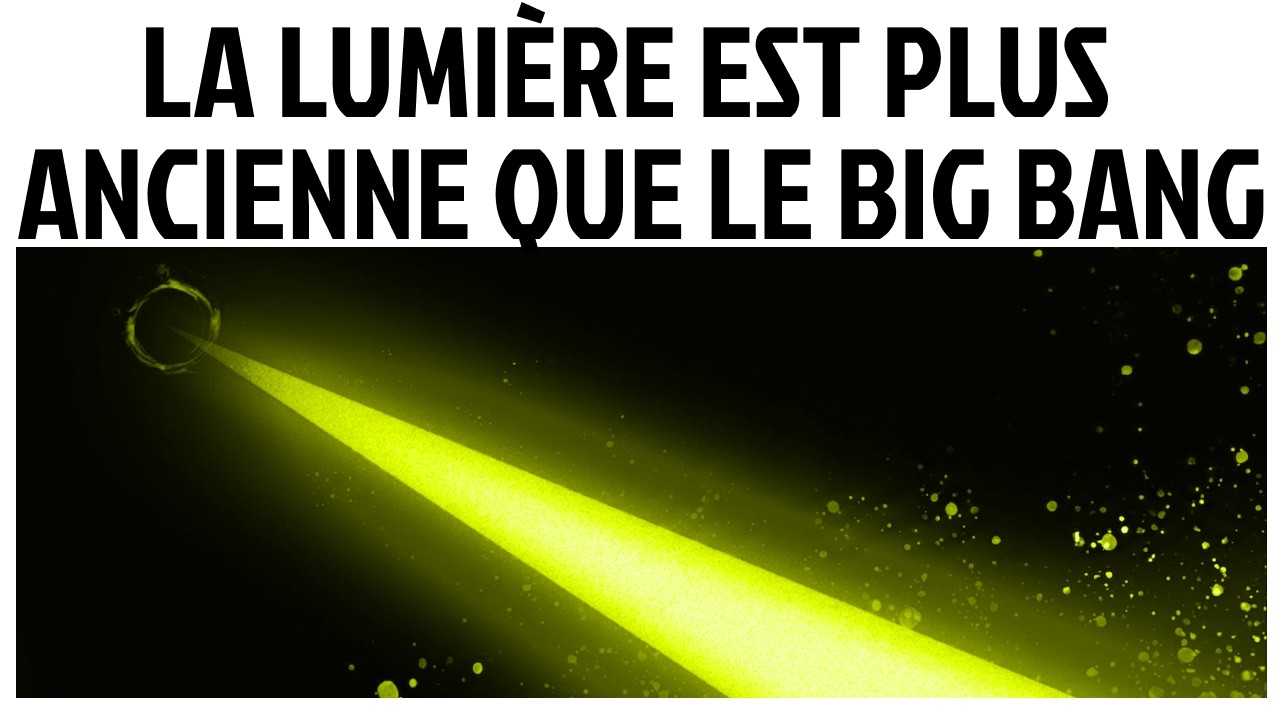
The title is engaging and reflects the video's central speculative thesis, though it may overstate the certainty of the claim; the content explores the idea that the speed of light might be a fundamental precondition of the universe rather than a property within it.
Quality & Reliability
7/10
The video presents a mix of established physics (special relativity, cosmological expansion, fine-structure constant) and speculative theories (VSL, cyclic cosmology), clearly distinguishing between them. It references credible sources (Feynman, Magueijo, Penrose) and includes a disclaimer about fictionalized elements. However, some analogies and rhetorical flourishes may oversimplify complex concepts, and the speculative nature of VSL and cyclic cosmology is not always emphasized with sufficient caution.
Key Moments
Markers derived by PSI from the transcript: the creator did not define chapters.
- Introduction to the mystery of the speed of light's exact value and its role in fundamental equations.
- Explanation of cosmic expansion and why galaxies can recede faster than light without violating relativity.
- Discussion of the fine-structure constant (α ≈ 1/137) and Feynman's 'magic number'.
- Introduction to the variable speed of light (VSL) theory and its motivation from the horizon problem.
- Story of João Magueijo and the publication history of the VSL theory.
- Discussion of potential observational evidence for VSL, including James Webb Space Telescope findings.
- Exploration of Penrose's cyclic cosmology and the idea that c might transcend each universe cycle.
- Reflection on the mystery of α and the possibility that the constants are necessary for life.
Cited Sources
- The Feynman Lectures on Physics — Referenced as a free resource for Feynman's lectures, supporting the discussion of his ideas.
Concurring Sources
- QED: The Strange Theory of Light and Matter — Feynman's book, cited in the video, discusses the fine-structure constant and the mystery of its value.
- A time varying speed of light as a solution to cosmological puzzles — The original VSL paper by Magueijo and Albrecht, which the video references.
Dissenting Sources
- Cosmic inflation — The mainstream cosmological model, which the video presents as an alternative to VSL. The video acknowledges that inflation is the standard explanation for the horizon problem, while VSL is a heterodox alternative.
Contribution & Novelties
The video’s original contribution lies in its narrative framing of the speed of light as a ‘grammar’ of the universe, synthesizing ideas from Feynman, Magueijo, and Penrose into a coherent and engaging story. It effectively communicates the deep mystery of the fine-structure constant and the speculative nature of VSL theory, making complex physics accessible to a general audience. The video also highlights the sociological aspect of scientific discovery, such as the initial rejection of Moffat’s work and the later acceptance of Magueijo’s similar idea.
Pour aller plus loin :
- Fine-structure constant - Wikipedia — Provides a comprehensive overview of α, its measurement, and theoretical significance.
- Variable speed of light - Wikipedia — Details the VSL theory, its history, and current status.
- Cosmic inflation - Wikipedia — Explains the inflationary model, which is the mainstream alternative to VSL for solving the horizon problem.
- Conformal cyclic cosmology - Wikipedia — Overview of Penrose’s cyclic cosmology, mentioned in the video.
157 words
Radar Profile
The radar profile shows high scores in information quantity and technical level, indicating a content-rich video with substantial scientific depth. The quality of information and global reliability are slightly lower, reflecting the inclusion of speculative theories and the need for clearer distinction between established facts and hypotheses.