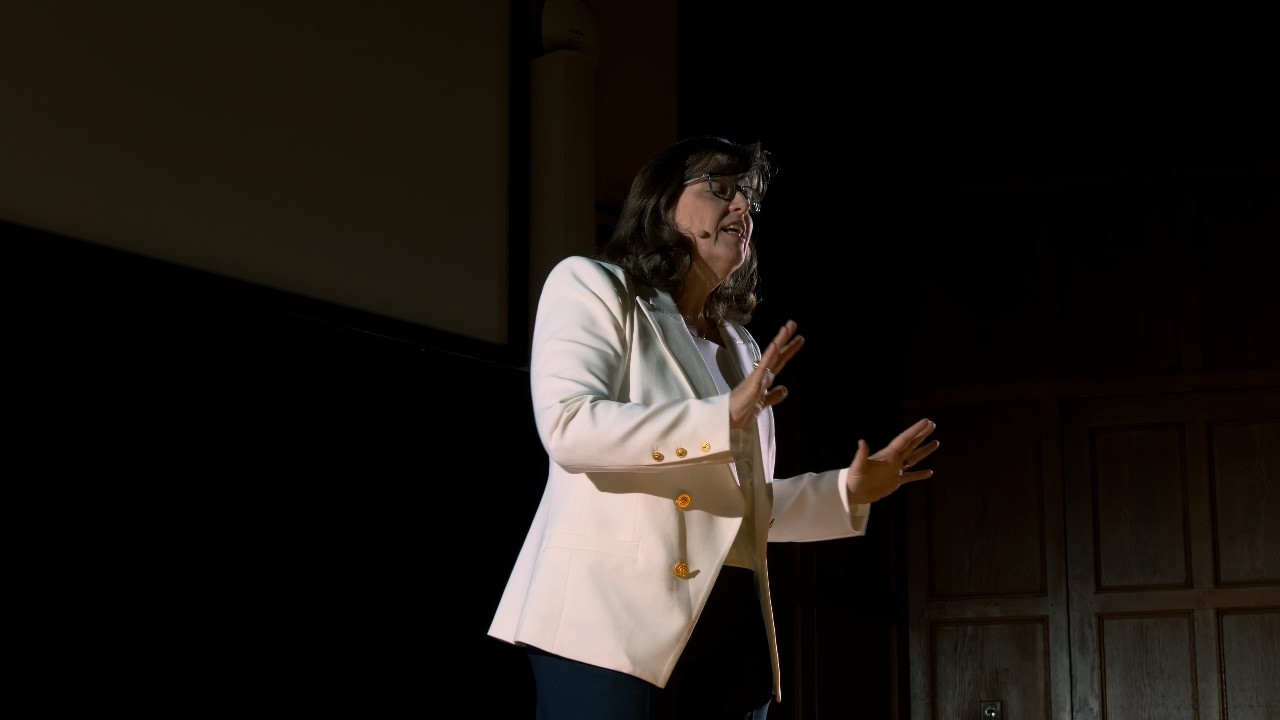
Science is for everyone. Even you! | Jennifer Swanson | TEDxNorthwesternU
Keywords
Summary
198 words
Critical Evaluation
Value of the Information & Strength of the Argument
The talk’s value lies in its accessible and relatable advocacy for science education. Swanson effectively uses personal anecdotes and simple examples to illustrate her points, making the argument compelling for a general audience. The argumentation is coherent, moving from a problem (declining curiosity) to a solution (promoting awareness and curiosity). However, it relies heavily on anecdotal evidence and lacks rigorous data or citations to support its claims, such as the specific statistics about question frequency and classroom time. The reasoning is more inspirational than analytical, which may limit its scientific weight but enhances its motivational appeal.
Scientific Rigor, Source Quality, Title Accuracy
The talk is a personal narrative and advocacy piece, not a scientific study. It cites anecdotal evidence and general references to educational surveys without specific citations. The speaker’s credibility is established through her background as a science educator and author, but the content is not rigorously sourced. The title accurately reflects the core message: science is accessible to everyone, and the talk delivers on this promise through personal stories and calls to action.
184 words
Title / Content Match
The title accurately reflects the core message: science is accessible to everyone, and the talk delivers on this promise through personal stories and calls to action.
Quality & Reliability
7/10
The talk is a personal narrative and advocacy piece, not a scientific study. It cites anecdotal evidence and general references to educational surveys without specific citations. The speaker's credibility is established through her background as a science educator and author, but the content is not rigorously sourced.
Key Moments
Markers derived by PSI from the transcript: the creator did not define chapters.
- Introduction: Science faces a crisis of trust, not research or funding.
- Science starts with a question; preschoolers ask 1-2 questions per minute.
- By fifth grade, questions drop from 100 to 2 per day due to educational priorities.
- Elementary schools spend only 20 minutes on science vs 90 on reading; teachers feel unprepared.
- Interactive audience poll: What do you think of when I say science? (nature, space, life science)
- Anecdote: First-grader says 'science smells' after recess, showing awareness.
- Personal story: Mrs. Ross, a female science teacher, inspired her career.
- Sixth graders discover inventions all around them, demonstrating curiosity.
- Conclusion: Science is our shared language for understanding the world.
Cited Sources
- Jennifer Swanson Books — Speaker's website, mentioned in the description as a resource for her work.
- TEDx Program — Mentioned in the description as the organizing body for TEDx events.
Concurring Sources
- National Survey of Science and Mathematics Education — Referenced in the talk as evidence of low science instruction time and teacher preparedness.
Contribution & Novelties
The talk’s original contribution is its emphasis on ‘awareness’ as a key to science engagement, rather than just more information. It reframes science as a shared language and encourages a cultural shift in education. The personal anecdotes and interactive examples make the message relatable.
Pour aller plus loin :
- Science education — Overview of science education, including challenges and approaches.
- Inquiry-based learning — A pedagogical approach that aligns with the talk’s advocacy for questioning and exploration.
- STEM education — Discusses the importance of science, technology, engineering, and math in education.
- Curiosity — Psychological aspects of curiosity and its role in learning.
101 words
Radar Profile
The radar profile shows moderate scores across all dimensions, with a slight peak in 'qualite_information' and 'fiabilite_globale'. This reflects a talk that is engaging and credible in its message but lacks deep technical detail and rigorous sourcing.