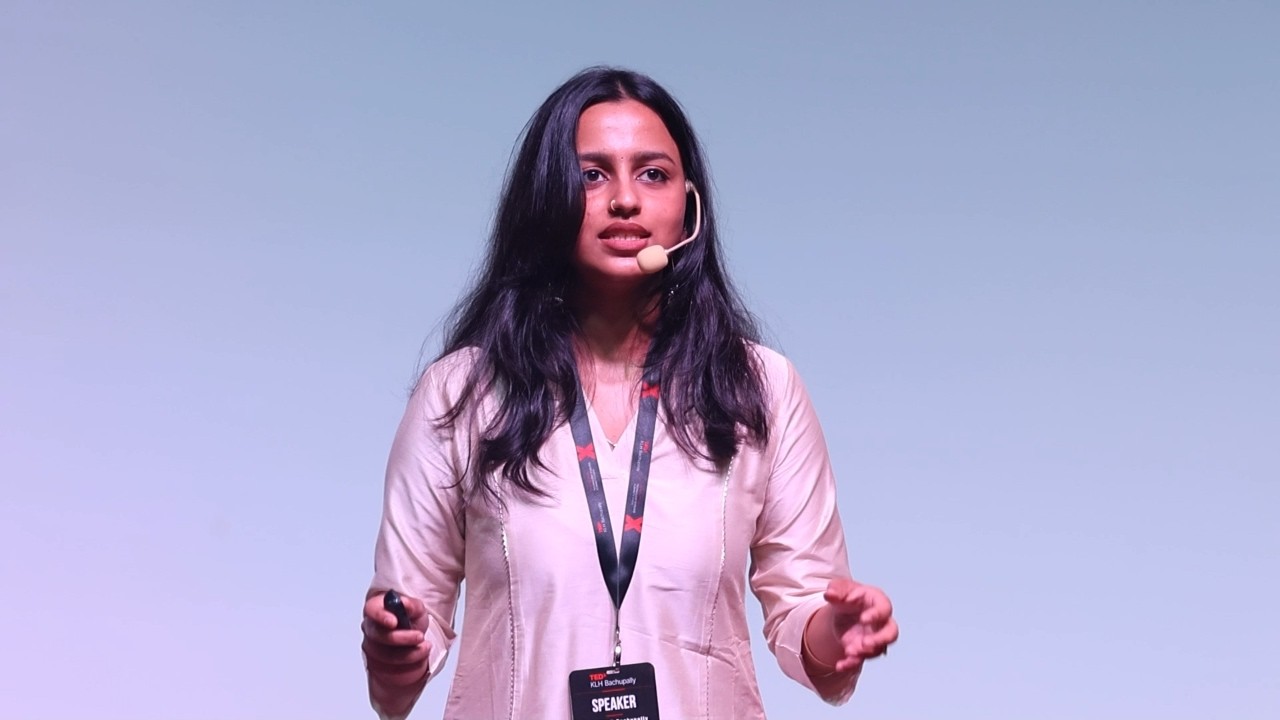
The Freedom to Be Ordinary
Keywords
Summary
134 words
Critical Evaluation
Value of the Information & Strength of the Argument
The talk’s value lies in its authentic personal narrative, which can resonate with individuals facing similar societal pressures. The argumentation is based on anecdotal evidence and emotional appeal rather than empirical data or logical rigor. The speaker uses rhetorical questions and relatable scenarios to engage the audience, but the reasoning is largely subjective. The conclusion that ‘wanting more is ordinary’ is presented as a personal revelation rather than a universally applicable principle. The talk lacks a structured argument and does not address counterarguments or complexities, such as cultural variations or the potential benefits of societal norms.
Scientific Rigor, Source Quality, Title Accuracy
The talk does not cite any scientific sources, studies, or expert opinions. The only reference is a quote from a Telugu poet, which is used for emotional effect. The title ‘The Freedom to Be Ordinary’ is somewhat fitting, but the content focuses more on the speaker’s personal struggle with perfectionism than on a broader exploration of the concept of ordinariness. The talk is a personal testimony, and its scientific rigor is minimal. The description mentions the speaker’s background in psychology, but this is not leveraged to provide any psychological insights or references. The talk adheres to the TEDx format but lacks the depth expected of a scientific or academic presentation.
221 words
Title / Content Match
The title accurately reflects the core message about reclaiming the freedom to be ordinary, though the talk focuses more on personal struggle than on a broader philosophical analysis.
Quality & Reliability
5/10
Personal narrative with no empirical data, no citations, and no references to scientific literature. The talk is based on subjective experience and anecdotal evidence, which limits its scientific reliability.
Key Moments
Markers derived by PSI from the transcript: the creator did not define chapters.
- Speaker introduces herself and sings a song as an introduction.
- Speaker poses questions about what is ordinary, using examples like asking for sick leave or choosing a partner.
- Speaker shares her story of moving to Hyderabad at 17 and her pursuit of perfection.
- Speaker describes her realization in October 2025 that she was suffocating despite achieving her goals.
- Speaker quotes a Telugu poet about society's indifference and discusses the 'noise' of corrupted normality.
- Speaker encourages the audience to define their own ordinary and reclaim their freedom.
Cited Sources
- TEDx Program — The talk is part of the TEDx series, and the description links to the TEDx program for more information.
Concurring Sources
- TEDx Program — The talk is part of the TEDx series, which aims to share ideas worth spreading.
Contribution & Novelties
The talk offers a personal perspective on the pressure to conform to societal expectations, particularly in the context of Indian culture. It highlights the internal conflict between achieving external success and maintaining personal identity. The speaker’s background as a singer and psychology student adds a unique angle, but the talk does not introduce novel concepts or research. It reinforces existing ideas about perfectionism and self-acceptance.
Pour aller plus loin :
- Perfectionism (psychology) — Relevant for understanding the psychological aspects of the speaker’s experience.
- Self-acceptance — Directly related to the talk’s theme of reclaiming one’s identity.
- Social norm — Provides a framework for understanding societal expectations discussed in the talk.
109 words
Radar Profile
The radar profile shows low scores across all dimensions, with the lowest in technical level and reliability. This reflects the talk's nature as a personal narrative without scientific depth. The scores for information quantity and quality are moderate, indicating some value in the personal insights shared, but the lack of rigor and sources limits its overall impact.
💬 Sur les 0 commentaires analysés, aucune tendance n'est disponible.