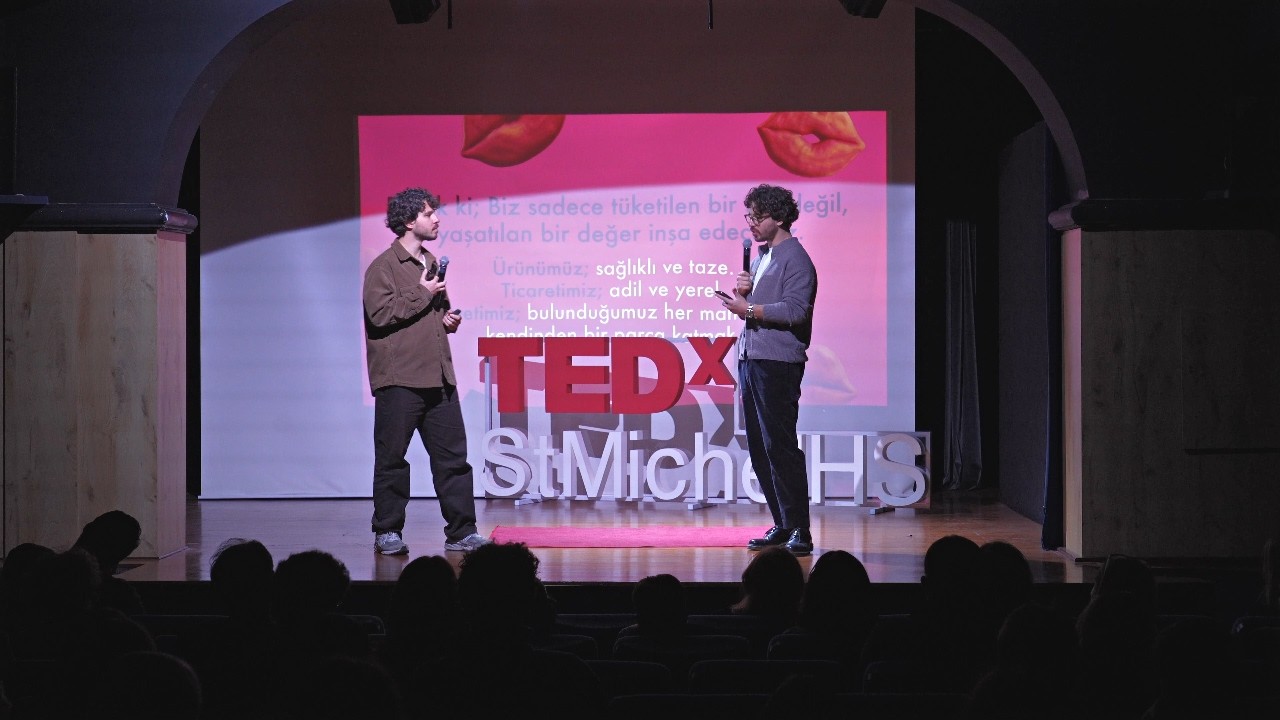
Mua İkizleri | Burak Yener & Burç Yener | TEDxSaint Michel HS
Keywords
Summary
177 words
Critical Evaluation
Value of the Information & Strength of the Argument
The talk offers valuable insights into entrepreneurial mindset and goal-setting, drawing from the speakers’ personal experience. The argumentation is coherent and structured around a narrative of growth and self-discovery. However, it lacks empirical evidence or data to support the claims, relying heavily on anecdotal success. The advice is practical and motivational, but its generalizability is limited. The speakers effectively argue that goals should evolve and that discipline is crucial, but the presentation would benefit from more concrete examples or metrics to strengthen the argument.
Scientific Rigor, Source Quality, Title Accuracy
The talk is a personal testimony with no scientific rigor or external sources. The only source mentioned is the TEDx platform itself. The title accurately represents the content, as it features the Mua twins discussing their journey. The lack of citations and empirical data reduces the scientific credibility, but for an opinion-based talk, the content is coherent and well-delivered. The speakers do not claim to present research, so the absence of sources is not a major flaw, but it limits the talk’s value for evidence-based decision-making.
185 words
Title / Content Match
The title accurately reflects the content: the speakers, the Mua twins, share their entrepreneurial journey and goal-setting philosophy at a TEDx event.
Quality & Reliability
5/10
The talk is a personal narrative and entrepreneurial advice, not a scientific presentation. It lacks empirical evidence, citations, or verifiable data. The speakers share subjective experiences and motivational insights, which are inherently anecdotal. The reliability is low for factual claims but acceptable for opinion-based content.
Key Moments
Markers derived by PSI from the transcript: the creator did not define chapters.
- Introduction: Burak and Burç Yener introduce themselves and the purpose of the talk.
- Childhood and family background: growing up in a neighborhood, family values, and the influence on their business.
- The decision to become ice cream makers: training in Italy and opening the first shop in 2017.
- The concept of selling happiness: using ice cream as a medium to create joyful experiences.
- Growth and expansion: from 32 square meters to 32 branches, and the increasing responsibilities.
- The importance of discipline and evolving goals: maintaining motivation through discipline.
- Building a culture and brand: the transition from a local shop to a national brand with a vision.
- Three key questions for goal setting: what to be part of, what fits your strengths, and can you bear the responsibility.
- Conclusion: encouragement to set goals, believe in them, and persist; the meaning of happiness in their journey.
Cited Sources
- TEDx Program — The talk was given at a TEDx event, and the description links to the TEDx program page.
Concurring Sources
- Goal setting theory — The talk's emphasis on setting specific and challenging goals aligns with established psychological research on goal setting.
Contribution & Novelties
The talk provides a personal perspective on goal setting and entrepreneurship, emphasizing the importance of aligning goals with personal values and community culture. It offers a framework of three questions to guide goal setting, which is practical and actionable. The narrative of using a product (ice cream) as a vehicle for broader values (happiness, community) is a compelling example of purpose-driven business.
Pour aller plus loin :
- Goal setting theory — Academic framework on how specific and challenging goals lead to higher performance.
- Effectuation — Entrepreneurial logic that emphasizes using available means and co-creation, relevant to the speakers’ approach.
- Ikigai — Japanese concept of purpose, which aligns with the talk’s emphasis on finding meaning in work.
116 words
Radar Profile
The radar profile shows low scores in technical level and reliability, reflecting the anecdotal and non-scientific nature of the talk. The moderate scores in information quantity and quality indicate that while the content is engaging and coherent, it lacks depth and evidence. Overall, the talk is more inspirational than informative.