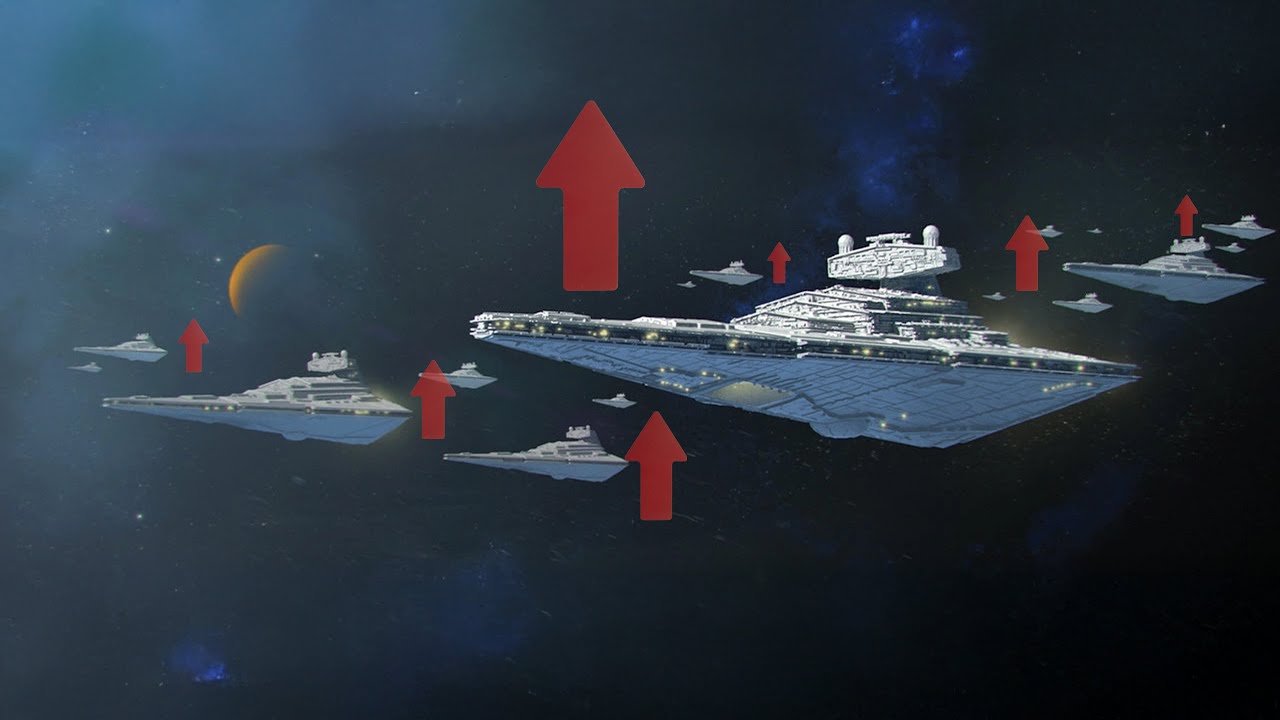
Why do all space battles look like this?
Keywords
Summary
194 words
Critical Evaluation
Value of the Information & Strength of the Argument
The video provides a compelling and well-argued explanation for a common sci-fi trope, blending historical references, in-universe lore, and cognitive science. The argument is structured logically, moving from the creative inspiration behind the trope to the physiological and cognitive reasons that make it plausible. The host effectively uses examples from Star Wars lore, such as Thrawn’s tactics and the Jedi’s failures, to illustrate the points. The discussion of human visual and spatial limitations is particularly insightful and adds depth to the analysis. However, the argument is largely speculative and based on the host’s interpretation rather than empirical evidence. The video does not cite any scientific studies or expert opinions to support the cognitive claims, which weakens the overall argumentation.
Scientific Rigor, Source Quality, Title Accuracy
The video demonstrates a good understanding of Star Wars lore and makes reasonable connections to historical naval and aerial warfare. However, it lacks rigorous sourcing: no academic papers, books, or official references are cited. The host mentions ‘The Expanse’ and ‘Ender’s Game’ as examples of more realistic space combat, but these are not formally cited. The title is accurate and the content matches it well. The video is more of an opinion piece than a scientifically rigorous analysis, which is acceptable for the genre but limits its reliability as a source of factual information.
228 words
Title / Content Match
The title accurately reflects the content, which directly addresses the common visual trope of space battles being fought on a single plane.
Quality & Reliability
6/10
The video offers a well-structured and engaging exploration of the cognitive and practical reasons behind the 2D orientation of space battles in Star Wars. It combines historical references (WWII, naval warfare) with in-universe lore and some scientific concepts (human vision, spatial cognition). However, it lacks formal citations, relies heavily on subjective interpretation of fictional lore, and does not provide empirical evidence or expert testimony to support its claims.
Key Moments
Markers derived by PSI from the transcript: the creator did not define chapters.
- Introduction to the question: why are starships oriented the same way in battles?
- Explanation of George Lucas's inspiration from WWII dogfights and naval battles.
- Discussion of Thrawn's 3D tactical genius and the Chiss perspective.
- Human cognitive limitations in vertical space and the example of Ender's Game.
- Design of starships reflecting human visual strengths and weaknesses.
- Jedi as poor naval commanders and the Battle of Coruscant example.
- Imperial Navy's lack of real combat experience and reliance on fear.
- Conclusion: 2D orientation is a practical simplification for humanoid crews.
Cited Sources
- The Expanse (TV series) — Mentioned as an example of more realistic space combat.
- Ender's Game (novel) — Referenced for the concept of training to think in 3D space.
- Thrawn (character) — Discussed as a tactical genius who thinks in 3D.
Concurring Sources
- The Expanse (TV series) — Often praised for realistic space combat with 3D maneuvers.
- Ender's Game (novel) — Explores the importance of 3D thinking in space warfare.
Dissenting Sources
- Star Wars: The Clone Wars (TV series) — Some episodes feature more 3D-oriented battles, contradicting the general trend.
Contribution & Novelties
The video offers a novel perspective by combining in-universe lore with cognitive science to explain a visual trope. It goes beyond simple ‘it’s for the audience’ explanations by providing a plausible in-world rationale based on human physiology and psychology. The discussion of how different species might fight in space is a creative addition.
Pour aller plus loin :
- Human spatial cognition and navigation — Provides background on how humans perceive and navigate 3D space.
- Binocular vision — Explains the advantages and limitations of human depth perception.
- The Expanse (TV series) — Known for its realistic depiction of space combat, often cited as a contrast to Star Wars.
107 words
Radar Profile
The radar profile shows a balanced performance with moderate scores across all dimensions. The video excels in providing information and maintaining a coherent argument, but lacks in technical depth and formal sourcing, which is typical for an opinion-based analysis.
💬 Positif. Sur les 30 commentaires analysés, la majorité exprime un accord avec l'analyse, appréciant la profondeur et les références, avec quelques suggestions d'autres œuvres comme The Expanse.