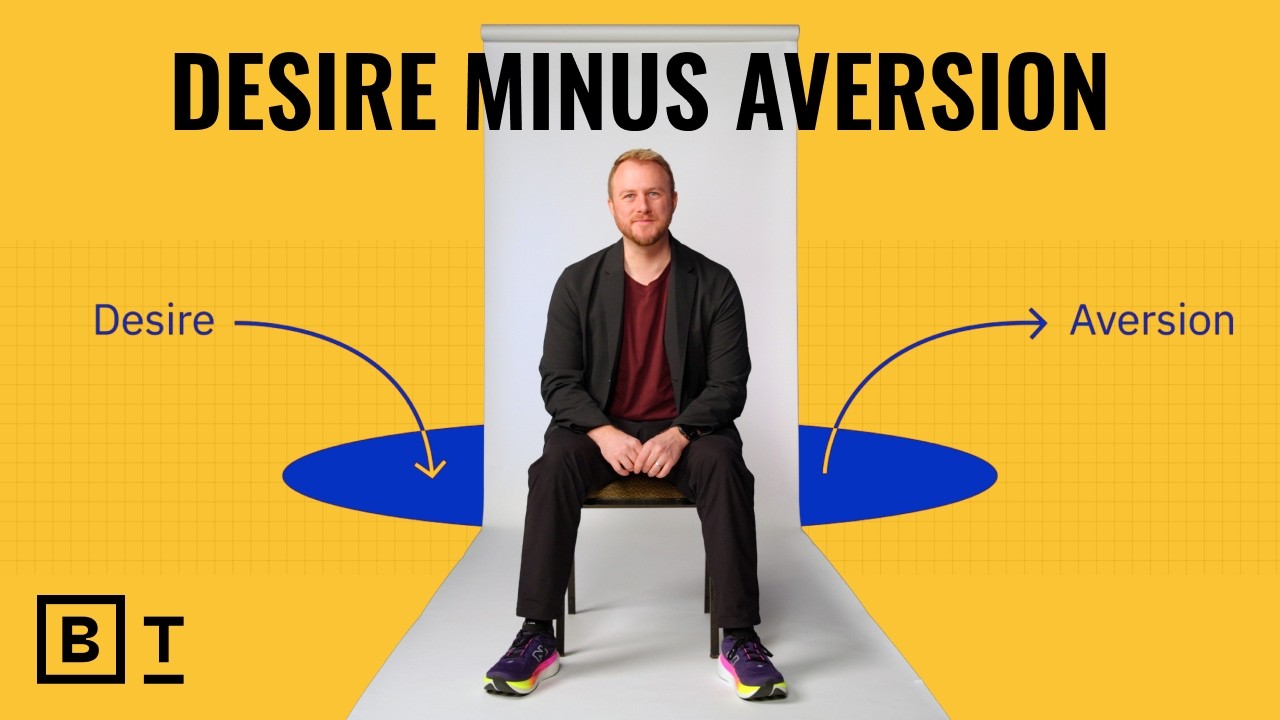
The productivity advice that will actually improve your life | Chris Bailey: Full Interview
Keywords
Summary
112 words
Critical Evaluation
The interview provides a comprehensive overview of productivity from a psychological perspective, emphasizing the role of intentionality and values. Bailey’s arguments are coherent and well-structured, drawing on both personal experience and academic research. He references Schwartz’s theory of basic human values, which adds credibility, but he does not cite specific studies during the conversation, limiting the verifiability of his claims. The advice is practical and actionable, with clear frameworks like the intention stack and the rule of three. However, some concepts, such as the ‘intention stack,’ are presented as novel without explicit scientific backing, which may be a concern for rigorous evaluation. The discussion on SMART goals is critical, but it aligns with existing literature that questions their effectiveness. The interview is engaging and accessible, but it could benefit from more explicit references to empirical evidence. The title accurately reflects the content, and the overall quality is high, though the scientific rigor could be enhanced with more citations.
158 words
Title / Content Match
The title accurately reflects the content: the interview focuses on productivity advice that is practical and evidence-informed, aiming to improve life.
Quality & Reliability
7/10
The interview is based on the author's book and references academic research (e.g., Schwartz's theory of basic human values), but lacks direct citations to specific studies during the conversation. The advice is practical and grounded in personal experiments, but the scientific evidence is not systematically presented.
Chapters
- Chapter 1: Intentionality and how it shapes our goals
- The “Intention Stack” explained
- Characteristics of intention
- Chapter 2: Why values are essential to goal attainment
- How to define your values and embrace them
- Chapter 3: How to follow through on goals
- Why SMART goals don’t work
- The four steps to actually accomplishing your goals
- What causes procrastination and how to combat it
- How to maintain momentum on your goals
- Chapter 4: Focus in the age of distraction
- How to achieve hyperfocus
- The benefit of letting your mind wander
Cited Sources
- Big Think Membership — Promotional link for Big Think membership, mentioned in the description.
- Video Transcript — Link to the full transcript of the interview.
- The lost art of accomplishment without burnout — Related video suggested in the description.
Concurring Sources
- Theory of Basic Human Values — Bailey references Schwartz's theory, which is consistent with this academic framework.
Dissenting Sources
External References
Contribution & Novelties
The interview offers a practical framework for aligning daily actions with deeper values, emphasizing the ‘intention stack’ as a tool for intentional living. It provides actionable advice on setting intentions and overcoming procrastination, grounded in psychological research.
Pour aller plus loin :
- Theory of Basic Human Values — This theory by Shalom Schwartz underpins the discussion on values.
- SMART criteria — Bailey critiques SMART goals; this article provides background.
- Procrastination — Relevant to the section on overcoming procrastination.
78 words
Radar Profile
The radar profile shows high scores in quantity and quality of information, with moderate technical level and reliability. This indicates a well-rounded, informative interview that is accessible to a general audience but grounded in research.