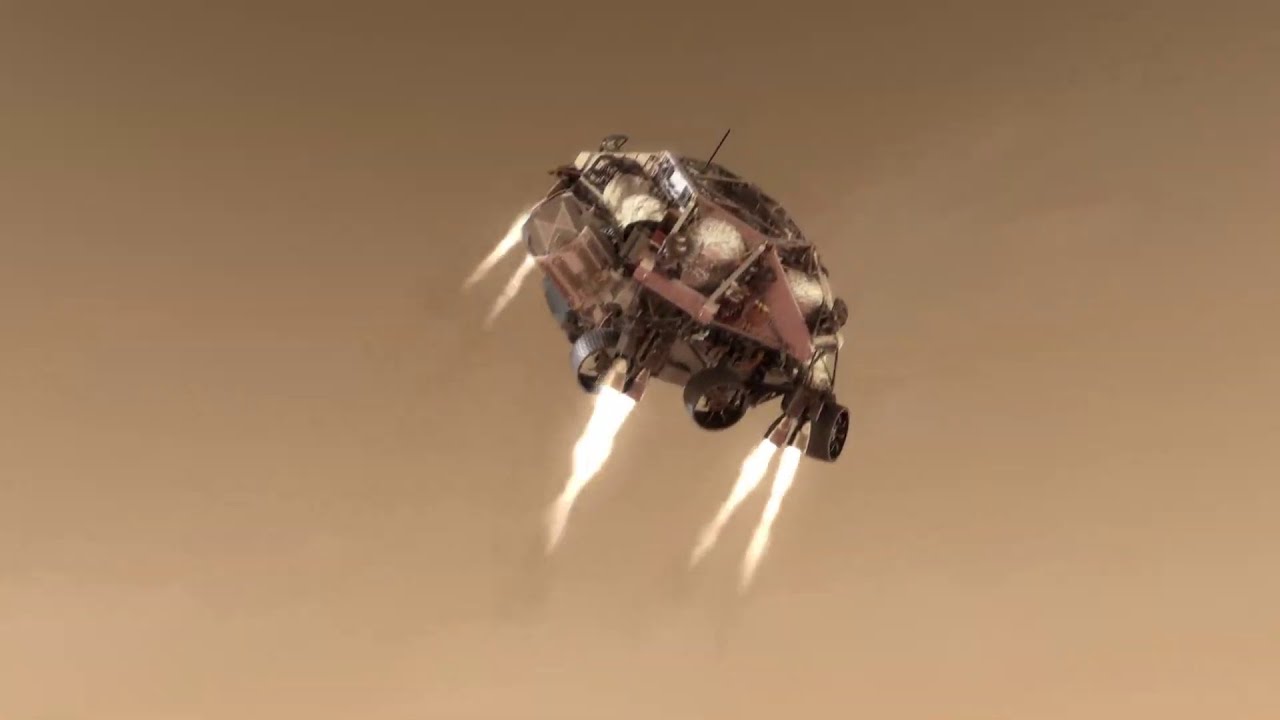
Comment le rover Perseverance se posera sur Mars
Keywords
Summary
151 words
Critical Evaluation
Value of the Information & Strength of the Argument
The video provides substantial value by going beyond the commonly cited ‘seven minutes of terror’ and offering a comprehensive, step-by-step breakdown of the EDL sequence. The argumentation is solid, grounded in mission data and comparisons with the previous MSL mission. The creator explains the engineering trade-offs and design choices, such as the use of a lifting entry to target high-altitude sites and the mass jettisoning for balance. The explanation of terrain-relative navigation and its impact on landing safety is particularly insightful. The video is well-structured, building from the mission timeline to each phase of EDL, and effectively uses visual aids and telemetry data to support the narrative.
Scientific Rigor, Source Quality, Title Accuracy
The video demonstrates high scientific rigor, with accurate technical details consistent with NASA’s official mission documentation. The creator cites NASA, JPL, and the Planetary Society for images, and the description includes links to supporting resources. The title accurately reflects the content, which is a focused explanation of the landing sequence. The video does not include formal citations within the narration, but the reliance on official mission data and the creator’s expertise lend credibility. The description also credits audio sources, showing attention to proper attribution.
206 words
Title / Content Match
The title accurately reflects the content, which focuses on the landing sequence of the Perseverance rover.
Quality & Reliability
9/10
The video is technically precise, based on NASA/JPL mission data, and includes detailed explanations of the EDL sequence. The creator demonstrates deep knowledge and uses credible sources (NASA, JPL). Minor limitations: no formal citations in the video itself, but the description provides links to supporting materials.
Key Moments
Markers derived by PSI from the transcript: the creator did not define chapters.
- Introduction to the video and the mission.
- Explanation of the landing date and time selection.
- Overview of the spacecraft components and cruise phase.
- Details on the entry phase and the use of a lifting body.
- Parachute deployment and its design.
- Terrain-relative navigation and hazard avoidance.
- Powered descent and skycrane maneuver.
- Touchdown and post-landing procedures.
- Comparison with Curiosity's landing and lessons learned.
- Future Mars Sample Return mission and conclusion.
Cited Sources
- Creative Commons License — License for audio used in the video.
- Nicolai Heidlas Music on SoundCloud — Source of background music.
- Utip page for Techniques Spatiales — Support page for the channel.
- Audio Library video — Music promotion video.
Concurring Sources
- NASA Mars 2020 Mission — Official mission page confirming the landing date and EDL details.
- JPL Perseverance Rover — JPL mission page with technical details.
Contribution & Novelties
The video offers a unique, in-depth look at the EDL sequence, providing technical details often overlooked in mainstream coverage. It highlights the engineering innovations, such as terrain-relative navigation and the guided entry system, and explains their significance. The comparison with Curiosity’s landing adds historical context and shows the evolution of the technology.
Pour aller plus loin :
- Mars 2020 Mission Overview — Official NASA page with detailed mission information.
- Entry, Descent, and Landing (EDL) - NASA — Official timeline and explanation of the EDL sequence.
- Terrain Relative Navigation - NASA — Article on the TRN system used by Perseverance.
- Mars Sample Return Mission — Official page for the future sample return mission.
112 words
Radar Profile
The radar profile shows high scores across all dimensions, with a slight dip in technical level compared to information quantity and quality. This indicates the video is highly informative and reliable, with a strong technical depth that is accessible to a broad audience.
💬 Très positif. Sur les 30 commentaires analysés, les spectateurs expriment une admiration unanime pour la qualité technique et la clarté de la vidéo, saluant le travail de recherche et la pédagogie de l'auteur.