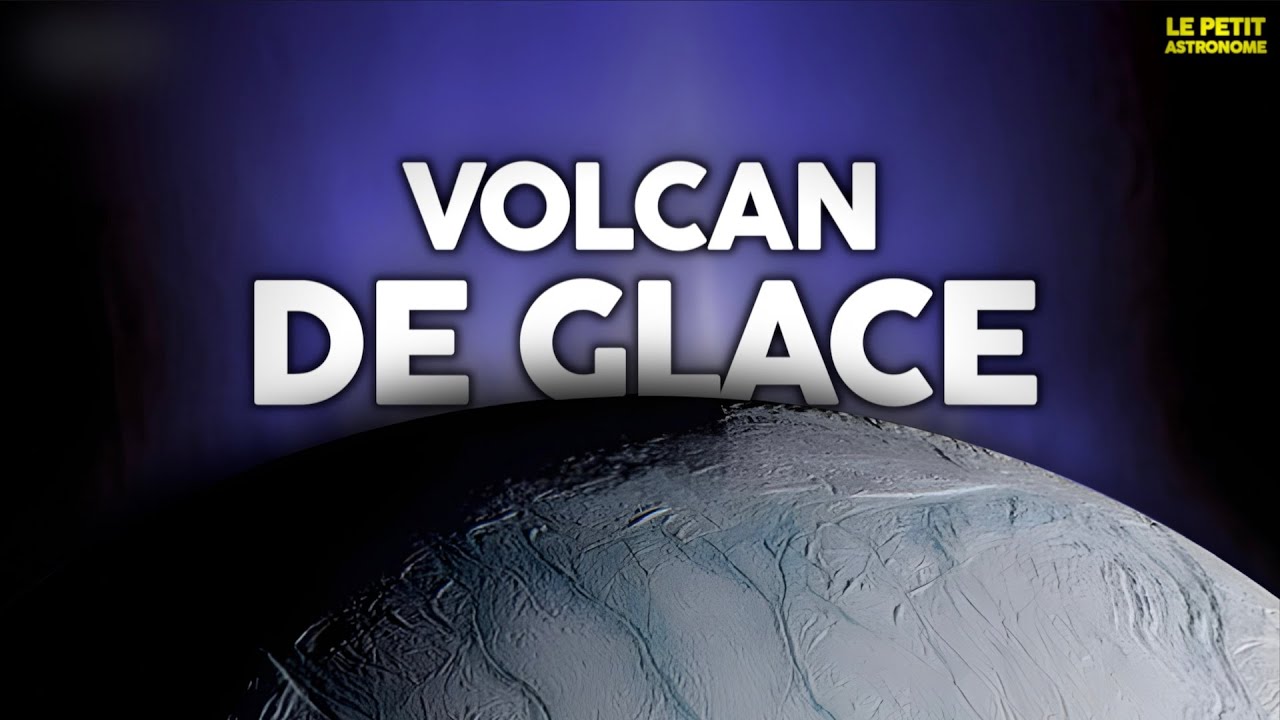
On a trouvé des Geysers de glace dans l'espace !
Keywords
Summary
147 words
Critical Evaluation
Value of the Information & Strength of the Argument
The video provides a compelling and informative overview of volcanic and cryovolcanic activity in the solar system. It effectively uses historical anecdotes and visual examples to illustrate key points, making the content engaging. The argumentation is solid, as it relies on well-documented discoveries from NASA missions and presents the information in a logical progression from terrestrial geysers to extraterrestrial phenomena. The explanation of tidal heating as the driver of Io’s volcanism is accurate and well-communicated.
Scientific Rigor, Source Quality, Title Accuracy
The video demonstrates good scientific rigor by referencing actual missions and discoveries, such as Voyager 1’s imaging of Io’s volcanic plumes and Cassini’s observations of Enceladus. The sources cited in the description include reputable scientific and institutional links, such as NASA and Wikipedia, which support the content. The title accurately reflects the video’s focus on ice geysers in space. The video does not overstate claims and appropriately distinguishes between classical volcanism and cryovolcanism.
163 words
Title / Content Match
The title accurately reflects the content, which focuses on ice geysers (cryovolcanism) discovered on various moons in the solar system.
Quality & Reliability
7/10
The video presents a well-structured narrative of the discovery of volcanic activity on Io and cryovolcanism on other moons, based on established scientific missions (Voyager, New Horizons, Cassini). The information is accurate and aligns with current scientific consensus, though it is presented in a popularized manner without deep technical detail.
Chapters
Cited Sources
- Volcanism on Io - Wikipedia — Provides detailed information on Io's volcanic activity, supporting the video's claims.
- Discovery image - Wikipedia — Explains the concept of discovery images, relevant to the Voyager 1 photo of Io's plume.
- Io (moon) - Wikipedia — General information about Io, its geology, and volcanic activity.
- Geyser - Wikipedia (French) — Background on terrestrial geysers, used as a comparison in the video.
- Voyager 1 - Wikipedia (French) — Information about the Voyager 1 mission, which discovered Io's volcanism.
- Exploration of Io - Wikipedia — Details on the history of Io exploration, including Voyager and New Horizons.
- Enceladus - Wikipedia — Information on Enceladus and its cryovolcanic activity, as discussed in the video.
- Triton (moon) - Wikipedia (French) — Details on Triton, including its geysers observed by Voyager 2.
- Voyager 1 image of Io's plume - NASA NSSDC — The actual image of Io's volcanic plume, a key visual in the video.
- PIA00379 - NASA Photojournal — Another NASA image of Io's volcanic activity.
- Voyager 1 - NASA Science — Official NASA page for the Voyager 1 mission.
- First Pictures: Voyager 1 Images of Io's Volcanic Plumes - Drew Ex Machina — A detailed article about the discovery of Io's plumes.
- Io's Geysers - Windows to the Universe — Educational resource on Io's geysers.
- Io's Prometheus - Windows to the Universe — Information about the Prometheus volcano on Io.
- Ocean geysers on Enceladus harbor large - C&EN — Article about Enceladus's geysers and their implications for habitability.
- Neptune gallery - Archive Wikiwix — Archived NASA gallery of Neptune images, including Triton.
- NYT article on Io — Recent news article about Io, likely providing additional context.
Concurring Sources
- Volcanism on Io - Wikipedia — Confirms the volcanic activity on Io as described in the video.
- Enceladus - Wikipedia — Supports the existence of cryovolcanic geysers on Enceladus.
- Triton (moon) - Wikipedia (French) — Confirms the geysers observed on Triton by Voyager 2.
External References
Contribution & Novelties
The video provides a compelling narrative that connects terrestrial geysers to extraterrestrial cryovolcanism, offering a fresh perspective on familiar concepts. It highlights the historical significance of the Voyager 1 discovery and effectively communicates the scale of these phenomena. The video also touches on the potential for life on moons like Enceladus, adding an element of scientific intrigue.
Pour aller plus loin :
- Volcanism on Io — Detailed overview of Io’s volcanic activity.
- Cryovolcanism — Concept of cryovolcanism, relevant to the video’s discussion.
- Tidal heating — Mechanism explaining the internal heat of Io and other moons.
- Enceladus — Further reading on Enceladus’s geysers and astrobiology.
- Voyager program — Background on the Voyager missions.
112 words
Radar Profile
The radar profile shows high scores in information quality and reliability, reflecting the video's accurate scientific content. The lower score in technical level indicates that the video is accessible to a general audience, which is appropriate for its educational purpose.
💬 Très positif. Sur les 30 commentaires analysés, l'enthousiasme est unanime : les spectateurs expriment leur passion pour l'astronomie, leur appréciation du travail du créateur, et partagent des souvenirs personnels liés aux missions Voyager.