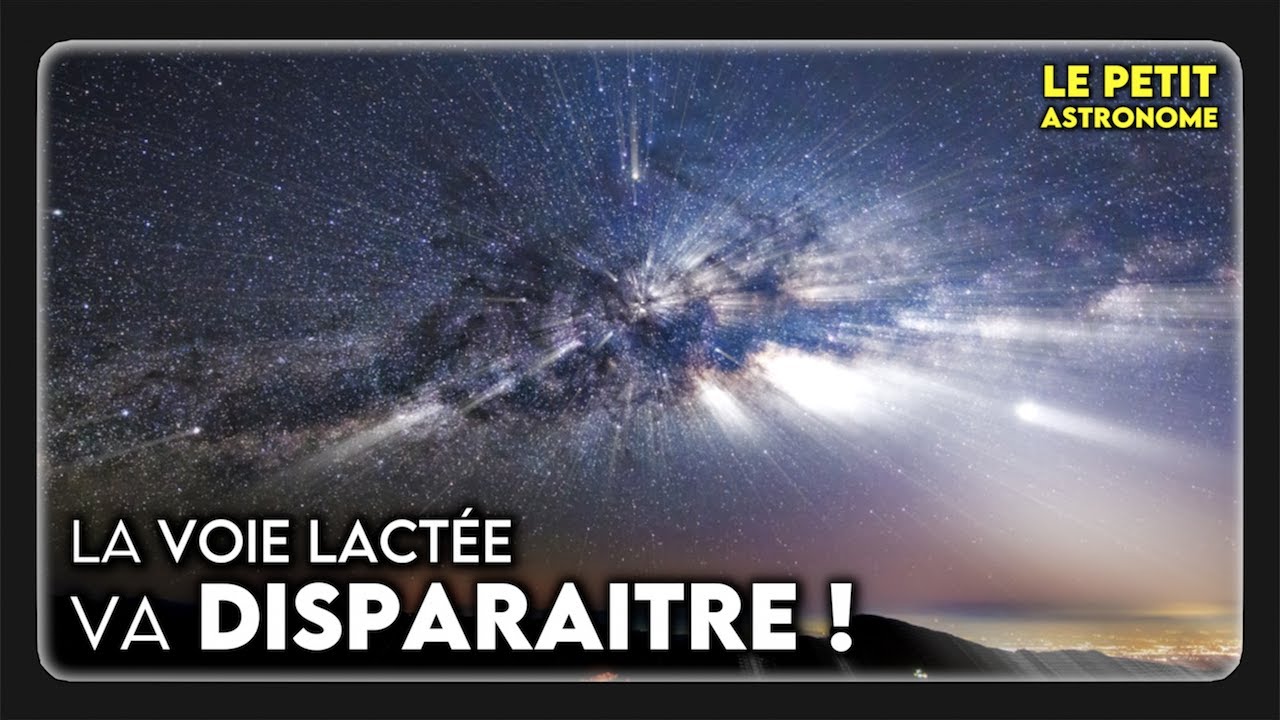
🛰 La VOIE LACTÉE va bientôt disparaitre !
Keywords
Summary
173 words
Critical Evaluation
Value of the Information & Strength of the Argument
The video provides valuable information about light pollution, a topic often overlooked. It effectively argues that light pollution is not just an astronomical nuisance but also an environmental and health issue. The argumentation is solid, building from historical context to current problems and solutions. The creator uses relatable examples and personal commentary to engage the viewer, while maintaining a scientific basis. The call to action, referencing the International Dark Sky Association, adds practical value.
Scientific Rigor, Source Quality, Title Accuracy
The video demonstrates scientific rigor by referencing credible sources such as the International Dark Sky Association and Wikipedia articles on light pollution. The description includes links to these sources, allowing viewers to verify the information. The title is somewhat sensational but accurately reflects the core message. The content is well-researched and presented in a clear, logical manner, with appropriate caveats about the creator’s expertise.
153 words
Title / Content Match
The title is catchy and slightly sensational, but the content directly addresses the disappearance of the Milky Way due to light pollution, making it adequately aligned.
Quality & Reliability
7/10
The video is a well-structured popular science presentation on light pollution, combining historical context, current data, and references to organizations like the International Dark Sky Association. The information is generally accurate and up-to-date as of 2020, though some statements are simplified for a general audience. The creator clearly distinguishes between established facts and personal opinions, and provides sources in the description.
Key Moments
Markers derived by PSI from the transcript: the creator did not define chapters.
- Introduction: The Milky Way's future and the claim of its imminent disappearance.
- Historical significance of the Milky Way in various cultures.
- The rise of electric lighting and the onset of light pollution.
- Impact of light pollution on ecosystems and human health.
- The problem with sodium lamps and inefficient lighting.
- Solutions: space telescopes and remote observatories.
- The International Dark Sky Association and the COVID-19 lockdown effect.
- Conclusion: The Milky Way as a privilege and a call to action.
Cited Sources
- Pollution lumineuse - Wikipédia — General information on light pollution.
- Cartes de pollution européenne AVEX 2016 — Maps of light pollution in Europe.
- International Dark Sky Association — Organization working to reduce light pollution.
- Définition de la pollution lumineuse - Futura Sciences — Definition and explanation of light pollution.
- Vidéo sur la pollution lumineuse — Referenced video on the topic.
Concurring Sources
- Light pollution - Wikipedia — General information on light pollution, consistent with the video's claims.
- International Dark Sky Association — Organization's mission aligns with the video's advocacy.
Contribution & Novelties
The video brings a fresh perspective on light pollution by linking it to the visibility of the Milky Way, making the issue tangible for a general audience. It combines historical context, current data, and practical solutions, encouraging viewers to engage with the topic. The emphasis on the COVID-19 lockdown as a natural experiment is a unique angle.
Pour aller plus loin :
- Light pollution - Wikipedia — Comprehensive overview of light pollution, its causes, and effects.
- International Dark Sky Association — Official website of the organization mentioned in the video, offering resources and initiatives.
- Bortle scale - Wikipedia — A scale measuring the darkness of the night sky, useful for understanding light pollution levels.
- Circadian rhythm - Wikipedia — Biological processes affected by light pollution, as discussed in the video.
130 words
Radar Profile
The radar profile shows high scores in information quantity and quality, with moderate technical level and reliability. This indicates a well-balanced popular science video that is informative and credible, though not highly technical.
💬 Très positif. Sur les 30 commentaires analysés, les spectateurs expriment une forte appréciation, soulignant la qualité pédagogique et l'enthousiasme du créateur, avec des anecdotes personnelles sur l'observation du ciel.