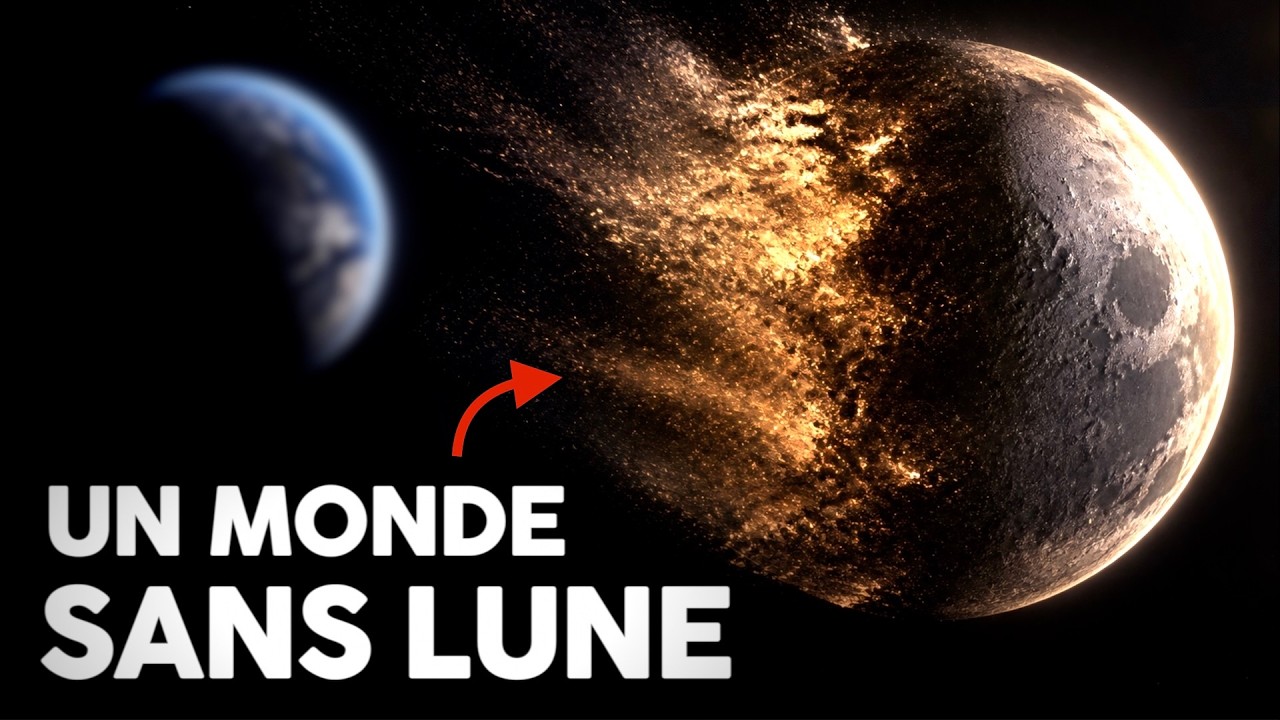
Et si la LUNE disparaissait subitement ?
Keywords
Summary
160 words
Critical Evaluation
Value of the Information & Strength of the Argument
The video provides substantial value by systematically exploring a complex hypothetical scenario, breaking it down into clear, digestible segments. The argumentation is solid, grounded in established physics and astronomy, and avoids sensationalism. The presenter effectively uses analogies and concrete examples to illustrate abstract concepts, such as comparing the Moon’s gravitational pull to a fraction of Earth’s gravity. The discussion of tides, axial tilt, and Milankovitch cycles is particularly well-argued, showing a logical progression from immediate effects to long-term consequences. The video also debunks common myths, reinforcing its scientific credibility.
Scientific Rigor, Source Quality, Title Accuracy
The video demonstrates strong scientific rigor, referencing reputable sources such as NASA, Wikipedia articles on Milankovitch cycles and thermohaline circulation, and space science publications. The information is presented accurately, with appropriate caveats about the hypothetical nature of the scenario. The title accurately reflects the content, and the video stays on-topic throughout. The inclusion of a sponsored segment is clearly marked and does not detract from the scientific content. The presenter’s tone is engaging yet authoritative, and the use of chapter markers enhances navigability. Overall, the sources are credible and the title-content alignment is excellent.
198 words
Title / Content Match
The title accurately reflects the content, which explores the consequences of a sudden lunar disappearance.
Quality & Reliability
8/10
The video presents a well-structured hypothetical scenario grounded in established physics and astronomy, citing credible sources and avoiding sensationalism. Minor simplifications are present, but overall the information is accurate and reliable.
Chapters
Cited Sources
- Destruction of the Moon - Wikipedia — Referenced as a source for exploring the hypothetical scenario of the Moon's destruction.
- Circulation thermohaline - Wikipédia — Cited when discussing ocean currents and the potential impact on the Gulf Stream.
- Cycles de Milankovitch - Wikipédia — Mentioned in the context of climate variations and the Moon's influence on Earth's orbital cycles.
- Exploration de la Lune - Wikipédia — Referenced when discussing the impact on lunar exploration programs and future space missions.
- Lune - Wikipédia — General reference for lunar facts and characteristics.
- JustRussel - Partenaire de la vidéo — Sponsor link mentioned in the video description.
- Moon - NASA Science — Cited as a source for lunar data and information.
- Earth's Moon By the Numbers - NASA Solar System Exploration — Referenced for quantitative data about the Moon.
- What if the Moon disappeared tomorrow? - Astronomy Magazine — Cited as an article exploring the same hypothetical scenario.
- What would happen if the Moon disappeared? - Royal Museums Greenwich — Referenced for additional perspectives on the consequences.
- What would happen if the Moon disappeared? - Space.com — Cited as a source for the hypothetical scenario.
- What would happen if the Moon actually disappeared? - ZME Science — Referenced for additional analysis of the scenario.
Concurring Sources
- What would happen if the Moon disappeared? - Space.com — Presents similar conclusions about the effects on tides and Earth's rotation.
- What if the Moon disappeared tomorrow? - Astronomy Magazine — Concurs with the video's analysis of the Moon's role in stabilizing Earth's axial tilt.
- What would happen if the Moon actually disappeared? - ZME Science — Aligns with the video's discussion on the long-term climatic consequences.
Dissenting Sources
- No source discordant found — All cited sources are consistent with the video's content.
Contribution & Novelties
The video offers a comprehensive and engaging synthesis of existing scientific knowledge about the Moon’s role, presenting it in an accessible format. It effectively combines multiple scientific disciplines—astronomy, geophysics, oceanography, and climatology—to explore a hypothetical scenario, providing viewers with a holistic understanding of the Moon’s importance. The clear structure and use of analogies make complex concepts understandable without oversimplifying. The video also debunks common misconceptions, adding educational value.
Pour aller plus loin :
- Giant-impact hypothesis — Explains the leading theory of the Moon’s formation, which the video briefly mentions.
- Tidal acceleration — Details the gravitational interaction between Earth and the Moon, relevant to the discussion on Earth’s rotation slowing.
- Axial tilt — Provides more information on Earth’s obliquity and its stability, a key point in the video.
- Precession — Explains the 26,000-year cycle mentioned in the video.
- Thermohaline circulation — Offers deeper insight into ocean currents and the potential impact on the Gulf Stream.
154 words
Radar Profile
The radar profile shows high scores across all dimensions, indicating a well-balanced and reliable video. The lowest score is in technical level, which is appropriate for a general audience, while the highest are in information quantity and quality, reflecting the video's comprehensive and accurate content.
💬 Très positif. Sur les 30 commentaires analysés, les spectateurs expriment un enthousiasme marqué, saluant la qualité pédagogique, la rigueur scientifique et le divertissement offert par la vidéo.