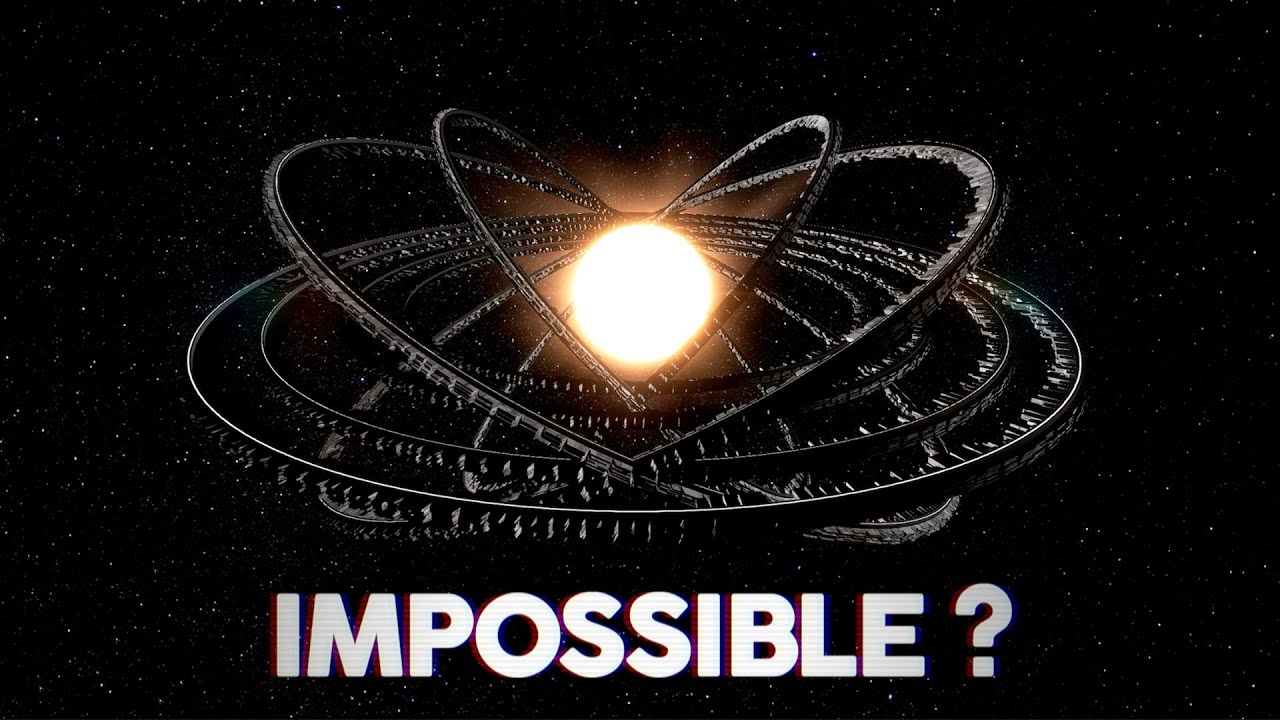
Comment les EXTRATERRESTRES utilisent l'énergie des ÉTOILES
Keywords
Summary
148 words
Critical Evaluation
Value of the Information & Strength of the Argument
The video provides a valuable overview of key concepts in astrobiology and megastructure theory, making complex ideas accessible to a general audience. It effectively explains the Kardashev scale and the engineering challenges of Dyson spheres, using clear analogies and examples. The argumentation is generally solid, but it sometimes blurs the line between scientific fact and speculation, particularly when discussing the potential existence of such structures. The narrator does a good job of presenting the concepts as theoretical and encourages critical thinking, but could have more explicitly distinguished between established science and science fiction.
Scientific Rigor, Source Quality, Title Accuracy
The video references several sources, including a 2024 study on potential Dyson sphere candidates and Wikipedia articles on the Kardashev scale and Dyson spheres. The sources are relevant and generally reliable, though the video does not always cite them explicitly during the narration. The title accurately reflects the content, which is a science communication piece about extraterrestrial energy use. The video’s scientific rigor is moderate: it presents concepts accurately but sometimes oversimplifies or omits nuances. The title is well-matched to the content, and the video does not overpromise or mislead.
198 words
Title / Content Match
The title accurately reflects the content, which explores how advanced civilizations might harness stellar energy through megastructures.
Quality & Reliability
7/10
The video presents a well-structured overview of Dyson spheres, the Kardashev scale, and Matrioshka brains, referencing key scientific concepts and a recent study. However, it blends scientific facts with speculative elements and does not always clearly distinguish between established science and theoretical concepts.
Chapters
Cited Sources
- A search for technosignatures around 11,680 stars with the Green Bank Telescope — Study analyzing millions of stars for potential Dyson sphere candidates, mentioned in the video.
- Échelle de Kardachev — Wikipedia article on the Kardashev scale, referenced in the video's description.
- L'échelle de Kardashev : quel type de civilisation sommes-nous ? — Article explaining the Kardashev scale, linked in the description.
- Sphère de Dyson — Wikipedia article on Dyson spheres, referenced in the description.
- Search for Artificial Stellar Sources of Infrared Radiation — Original 1960 paper by Freeman Dyson proposing the Dyson sphere concept.
- Spitzer (télescope spatial) — Wikipedia article on the Spitzer Space Telescope, which observed Vega's infrared excess.
- Sphères de Dyson : anomalies cosmiques — Article about Dyson sphere anomalies, linked in the description.
- Matrioshka brain — Wikipedia article on Matrioshka brains, a concept discussed in the video.
- Cerveau matriochka — French Wikipedia article on Matrioshka brains.
- Freeman Dyson — Wikipedia article on Freeman Dyson, the physicist who proposed the Dyson sphere.
- Matrioshka brain — Fandom wiki article on Matrioshka brains, linked in the description.
- Véga — Wikipedia article on Vega, the star discussed at the beginning of the video.
Concurring Sources
- Search for Artificial Stellar Sources of Infrared Radiation — Original paper by Freeman Dyson proposing the concept, consistent with the video's description.
- A search for technosignatures around 11,680 stars with the Green Bank Telescope — Recent study on potential Dyson sphere candidates, aligning with the video's discussion.
Dissenting Sources
Contribution & Novelties
The video offers a comprehensive and accessible introduction to the concept of Dyson spheres and the Kardashev scale, synthesizing information from various sources. It stands out for its engaging storytelling and clear explanations of complex astrophysical ideas. The video also touches on the psychological and cultural reasons behind our fascination with extraterrestrial megastructures, adding a unique perspective.
Pour aller plus loin :
- Dyson sphere — Wikipedia article providing a detailed overview of the concept.
- Kardashev scale — Wikipedia article on the scale of civilization energy consumption.
- Matrioshka brain — Wikipedia article on the hypothetical megastructure computer.
- Tabby’s Star — Wikipedia article on the star with unusual dimming events.
- Fermi paradox — Wikipedia article on the paradox of the apparent absence of extraterrestrial civilizations.
123 words
Radar Profile
The radar profile shows a balanced performance across all dimensions, with slightly higher scores in information quantity and quality, and lower in technical depth. This indicates a well-rounded science communication video that is informative and reliable but does not delve into highly technical details.
💬 Très positif : Sur les 30 commentaires analysés, la grande majorité exprime un enthousiasme marqué pour la vidéo et une forte demande pour un futur iceberg sur le paradoxe de Fermi, avec des éloges récurrents sur la qualité du contenu et le style de présentation.