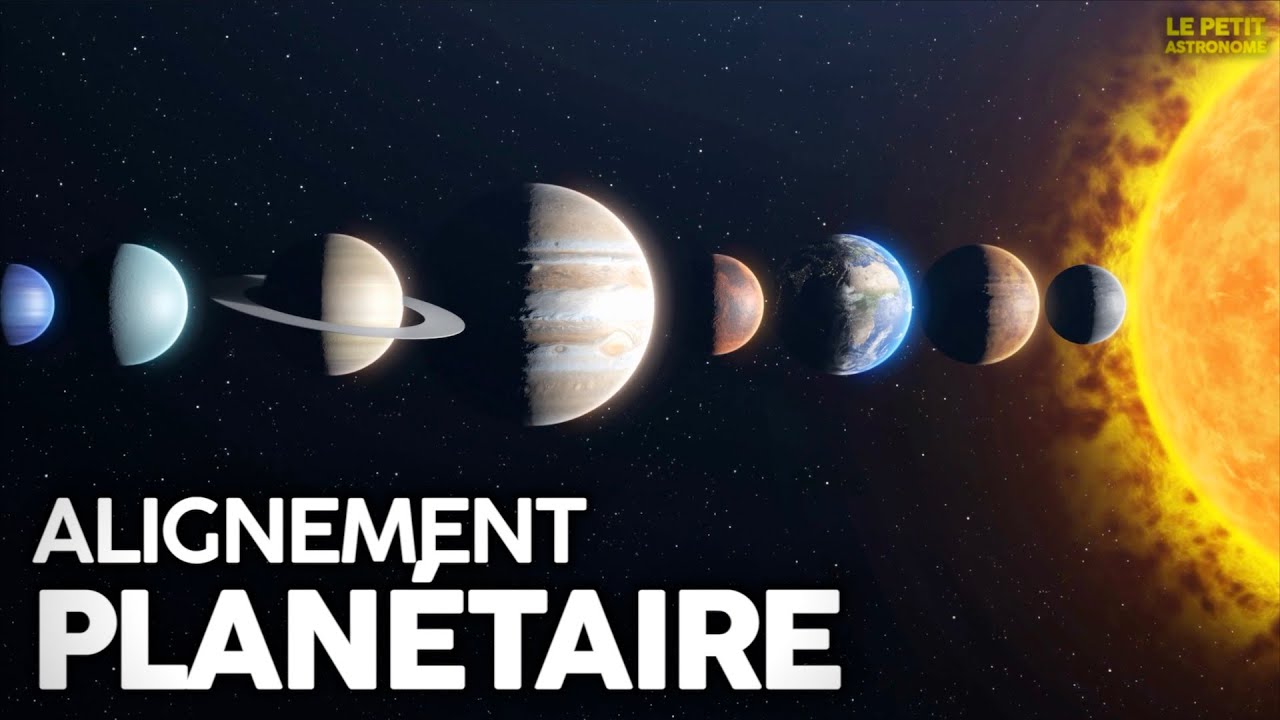
Et si toutes les Planètes étaient alignées ?
Keywords
Summary
170 words
Critical Evaluation
Value of the Information & Strength of the Argument
The video provides substantial value by debunking a popular myth with clear, logical reasoning and quantitative estimates. The argumentation is solid: it starts with a historical example of a failed prediction, then builds a probabilistic model step by step, adding planets one by one and explaining the multiplication of probabilities. The creator is transparent about the model’s simplifications (e.g., 3.6° tolerance) and acknowledges that a perfect alignment is impossible. The explanation of gravitational forces is accurate and effectively demonstrates that planetary alignment would have negligible effects. The video is engaging and accessible, making complex concepts understandable without oversimplifying the science.
Scientific Rigor, Source Quality, Title Accuracy
The scientific rigor is high: the creator references Jean Meeus’s calculation for the 2492 alignment and provides links to reputable sources like Sky & Telescope, HowStuffWorks, and Wikipedia. The historical account of the Jupiter Effect is accurate and well-documented. The title accurately reflects the content, though it could be seen as slightly clickbait, but the video delivers a thorough answer. The creator’s methodology is clearly explained, and he distinguishes between apparent and real alignments, which is a common misconception. Overall, the sources are credible and the reasoning is sound.
204 words
Title / Content Match
The title is a classic 'what if' question, and the video directly answers it with a thorough scientific analysis, including probabilities and effects on Earth. The title is slightly sensational but accurately reflects the content.
Quality & Reliability
8/10
The video presents a rigorous probabilistic analysis of planetary alignments, correctly distinguishing between apparent and real alignments, and debunks the 'Jupiter Effect' myth with historical context. The creator uses a clear methodology (dividing the ecliptic into 100 segments) and cites credible sources (Jean Meeus, Sky & Telescope, etc.). However, the probabilistic model simplifies orbital mechanics and the 3.6° tolerance is arbitrary, but the conclusions are robust and well-communicated.
Chapters
Cited Sources
- Jean Meeus - Wikipedia — Reference for the Belgian astronomer who calculated the 2492 alignment.
- List of future astronomical events - Wikipedia — General reference for future astronomical events, including alignments.
- How Planetary Alignment Works - HowStuffWorks — Explains the concept of planetary alignment and its effects.
- Will there ever be a moment when all eight major planets are in a straight line on the same side of the Sun? - Sky & Telescope — Addresses the probability of a full planetary alignment.
- SkyAlignments - Griffith Observatory (archived) — Archived page discussing planetary alignments.
- Espace : l'alignement de l'ensemble des planètes sur un seul axe, un phénomène plausible - 20 Minutes — French news article about planetary alignment plausibility.
- See a rare alignment of all the planets in the night sky - National Geographic — Article about observing planetary alignments.
- Le grand alignement des planètes de juin 2022 - Stelvision — French site about the June 2022 planetary alignment.
- When do the planets in our solar system all line up? - WTAMU Science Questions — Explains the frequency of planetary alignments.
- Le Fond Vidéo - YouTube — Background video used in the production.
- What year will planets align? - YourGameTips — A less authoritative source, but included in the description.
Concurring Sources
- Sky & Telescope - Will there ever be a moment when all eight major planets are in a straight line? — Confirms that a perfect alignment of all planets is extremely unlikely.
- WTAMU - When do the planets in our solar system all line up? — Provides similar estimates for the rarity of planetary alignments.
Dissenting Sources
- YourGameTips - What year will planets align?
Contribution & Novelties
The video’s original contribution lies in its clear, step-by-step probabilistic calculation of a full planetary alignment, making the concept accessible to a general audience. It effectively debunks the ‘Jupiter Effect’ myth and provides a memorable conclusion: the probability is so low that it will never happen within the Sun’s lifetime. The video also clarifies the distinction between apparent and real alignments, which is often confused in popular media.
Pour aller plus loin :
- Jean Meeus — Belgian astronomer known for his work on celestial mechanics and astronomical algorithms.
- Orbital resonance — The phenomenon where orbiting bodies exert regular, periodic gravitational influence, relevant to the 23:9 resonance mentioned.
- N-body problem — The problem of predicting the individual motions of a group of celestial objects interacting gravitationally, which underpins the difficulty of precise long-term predictions.
133 words
Radar Profile
The radar profile shows high scores in information quantity and quality, with a slightly lower technical level, indicating that the video is dense but accessible. The reliability is strong, reflecting the use of credible sources and sound reasoning.
💬 Très positif. Sur les 30 commentaires analysés, les spectateurs expriment un enthousiasme marqué pour la rigueur scientifique et la clarté de la démonstration, certains demandant même d'autres vidéos de débunkage.