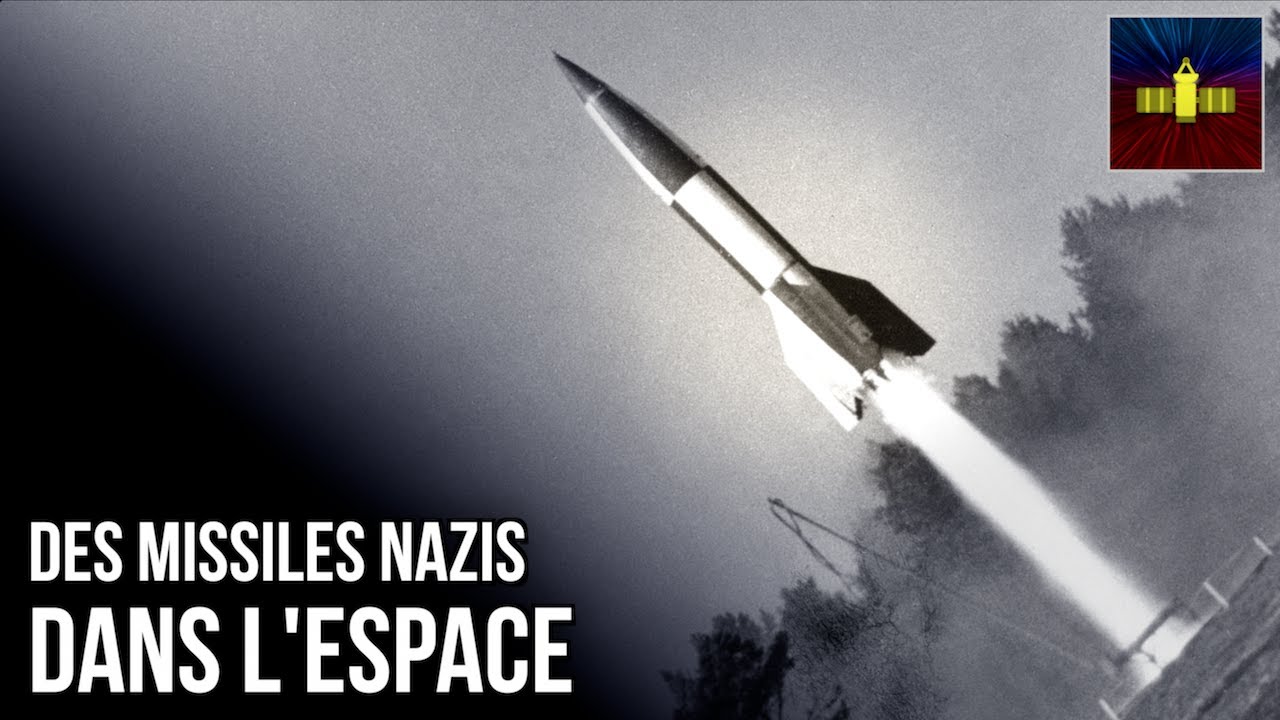
🛰 On a envoyé des missiles Nazis dans l'espace !
Keywords
Summary
162 words
Critical Evaluation
Value of the Information & Strength of the Argument
The video provides valuable historical context, connecting the V2 program to the birth of the space age. It effectively argues that the space race was a direct consequence of wartime technology and geopolitical rivalry. The narrative is coherent and well-paced, though it simplifies some technical aspects and does not delve into alternative perspectives or controversies surrounding von Braun’s involvement with the Nazi regime.
Scientific Rigor, Source Quality, Title Accuracy
The video relies on reputable sources, including Wikipedia articles and Encyclopædia Universalis, which are appropriate for a general audience. The title accurately reflects the content. The video does not present original research but synthesizes existing historical knowledge. The lack of critical discussion on the ethical implications of von Braun’s actions and the broader context of the V2 program is a minor weakness.
140 words
Title / Content Match
The title accurately reflects the content, which focuses on the V2 missile program and its role in the early space race.
Quality & Reliability
7/10
The video presents a well-structured historical narrative based on established facts and references several authoritative sources (Wikipedia, Encyclopædia Universalis). However, it simplifies complex technical details and relies on a single perspective, with no critical examination of conflicting historical interpretations.
Key Moments
Markers derived by PSI from the transcript: the creator did not define chapters.
- Introduction to the topic and its significance for space exploration.
- Discussion of Konstantin Tsiolkovsky's theoretical work on liquid-fueled rockets.
- Robert Goddard's experiments and the first liquid-fueled rocket launch.
- Development of the V2 missile by Wernher von Braun and his team.
- Description of the V2's technical specifications and its use as a weapon.
- Operation Paperclip and the transfer of German engineers to the US.
- First photograph of Earth from space taken by a V2 in 1946.
- Conclusion reflecting on the somber origins of space exploration and tribute to victims.
Cited Sources
- Constantin Tsiolkovski — Background on the Russian mathematician who theorized liquid-fueled rockets.
- Opération Paperclip — Details on the US program to recruit German scientists after WWII.
- Robert Goddard (physicien) — Information on the American physicist who built the first liquid-fueled rocket.
- V2 (missile) — Technical and historical details on the V2 missile.
- Wernher von Braun — Biographical information on the lead engineer of the V2 program.
- Premier missile balistique — Encyclopedic entry on the first ballistic missile.
Concurring Sources
- V2 (missile) — Confirms the technical details and historical context of the V2.
- Wernher von Braun — Supports the biographical information presented.
- Opération Paperclip — Corroborates the account of the US recruitment of German engineers.
Dissenting Sources
- No discordant sources — No conflicting sources were identified in the video or description.
Contribution & Novelties
The video offers a compelling narrative that connects the V2 program to the origins of space exploration, emphasizing the ethical paradox of technological progress born from atrocity. It provides a concise overview for a general audience, but does not introduce new scientific findings.
Pour aller plus loin :
- Operation Paperclip — Further reading on the US recruitment of German scientists.
- V-2 rocket — Detailed technical and historical information on the V2.
- Wernher von Braun — Biography and controversies.
- Konstantin Tsiolkovsky — His contributions to astronautics.
- Robert H. Goddard — Pioneer of liquid-fueled rocketry.
93 words
Radar Profile
The radar profile shows high scores in information quantity and quality, with moderate technical depth and reliability. This indicates a well-researched and informative video that is accessible to a general audience, though it may not delve deeply into technical or controversial aspects.
💬 Très positif. Sur les 30 commentaires analysés, les spectateurs expriment une forte appréciation pour la qualité de la vidéo, la qualité de la narration et l'hommage rendu aux victimes, avec des éloges récurrents sur le travail de recherche et le style de présentation.