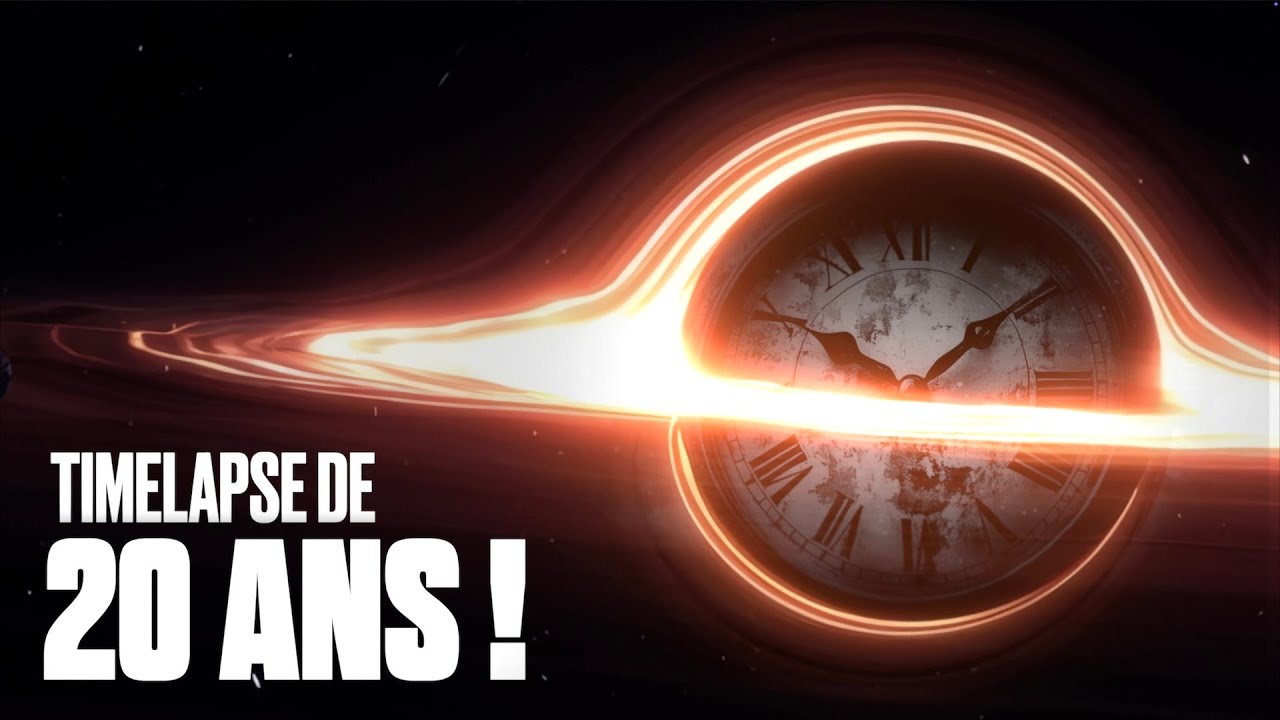
Les expériences temporelles sur l'UNIVERS qui font buguer votre cerveau
Keywords
Summary
183 words
Critical Evaluation
Value of the Information & Strength of the Argument
The video provides valuable information by presenting concrete examples of cosmic timescales, such as the Beta Pictoris b time-lapse and the Sagittarius A* stellar orbits, which are both scientifically significant and visually compelling. The argumentation is generally solid, relying on established astronomical facts and referencing Nobel Prize-winning research. However, the video occasionally ventures into speculative territory, such as the hypothetical perception of time by alien species, which is presented as a thought experiment rather than a scientific claim. The structure is engaging, building from familiar images like the Blue Marble to more abstract concepts, effectively conveying the mind-boggling scale of the universe.
Scientific Rigor, Source Quality, Title Accuracy
The video demonstrates a good level of scientific rigor by referencing real astronomical phenomena and providing links to sources in the description, including Wikipedia articles and scientific institutions like ESO. The title accurately reflects the content, which indeed explores mind-bending timescales. The inclusion of a promotional segment for a VPN sponsor is clearly marked and does not detract from the scientific content. The video’s use of time-lapses and comparisons is effective, though some simplifications are made for a general audience. Overall, the sources are credible and the title-content alignment is strong.
208 words
Title / Content Match
The title accurately reflects the content, which explores mind-bending timescales in the universe through various astronomical examples.
Quality & Reliability
7/10
The video presents well-established astronomical phenomena (e.g., Beta Pictoris b, Sagittarius A*) with references to scientific sources and Nobel Prize work. However, it includes speculative elements (e.g., alien perception of time) and a promotional segment, which slightly reduce the overall reliability.
Chapters
Cited Sources
- Antennae Galaxies - Wikipedia — Referenced when discussing the Antennae Galaxies as an example of galaxy merger.
- Whirlpool Galaxy - Wikipedia — Mentioned as another example of interacting galaxies.
- Apollo 17 - Wikipedia — Referenced for the Blue Marble photo and the mission details.
- Beta Pictoris b - Wikipedia — Referenced for the exoplanet and its time-lapse.
- Interacting Galaxies - Wikipedia — Referenced when explaining galaxy interactions.
- The Blue Marble - Wikipedia — Referenced for the Blue Marble photo.
- Earthrise - Wikipedia — Referenced in the context of Earth photos from space.
- Sagittarius A* - Wikipedia — Referenced for the supermassive black hole at the center of the Milky Way.
- Himawari 8 - Satellite Imagery — Referenced as a source for real-time Earth imagery.
- NASA Visible Earth - Blue Marble Collection — Referenced for Blue Marble images.
- Blue Marble Photo Timeline - Web Archive — Referenced for the history of the Blue Marble photo.
- NASA Worldview — Referenced for real-time satellite imagery.
- ESO Video - Sagittarius A* — Referenced for the time-lapse of stars orbiting Sagittarius A*.
- IFLScience - Longest Time-Lapse of an Exoplanet — Referenced for the Beta Pictoris b time-lapse.
- Quora - World's Longest Time-Lapse Video — Referenced in the context of long time-lapses.
- Reddit - 20-Year Time-Lapse of Stars Orbiting — Referenced for the time-lapse of stars around Sagittarius A*.
- Zoom Earth - Satellite Imagery — Referenced for real-time Earth observation.
Concurring Sources
- ESO - Sagittarius A* Time-Lapse — Supports the video's presentation of the stellar orbits around Sagittarius A*.
- IFLScience - Beta Pictoris b Time-Lapse — Confirms the details of the Beta Pictoris b time-lapse.
External References
Contribution & Novelties
The video offers a compelling compilation of astronomical time-lapses that illustrate the vast timescales of the universe, making abstract concepts tangible. Its originality lies in juxtaposing familiar images like the Blue Marble with long-term observations of exoplanets and black holes, effectively conveying the slow evolution of cosmic structures. The inclusion of the Beta Pictoris b and Sagittarius A* time-lapses provides viewers with direct visual evidence of celestial motion over decades, which is rarely presented in such an accessible format.
Pour aller plus loin :
- Beta Pictoris b - Wikipedia — Detailed information on the exoplanet and its discovery.
- Sagittarius A* - Wikipedia — Overview of the supermassive black hole and its significance.
- Galaxy merger - Wikipedia — Explains the process of galaxy collisions and mergers.
- Time perception - Wikipedia — Discusses how different species perceive time, relevant to the video’s concluding thoughts.
142 words
Radar Profile
The radar profile shows a balanced performance with high scores in information quantity and reliability, reflecting the video's solid factual base. The technical level is moderate, indicating that while the content is accessible, it still conveys complex astronomical concepts effectively. The overall quality is strong, with a slight dip in technical depth due to the popularization approach.
💬 Très positif. Sur les 30 commentaires analysés, les spectateurs expriment un enthousiasme marqué pour la qualité de la vulgarisation et la capacité de la vidéo à susciter l'émerveillement, avec des éloges récurrents sur le travail de la chaîne.