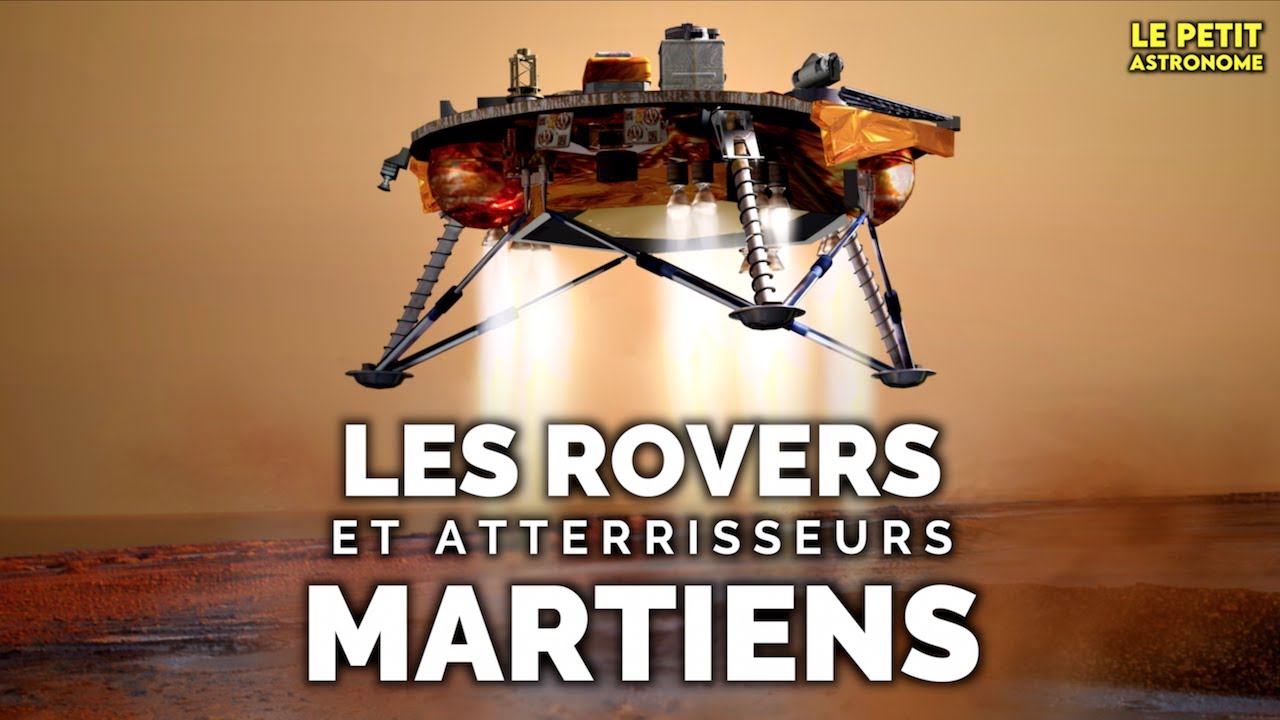
L'histoire des rovers martiens
Keywords
Summary
131 words
Critical Evaluation
Value of the Information & Strength of the Argument
The video provides a comprehensive and well-organized overview of Mars landing missions, offering valuable historical context and technical details. The argumentation is solid, supported by specific examples and data (e.g., distances traveled, mission durations). The creator also addresses common misconceptions, such as the temperature on Mars. The inclusion of failure cases (e.g., Mars 2, Mars Polar Lander) adds depth and illustrates the learning curve in space exploration. The narrative is engaging and maintains viewer interest throughout.
Scientific Rigor, Source Quality, Title Accuracy
The video demonstrates scientific rigor by referencing reliable sources, including NASA and Wikipedia articles, which are listed in the description. The creator clearly distinguishes between confirmed facts and hypotheses (e.g., the discovery of Mars 3’s landing site). The title accurately reflects the content, which is a historical overview rather than a technical analysis. The video is well-researched and presents information in a balanced manner, acknowledging both successes and failures.
160 words
Title / Content Match
The title accurately reflects the content, which covers the history of Mars rovers and landers.
Quality & Reliability
8/10
The video is a well-structured historical overview of Mars landers and rovers, based on reliable sources (NASA, Wikipedia, JPL). The creator clearly distinguishes facts from interpretations and mentions the sources in the description. Minor inaccuracies (e.g., 'Mars 1 lost in interplanetary space' is slightly imprecise) but overall reliable.
Key Moments
Markers derived by PSI from the transcript: the creator did not define chapters.
- Introduction: context of Perseverance landing and overview of video content.
- Soviet missions: Mars 2 and Mars 3, first objects to reach Mars.
- Discovery of Mars 3 landing site by amateur astronomers using MRO images.
- Mars 6 mission and its data on Mars' atmosphere.
- Viking program: successful landings and scientific results.
- Pathfinder and Sojourner: first rover on Mars.
- Mars Surveyor program: failure of Mars Climate Orbiter and Mars Polar Lander.
- Spirit and Opportunity rovers: discoveries and longevity.
- Curiosity and recent landers (Phoenix, InSight).
- Conclusion: importance of robotic exploration and future prospects.
Cited Sources
- Mars 3 - Wikipedia — Reference for the Mars 3 mission details and its landing.
- Liste des objets artificiels sur Mars - Wikipedia — List of artificial objects on Mars, used for context.
- Mars 1 - Wikipedia — Reference for the Mars 1 mission.
- Mars 2 - Wikipedia — Reference for the Mars 2 mission.
- Mars 6 - Wikipedia — Reference for the Mars 6 mission.
- NASA History - SP-441 — NASA historical document on Viking program.
- Clubic article on Mars 3 — Article about Mars 3 landing and its failure.
- JPL image of Mars 3 lander — Image of Mars 3 lander site from JPL.
Concurring Sources
- NASA Mars Exploration — Official NASA Mars exploration page, consistent with the video's content.
- Wikipedia - Mars 3 — Confirms the details of the Mars 3 mission.
Contribution & Novelties
The video provides a comprehensive and engaging historical overview of Mars landers and rovers, highlighting both successes and failures. It offers a unique perspective by emphasizing the role of amateur astronomers in locating lost spacecraft, such as Mars 3 and Beagle 2. The video also contextualizes the recent Perseverance landing within the broader history of Mars exploration.
Pour aller plus loin :
- Mars Exploration Program — Official NASA Mars exploration site with mission details.
- Viking program — Wikipedia article on the Viking program.
- Mars Reconnaissance Orbiter — Wikipedia article on MRO, which played a key role in locating lost landers.
- Curiosity rover — Wikipedia article on the Curiosity rover.
- Perseverance rover — Wikipedia article on the Perseverance rover.
118 words
Radar Profile
The radar profile shows high scores in information quantity and quality, with a moderate technical level. This indicates a well-researched and informative video that is accessible to a general audience, with a strong emphasis on historical narrative rather than deep technical analysis.
💬 Très positif. Sur les 30 commentaires analysés, les spectateurs expriment une grande appréciation pour la qualité de la vulgarisation, la diction et l'humour du créateur, tout en soulignant l'intérêt de l'aspect historique et des échecs.