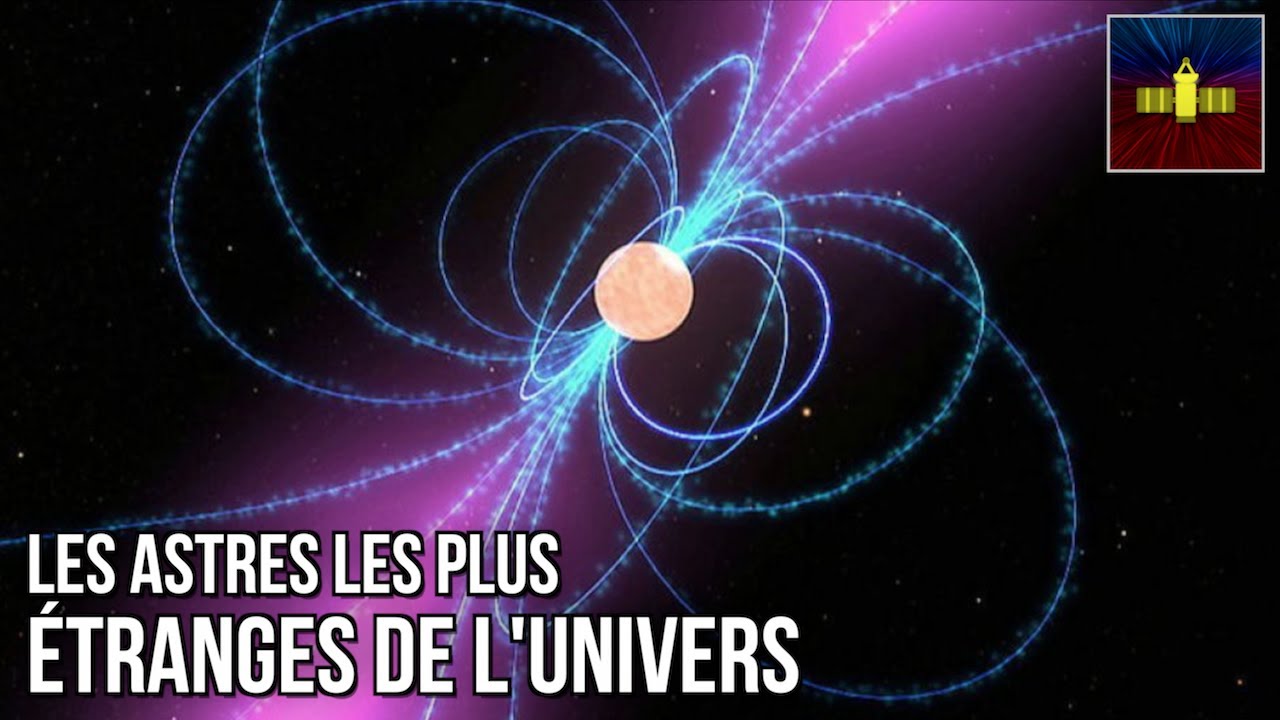
🛰 Les astres les plus étranges de l'Univers
Keywords
Summary
132 words
Critical Evaluation
Value of the Information & Strength of the Argument
The video provides valuable educational content, effectively explaining complex astrophysical concepts in an accessible manner. The argumentation is solid, building from basic stellar physics to the specific properties of neutron stars and pulsars. The historical narrative is well-structured and adds human interest. The presenter’s explanations are clear and logically sequenced, making the science understandable without oversimplifying. The use of analogies (e.g., comparing density to everyday objects) aids comprehension. The discussion of the Nobel Prize controversy is balanced, presenting both perspectives.
Scientific Rigor, Source Quality, Title Accuracy
The video demonstrates scientific rigor by relying on established sources such as Wikipedia and NASA. The information about neutron stars, pulsars, and the historical events is accurate and well-presented. The title accurately reflects the content, focusing on the strangest stars in the universe. The video does not overstate claims and appropriately notes uncertainties. The inclusion of the Nobel Prize controversy adds depth and shows attention to historical accuracy. Overall, the sources are reliable and the content is trustworthy.
173 words
Title / Content Match
The title accurately reflects the content, which focuses on neutron stars and pulsars as some of the strangest objects in the universe.
Quality & Reliability
7/10
The video provides a clear and engaging explanation of neutron stars and pulsars, with accurate scientific concepts (density, rotation, discovery history). It relies on established sources (Wikipedia, NASA) and correctly recounts the historical context, including the Nobel Prize controversy. Minor simplifications are present but do not mislead.
Key Moments
Markers derived by PSI from the transcript: the creator did not define chapters.
- Introduction to the video's topic and the story of Jocelyn Bell.
- Explanation of stellar life cycles and supernovae.
- Introduction to neutron stars and their composition.
- Discussion of density and mass per volume with examples.
- Explanation of why neutron stars are so dense.
- Story of Jocelyn Bell's discovery of pulsars in 1967.
- Explanation of pulsars and their rapid rotation.
- Discussion of the Nobel Prize controversy.
- Conclusion and reflection on the significance of the discovery.
Cited Sources
- Étoile à neutrons — Background information on neutron stars.
- Masse volumique — Definition and examples of density.
- Pulsar — Information on pulsars and their properties.
- Jocelyn Bell — Biographical details and discovery.
- Antony Hewish — Role in the discovery and Nobel Prize.
- Supernova — Explanation of supernovae and stellar death.
- Neutron Stars — NASA's overview of neutron stars.
- Jocelyn Bell privée de prix Nobel : la grande dame de l'astrophysique enfin récompensée — Article about the Nobel Prize controversy.
Concurring Sources
- Neutron Stars — NASA's page confirms the properties of neutron stars.
- Pulsar — Wikipedia article aligns with the video's description of pulsars.
Contribution & Novelties
The video offers an engaging and accessible introduction to neutron stars and pulsars, with a strong historical narrative centered on Jocelyn Bell’s discovery. It effectively explains complex concepts like density and rotation using relatable analogies. The inclusion of the Nobel Prize controversy adds a critical perspective on scientific recognition.
Pour aller plus loin :
- Neutron star — Comprehensive overview of neutron stars.
- Pulsar — Detailed information on pulsars and their characteristics.
- Jocelyn Bell Burnell — Biography and contributions.
- Supernova — Explanation of supernovae and stellar evolution.
86 words
Radar Profile
The radar profile shows high scores in information quality and technical level, with slightly lower scores in quantity and reliability. This indicates a well-explained and accurate video, though it could provide more depth and additional sources.
💬 Très positif. Sur les 30 commentaires analysés, les spectateurs expriment un fort enthousiasme pour la vulgarisation et l'humour, tout en soulignant l'injustice du prix Nobel pour Jocelyn Bell.