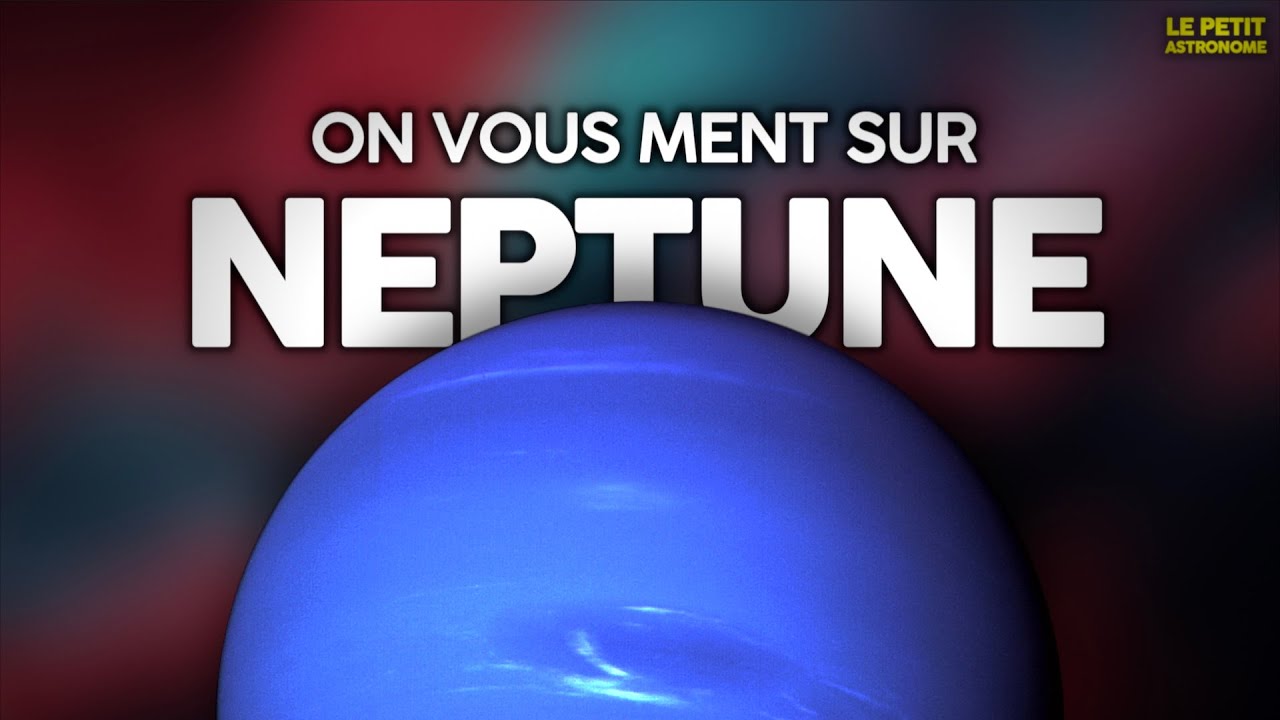
La vraie couleur des Planètes du Système Solaire
Keywords
Summary
150 words
Critical Evaluation
Value of the Information & Strength of the Argument
The video provides valuable information by correcting a common misconception about Neptune’s color, supported by recent scientific research. The argumentation is solid: it explains the scientific basis (methane absorption, image processing) and cites a peer-reviewed study. The reasoning is clear and logical, moving from the mystery to the explanation, and effectively uses examples like the James Webb calibration images to illustrate how color codes are arbitrary.
Scientific Rigor, Source Quality, Title Accuracy
The video demonstrates scientific rigor by referencing a specific study published in the Monthly Notices of the Royal Astronomical Society (Irwin et al., 2024) and providing links to reputable sources like Space.com and the New York Times. The title accurately reflects the content, and the video does not overstate claims. The description includes relevant links for further reading, enhancing its credibility.
142 words
Title / Content Match
The title accurately reflects the content, which focuses on the true colors of Uranus and Neptune as revealed by recent research.
Quality & Reliability
8/10
The video is based on a recent peer-reviewed study (Irwin et al. 2024, MNRAS) and correctly explains the scientific context, including the role of methane and the Voyager 2 image processing. The information is accurate and well-sourced, though the presentation is simplified for a general audience.
Chapters
Cited Sources
- Study on the true colors of Uranus and Neptune (MNRAS) — The peer-reviewed study by Patrick Irwin et al. that reanalyzed the colors of Uranus and Neptune.
- Numerama article on Neptune's true color — French science news article discussing the misconception about Neptune's color.
- Numerama article on why Uranus and Neptune have different blues — Explains the scientific reasons for the color difference between Uranus and Neptune.
- NYT article on Uranus and Neptune colors — News article covering the same study and its implications.
- Space.com article on similar shades of blue — Discusses how Voyager 2 images led to the misconception.
- Techno-Science article on true colors — French science website reporting on the corrected colors.
Concurring Sources
- Space.com article — Confirms that Voyager 2 images were enhanced, leading to the misconception.
- NYT article — Reports on the same study and agrees with the corrected colors.
Dissenting Sources
- No discordant sources found — All cited sources are consistent with the video's claims.
External References
Contribution & Novelties
The video brings a fresh perspective on a well-known topic by highlighting a recent scientific correction that has not yet permeated popular culture. It effectively explains the technical reasons behind the color discrepancy and encourages viewers to question the authenticity of astronomical images.
Pour aller plus loin :
- True color of Neptune and Uranus (MNRAS) — The original peer-reviewed study.
- Voyager 2 mission — Official NASA page for the Voyager 2 mission, which provided the original images.
- Hubble Space Telescope — NASA’s Hubble site, used in the study for spectral data.
- Color vision — Wikipedia article on how humans perceive color, relevant to understanding why color codes are arbitrary.
109 words
Radar Profile
The radar profile shows high scores in information quantity and quality, with a slightly lower technical level, indicating a well-researched yet accessible presentation. The reliability score is high, reflecting the use of credible sources.
💬 Très positif. Sur les 30 commentaires analysés, les spectateurs expriment un fort enthousiasme pour la qualité du contenu, la clarté des explications et l'humour du présentateur, sans aucune critique négative.