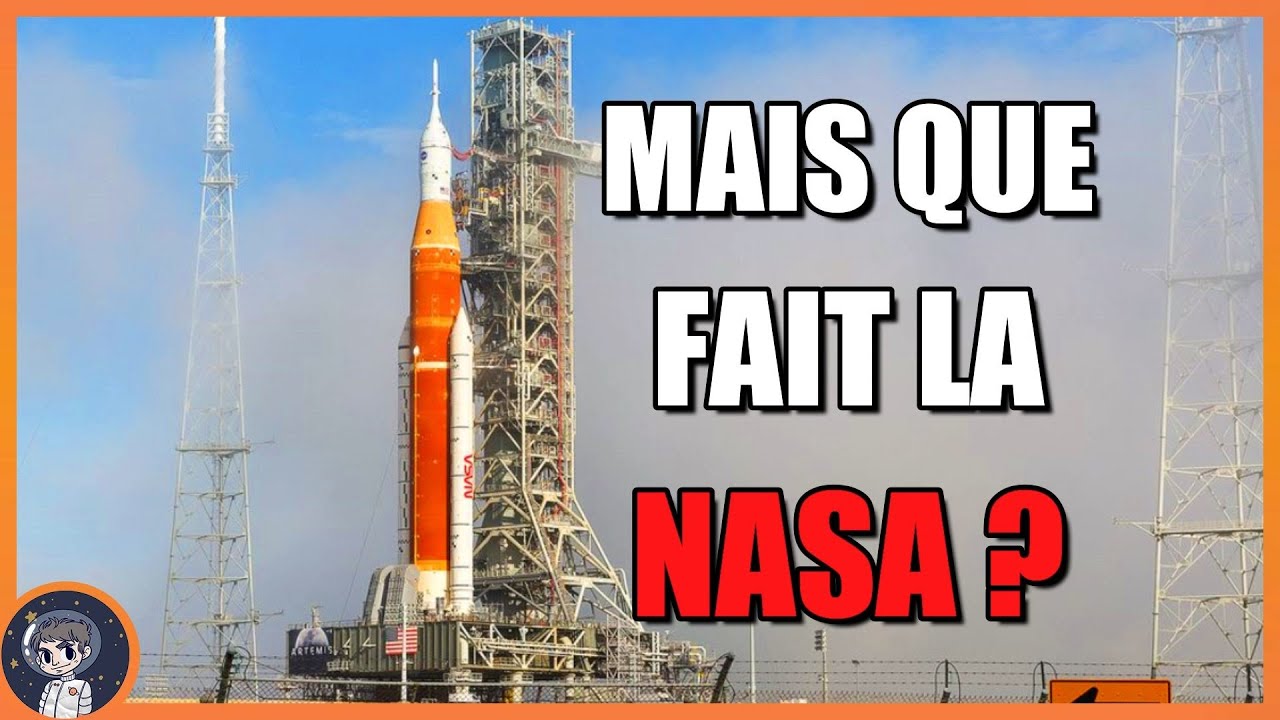
SLS et ARTEMIS : Quelles solutions pour la NASA ? - Le Journal de l'Espace #151 - Actu spatiale
Keywords
Summary
124 words
Critical Evaluation
Value of the Information & Strength of the Argument
The video provides valuable, up-to-date information on several significant space events. The argumentation is solid, with clear explanations of technical issues (e.g., hydrogen leaks, coronagraphs, gravitational lensing) and logical reasoning about NASA’s options. The host presents multiple perspectives and acknowledges uncertainties, such as the potential need to roll back SLS. The discussion of lunar site competition is well-reasoned, noting the lack of coordination between NASA and China. The MOXIE segment is particularly informative, explaining the process and future challenges. Overall, the content is informative and well-argued.
Scientific Rigor, Source Quality, Title Accuracy
The video demonstrates scientific rigor by referencing specific studies (e.g., the HIP 65426 b prepublication) and crediting sources on screen. The description lists general sources like NASA, ESA, and CNES, but lacks direct links to the specific papers mentioned. The title accurately reflects the main topic, and the content is well-structured with clear chapters. The host’s explanations are accurate and appropriately nuanced. The adéquation between title and content is good, with the SLS issue being the primary focus.
179 words
Title / Content Match
The title accurately reflects the main topic (SLS and Artemis) and the format (news review).
Quality & Reliability
8/10
The video is a well-structured space news review, presenting accurate technical details about the SLS launch issues, lunar landing site selections, JWST observations, and MOXIE results. The information aligns with known facts and is presented with appropriate nuance. The channel has a good reputation for space communication.
Chapters
- Introduction et annonces
- Le lanceur SLS est toujours cloué au sol...Et maintenant ? ARTEMIS
- Une course à la Lune avec la Chine: Les sites d'atterrissage
- JWST: La première image directe d'une exoplanète
- JWST: Un anneau d'Einstein. Explication lentille gravitationnelle
- Un succès total pour MOXIE: de l'oxygène sur Mars !
Cited Sources
- Forum de la conquête spatiale — General space community forum referenced as a source of information.
- LabPadre YouTube channel — Live streams and coverage of SpaceX and NASA activities.
- NASA Spaceflight YouTube channel — Coverage of space launches and missions.
Concurring Sources
- NASA Artemis Blog — Official updates on the Artemis program and SLS launch status.
- ESA Webb News — ESA's coverage of JWST discoveries, including exoplanet imaging.
External References
Contribution & Novelties
The video provides a concise synthesis of recent space news, with clear explanations of technical concepts. Its original contribution lies in the comparative analysis of NASA and China’s lunar landing site selections, highlighting potential geopolitical tensions. The explanation of the SLS hydrogen leak issue is particularly clear and informative.
Pour aller plus loin :
- James Webb Space Telescope — Overview of the telescope and its capabilities.
- Gravitational lens — Explanation of the phenomenon behind Einstein rings.
- MOXIE — Details on the Mars Oxygen In-Situ Resource Utilization Experiment.
- Artemis program — NASA’s lunar exploration program.
- Chang’e 7 — Chinese lunar mission planned for 2024.
103 words
Radar Profile
The radar profile shows high scores in information quantity, quality, and reliability, with a slightly lower technical level. This indicates a well-balanced, informative video that is accessible to a broad audience while maintaining scientific accuracy.
💬 Très positif. Sur les 30 commentaires analysés, la grande majorité exprime des remerciements et des éloges pour la qualité de la vidéo et de l'équipe, avec quelques remarques constructives sur des points techniques.