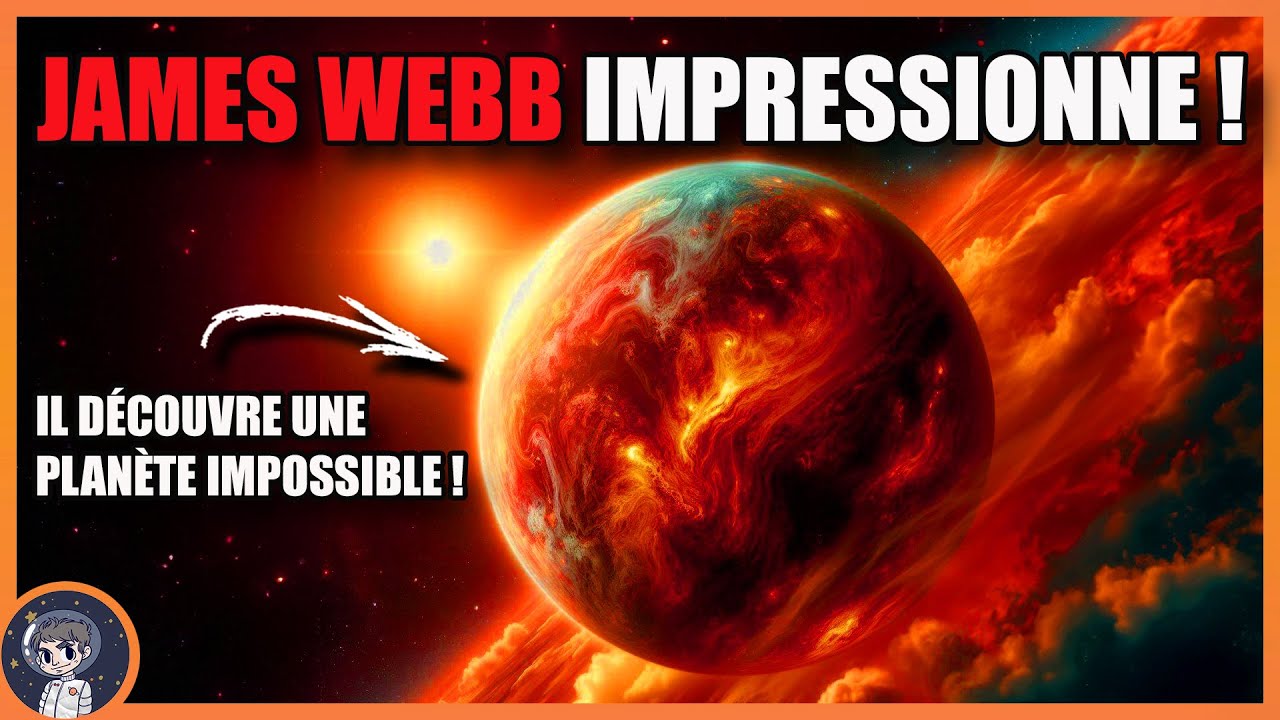
JAMES WEBB fait des MIRACLES pour la SCIENCE ! - Le Journal de l'Espace #263 - Actu spatiale
Keywords
Summary
151 words
Critical Evaluation
Value of the Information & Strength of the Argument
The video provides a valuable overview of recent space developments, presenting each topic with clear explanations and contextualizing their significance. The argumentation is generally solid, though it sometimes relies on simplified explanations that may omit nuances. For instance, the segment on black holes and dark energy presents a speculative hypothesis without thoroughly discussing the scientific debate or alternative explanations. The host’s enthusiasm is evident, but the reasoning could benefit from more critical analysis and acknowledgment of uncertainties.
Scientific Rigor, Source Quality, Title Accuracy
The video demonstrates a reasonable level of scientific rigor, referencing credible institutions like NASA and ESA, and using terms like ‘spectroscopy’ correctly. However, specific sources are not cited on screen or in the description, limiting the ability to verify claims. The title accurately reflects the content’s focus on recent discoveries, particularly the James Webb Space Telescope’s contributions, though it slightly overstates the ‘miracles’ aspect. The description provides links to general sources and credits, but not to the specific studies mentioned.
172 words
Title / Content Match
The title is catchy and reflects the content's focus on recent discoveries, particularly the James Webb Space Telescope's contributions, though it slightly overstates the 'miracles' aspect.
Quality & Reliability
7/10
The video presents recent space news with a generally accurate scientific basis, but lacks detailed references and sometimes simplifies complex topics. The information is reliable for a general audience, though not exhaustive.
Chapters
- Introduction et annonces
- Le James Webb Space Telescope découvre une planète recouverte de VAPEUR
- Un NOUVEL alliage métallique RÉVOLUTIONNAIRE pour le SPATIAL
- Trous NOIRS et énergie SOMBRE
- Des ROVERS pour ARTEMIS 5
- Miranda, une Lune d'Uranus aurait un Océan LIQUIDE ?
- L'inde annonce la suite après son incroyable succès CHANDRAYAAN 3
Cited Sources
- Creative Commons Attribution 4.0 International — License for music used in the video.
- CreatorChords — Source for music by Alexander Nakarada.
- Sound Lapse — Music source.
- Utho Riley — Music source.
- Forum de la conquête spatiale — General source for space news and discussions.
- Jamendo - Inspire Galactic — Music track used in the video.
- Le Journal de l'Espace — Official blog of the channel.
- Scott Buckley — Music source.
- Bensound - Evolution — Music track used in the video.
- City Walk by Sound Lapse — Music track used in the video.
Concurring Sources
Contribution & Novelties
The video synthesizes recent space news, making them accessible to a broad audience. Its original contribution lies in presenting multiple discoveries in a single episode, highlighting their interconnectedness. However, it does not provide in-depth analysis or new insights beyond what is already reported in scientific literature.
Pour aller plus loin :
- James Webb Space Telescope — Overview of the telescope’s capabilities and discoveries.
- Exoplanet GJ 9827d — Information about the star system and the planet.
- Dark energy — Explanation of dark energy and its role in the universe’s expansion.
- Artemis program — Details on NASA’s lunar exploration program.
- Miranda (moon) — Information about Uranus’s moon and its potential subsurface ocean.
110 words
Radar Profile
The radar profile shows a balanced performance with high scores in information quantity and quality, moderate technical depth, and good overall reliability. The video excels in covering a wide range of topics but could improve in providing more detailed technical explanations and explicit citations.
💬 Très positif. Sur les 30 commentaires analysés, les spectateurs expriment un enthousiasme général, remerciant l'équipe pour la qualité des informations et la clarté des explications, avec quelques remarques sur la rapidité de parole.