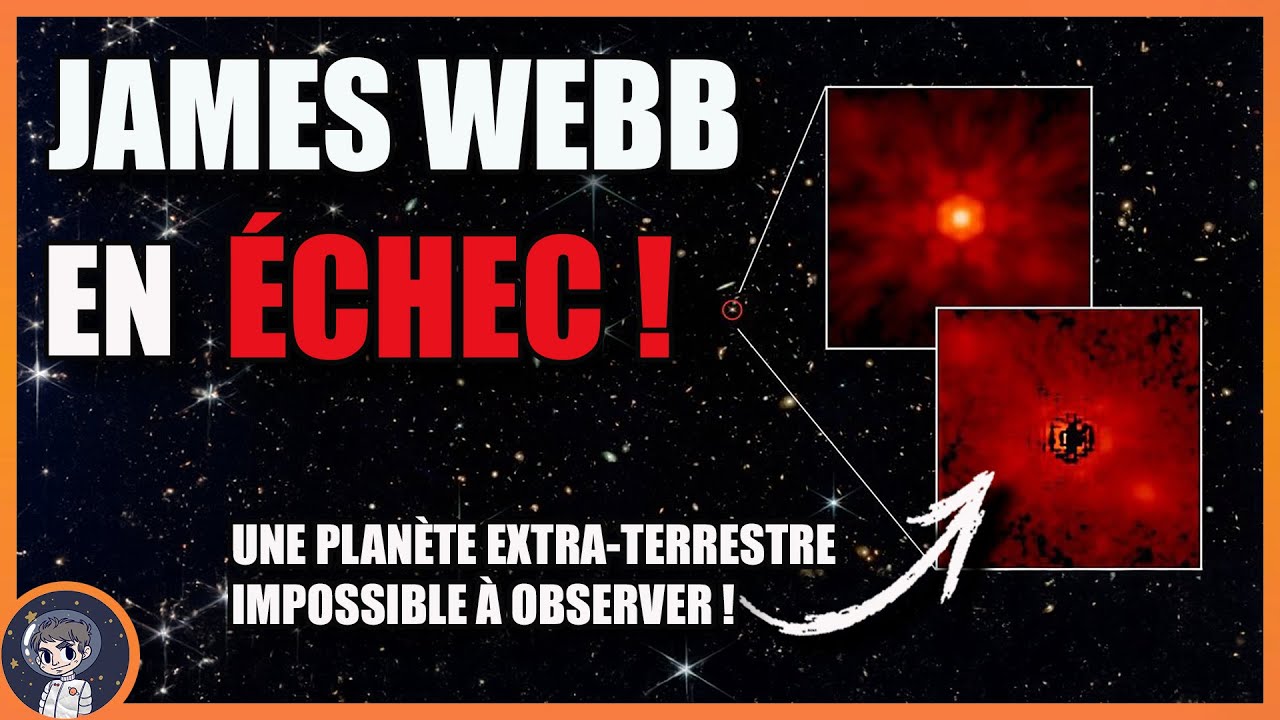
Le JAMES WEBB rencontre-t-il un PROBLEME de vue ? - Le Journal de l'Espace #249 - Actualité spatiale
Keywords
Summary
138 words
Critical Evaluation
Value of the Information & Strength of the Argument
The video provides a comprehensive and up-to-date overview of significant space events, offering valuable context and explanations. The argumentation is generally solid, with the host clearly distinguishing between confirmed facts, ongoing investigations, and speculative elements. For instance, the Starliner segment presents both NASA’s optimistic statements and critical perspectives from journalists, giving a balanced view. The TRAPPIST-1 segment explains the scientific challenges in detail, referencing a recent Nature Astronomy paper. The deepfake detection story is presented with appropriate nuance, acknowledging limitations. The New Frontier segment is more promotional but includes relevant background on the team’s experience. Overall, the information is well-structured and supported by credible sources, though some simplifications are made for a general audience.
Scientific Rigor, Source Quality, Title Accuracy
The video demonstrates a strong commitment to scientific rigor, citing specific sources such as NASA, Nature Astronomy, and the Goddard Space Flight Center. The host clearly attributes information to its origin and distinguishes between official statements, published research, and personal commentary. The title accurately reflects the main segment on James Webb, though the video covers multiple topics, which is typical for a news roundup. The description provides links to the channel’s blog and social media, but no direct links to the cited studies are included. The host’s tone is professional and measured, avoiding sensationalism. The video’s content aligns well with the channel’s stated mission of providing accessible space news and education.
240 words
Title / Content Match
The title accurately reflects the main segment about James Webb's challenges with TRAPPIST-1, though the video covers multiple other topics.
Quality & Reliability
8/10
The video is a weekly space news roundup, presenting recent developments with references to NASA, Boeing, and published studies (e.g., Nature Astronomy). The information is generally accurate and well-contextualized, though some simplifications are made for a general audience. The host maintains a neutral tone and clearly distinguishes facts from speculation.
Chapters
Cited Sources
- Creative Commons Attribution 4.0 International — Music licensing for the episode.
- CreatorChords — Music source for the episode.
- Sound Lapse — Music source for the episode.
- Utho Riley — Music source for the episode.
- Forum de la conquête spatiale — General source for space news and discussion.
- Jamendo - Inspire Galactic — Music source for the episode.
- Le Journal de l'Espace Blog — Channel's blog with additional articles.
- Scott Buckley — Music source for the episode.
- Bensound - Evolution — Music source for the episode.
- City Walk by Sound Lapse — Music source for the episode.
Concurring Sources
- NASA — Official source for Starliner updates and CO2 visualizations.
- Nature Astronomy — Journal where the TRAPPIST-1 study was published.
Contribution & Novelties
The video synthesizes recent space news into an accessible format, providing context and explanations that go beyond simple reporting. It highlights the scientific challenges of exoplanet observation with JWST, the innovative application of astronomical techniques to deepfake detection, and the emerging field of point-to-point space travel. The episode also emphasizes the importance of climate monitoring through NASA’s visualizations.
Pour aller plus loin :
- TRAPPIST-1 — Overview of the TRAPPIST-1 system and its planets.
- Transit spectroscopy — Explanation of the technique used to study exoplanet atmospheres.
- Deepfake detection — General information on deepfakes and detection methods.
- GEOS model — NASA’s Goddard Earth Observing System, used for atmospheric modeling.
107 words
Radar Profile
The radar profile shows high scores in information quantity and quality, with a slightly lower technical level, indicating content that is informative and reliable but not overly technical. The overall high scores reflect a well-produced and trustworthy news segment.
💬 Très positif. Sur les 30 commentaires analysés, tous expriment des remerciements et des éloges pour la qualité de la vidéo et le travail de l'équipe, sans aucune critique négative.